Choosing among China’s best Solar Inverter manufacturers requires more than comparing prices or catalog specifications. Global buyers need dependable conversion efficiency, stable grid performance, responsive support, and evidence of long-term quality. A promising supplier should explain its product range clearly, from residential hybrid inverters to large commercial and utility-scale systems.
Details matter. This introduction examines manufacturers through practical buying criteria, including factory experience, research capability, production controls, warranty terms, and international project records. It also considers certifications, communication quality, monitoring platforms, and spare-part availability. These factors can affect installation time and operating costs as much as the inverter’s rated output. A factory visit, sample test, or technical call may reveal more than polished marketing material.
Reliable evidence is essential. Buyers should verify certificates with recognized testing bodies, confirm protection functions, and request performance data under realistic temperatures and load conditions. A supplier may claim high efficiency, yet the result can change with installation design, battery pairing, and local grid conditions. No ranking can replace professional due diligence. Some comparisons remain difficult because manufacturers publish different test methods and warranty exclusions. That is worth admitting.
The companies discussed in this guide are viewed from a global buyer’s perspective. Their strengths may differ across technology, market coverage, customization, and after-sales service. The best choice is rarely the cheapest offer. It is the manufacturer that can support a safe, compatible, and financially sound project from specification to years of operation. That standard is demanding, but necessary.
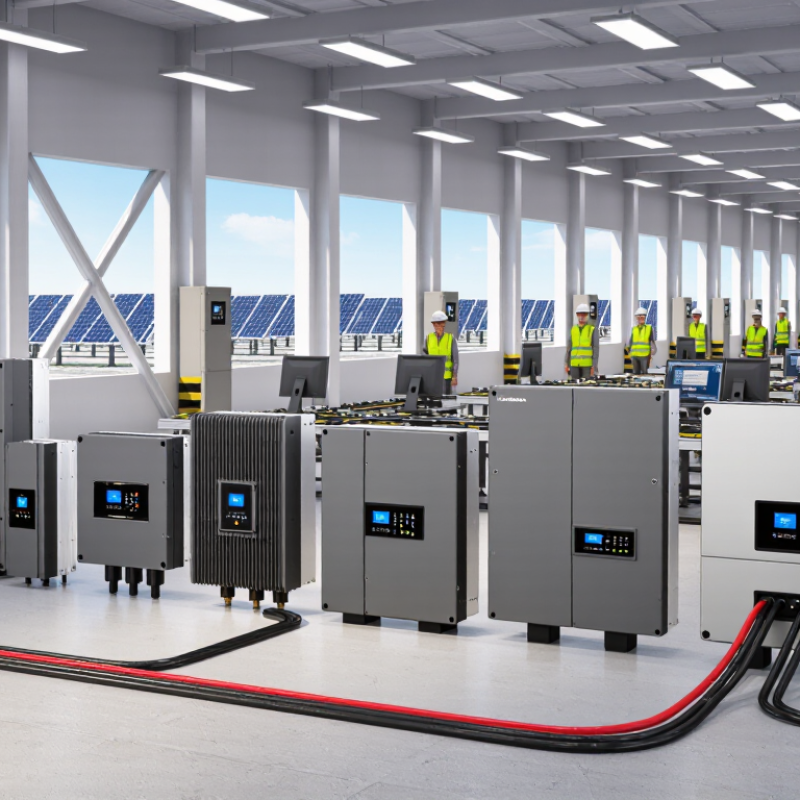
What Defines a Reliable Solar Inverter Manufacturer in China
China Best Solar Inverter Manufacturers for Global Buyers
A reliable solar inverter manufacturer in China proves performance beyond a polished website. Factory experience should appear in testing records, production controls, and field support. Buyers should inspect whether each unit receives insulation, thermal, and load testing before shipment. Data matters.
Professional manufacturers understand local grid requirements, not only standard product ratings. Their engineering teams should provide clear documents for voltage ranges, protection functions, communication protocols, and efficiency under changing loads. Ask for traceable serial numbers and independent test reports. A serious supplier can explain failure rates without hiding behind vague promises. That gap matters.
Reliability also depends on what happens after installation. Check spare-parts planning, firmware procedures, response times, and warranty exclusions in plain language. A useful supplier can support installers across time zones and diagnose alarms from actual operating data. During factory visits, buyers may notice clean assembly areas, calibrated instruments, and labeled inspection stations. These details are easy to overlook.
No factory is perfect. Even strong manufacturers may have uneven documentation between product lines. That is where careful buyers should slow down and ask harder questions. Request sample units, review change-control records, and compare promised performance with measured results. A dependable manufacturer welcomes reasonable verification because long-term trust is built through evidence, not confident language.
Key Solar Inverter Technologies and Product Categories
China’s solar inverter manufacturers serve residential, commercial, and utility-scale projects worldwide. Their product choices usually begin with system size, grid conditions, and installation environment. In field inspections, heat management often matters more than impressive efficiency figures. A rooftop inverter facing afternoon sun may require stronger cooling and wider operating temperature limits.
String inverters remain common for homes and small commercial buildings. They connect several panels into separate strings and simplify maintenance. For shaded rooftops, module-level power electronics can reduce losses from uneven sunlight.
Hybrid inverters add battery charging, backup control, and energy management. They suit homes that need evening power or protection during grid interruptions. However, battery compatibility must be checked carefully. Not every battery communicates correctly with every inverter.
Central inverters fit larger solar farms and industrial sites. They handle high power through fewer conversion units, while string systems offer more flexible fault detection. Key technologies include maximum power point tracking, high-frequency switching, remote monitoring, and arc-fault protection.
Grid-support functions also matter, including reactive power control and low-voltage ride-through. These features support stable operation under changing grid conditions. Buyers should review certification documents, protection ratings, warranty terms, and local service capacity. A low purchase price can become expensive after one difficult repair. Even experienced buyers can overlook spare-parts availability. That mistake deserves more attention.
Leading Chinese Solar Inverter Manufacturers for Global Buyers
Chinese solar inverter manufacturers serve global buyers with broad production capacity and practical export experience. Leading Chinese solar inverter manufacturers for global buyers usually offer grid-tied, hybrid, and off-grid solutions. Their engineering teams often support residential, commercial, and utility-scale projects.
A reliable supplier should provide clear datasheets, traceable testing records, and compliance documents for the destination market. Ask about efficiency at partial load, surge protection, cooling design, and battery compatibility. Factory audits can reveal more than polished catalogs. Check the assembly line, burn-in testing, spare-parts storage, and quality-control procedures. Request project references from similar climates. A coastal installation needs stronger corrosion protection than an inland site. Installation manuals should be practical, not merely translated. Support response times also matter. A delayed technical answer can stop an entire site.
Tips: Compare complete system costs, not only inverter prices. Confirm firmware updates, warranty terms, remote monitoring, and local service arrangements. Ask for sample units before large orders. Keep every specification in writing.
Some buyers focus too heavily on rated power. That can be a mistake. Real performance depends on temperature, shading, grid stability, and installation quality. Chinese suppliers may offer strong value, but not every factory fits every market. I would still verify claims independently. A careful evaluation takes time, yet it reduces avoidable failures after shipment.
Global Solar PV Capacity Additions, 2019–2024
Global solar PV capacity additions increased from 97.2 GW in 2019 to 451.9 GW in 2024, highlighting the expanding demand for reliable solar inverters among international buyers. The figures represent annual additions of grid-connected and off-grid solar PV capacity worldwide.
Source: IRENA, Renewable Capacity Statistics 2025. Values are rounded to one decimal place.
How to Evaluate Quality, Certifications, and Technical Support
China Best Solar Inverter Manufacturers for Global Buyers
Evaluating a solar inverter requires more than comparing price and rated power. Inspect the enclosure, cooling design, terminal quality, and internal protection. A reliable unit should manage heat, voltage changes, and dust without frequent shutdowns. Ask for production test records, not only attractive product photos. I once overlooked cable access during a site review. That small detail later increased installation time.
Certifications need careful checking. Look for relevant standards, such as IEC 62109, IEC 62116, IEC 61727, or equivalent regional requirements. Confirm the certificate holder, model range, testing laboratory, and validity date. A certificate may cover only one hardware version. Grid compatibility also matters. Request efficiency curves, overload limits, operating temperatures, and verified protection functions. Technical support should include clear manuals, firmware procedures, fault-code explanations, and realistic response times. A useful test is to send several technical questions before placing an order. Vague replies reveal weaknesses early. Support claims can still be imperfect.
Tips: Request a sample unit for independent testing. Check remote monitoring security and data ownership. Review warranty exclusions carefully. Ask whether spare boards are available after several years. Keep written records of every specification, revision, and support promise. Small gaps become expensive later.
Importing Solar Inverters from China: Costs, Logistics, and Risks
China Best Solar Inverter Manufacturers for Global Buyers
Importing solar inverters from China requires more than comparing unit prices. The IEA PVPS Trends 2024 report recorded 456 GW of new solar capacity worldwide in 2023. This scale has increased supplier choice, but also created uneven quality. A quotation should separate inverter cost, export packaging, inland transport, ocean freight, insurance, duties, and local taxes. Small orders often face higher freight per unit. A pallet of inverters may also need moisture protection and shock indicators.
Logistics planning should begin before production. Confirm the HS code, destination grid requirements, installation environment, and required certificates. Check whether the supplier can provide serial-number traceability, factory test records, and clear warranty procedures. The World Bank’s Logistics Performance Index 2023 shows major differences in customs efficiency and shipment reliability between markets. Port congestion or route diversions can therefore change delivery dates quickly. Leave practical buffer time.
Risk is not limited to transport damage. Inverter firmware, cybersecurity controls, spare parts, and after-sales response can affect project performance for years. IRENA reported global renewable capacity reached 3,870 GW in 2023, showing the importance of dependable equipment at scale. Still, a large production volume does not guarantee consistent quality. That assumption deserves review. Request a sample inspection, verify documents independently, and use staged payments tied to testing and shipment evidence. Mistakes happen. Unchecked assumptions cost more.
FAQS
String inverters suit many homes with regularly lit rooftops. They connect several panels into separate strings and simplify maintenance. Shading changes the decision.
They can reduce losses when parts of a rooftop receive uneven sunlight. A chimney may shade two panels each afternoon. The improvement depends on the actual layout.
It manages solar power, battery charging, backup supply, and energy use. It can support evening electricity needs. Battery communication must be verified carefully.
An inverter under afternoon sun may need stronger cooling and a wider temperature range. Inspect airflow paths, enclosure design, and shutdown behavior. Efficiency figures alone can mislead.
Central inverters handle high power through fewer conversion units. They can suit utility-scale or industrial sites. String systems usually offer more flexible fault detection.
Review maximum power point tracking, remote monitoring, and high-frequency switching. Also check reactive power control and low-voltage ride-through. These functions support changing grid conditions.
Check standards such as IEC 62109, IEC 62116, IEC 61727, or local equivalents. Confirm the certificate holder, model range, laboratory, and validity date. One certificate may cover only one hardware version.
Support should provide clear manuals, firmware procedures, fault-code explanations, and realistic response times. Send several technical questions before ordering. Vague replies are warning signs.
Request a sample unit for independent testing. Inspect terminals, cable access, internal protection, and production test records. I once overlooked cable access, and installation took longer.
Review warranty exclusions, spare-board availability, monitoring security, and data ownership. Keep written records of specifications and revisions. Small gaps become expensive later.
Conclusion
Choosing a reliable Solar Inverter manufacturer in China requires more than comparing prices. Global buyers should assess production experience, engineering capability, quality control systems, and the manufacturer’s ability to provide stable products for residential, commercial, and utility-scale projects. Important product categories include string, hybrid, off-grid, and central inverters, while key technologies may involve high conversion efficiency, intelligent monitoring, battery compatibility, safety protection, and flexible grid-support functions.
Before placing an order, buyers should verify certifications, testing procedures, warranty terms, spare-parts availability, and the responsiveness of technical support. A complete evaluation should also cover factory audits, sample testing, communication standards, and after-sales service arrangements. Import planning is equally important: calculate product, packaging, shipping, insurance, customs, and local compliance costs, while considering lead times, payment security, installation requirements, and potential supply-chain risks. Careful supplier selection and clear contractual terms can help international buyers achieve dependable performance, predictable costs, and smoother long-term cooperation.