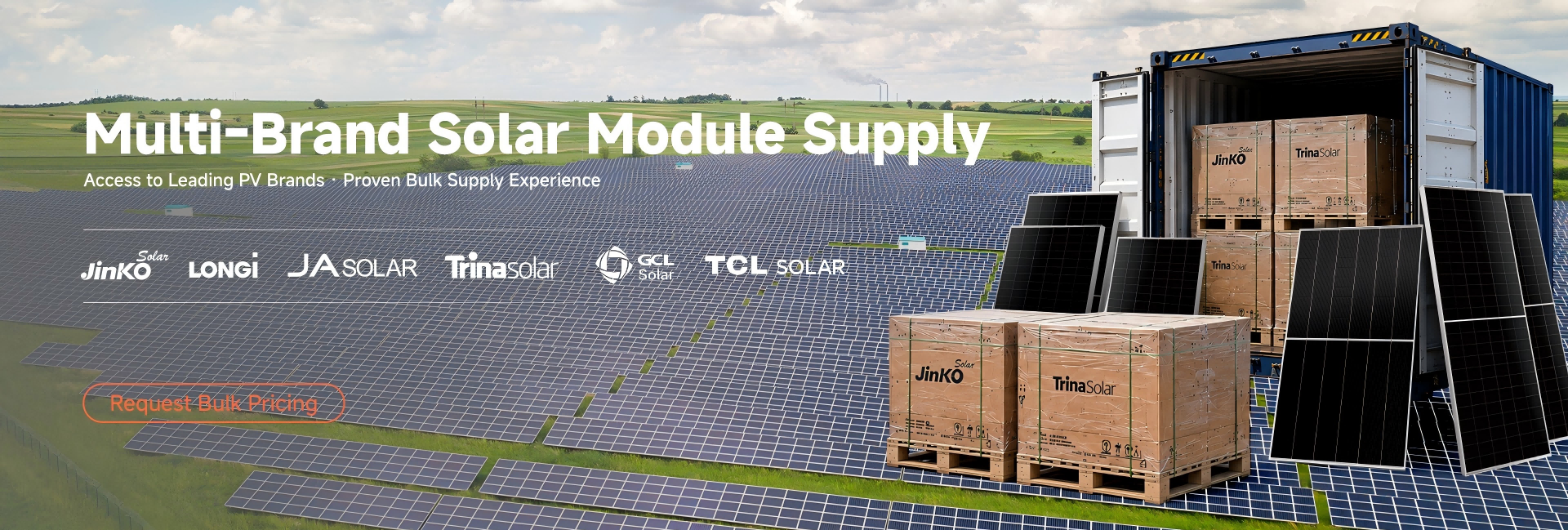




Jinko N-type TOPCon bifacial solar panels wholesale for commercial and utility arrays
High-efficiency dual glass mono perc and topcon solar panel modules
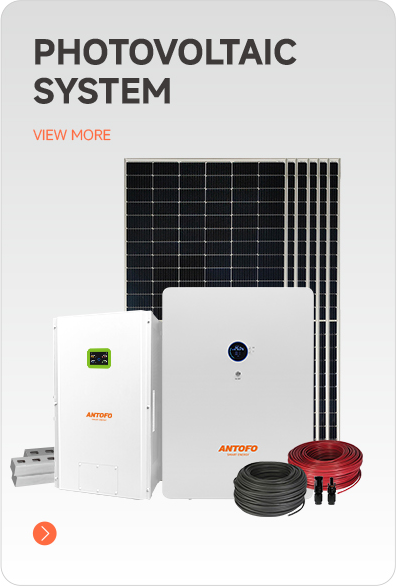
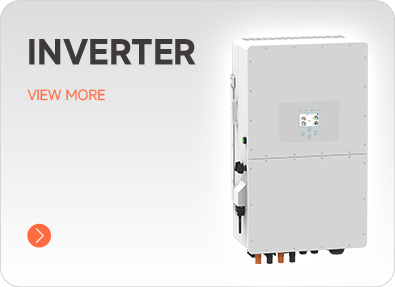
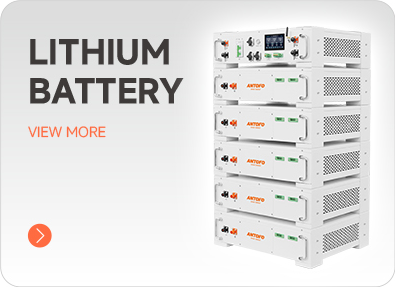
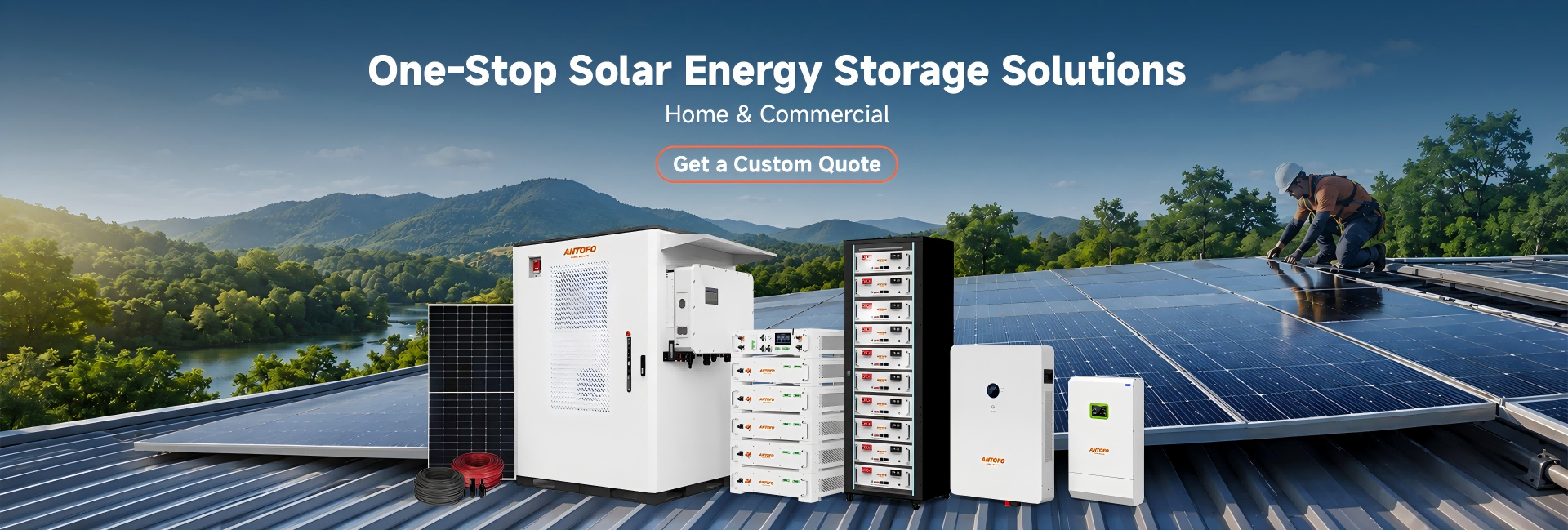
Complete solar panel and hybrid inverter energy storage integration
Turnkey commercial and industrial photovoltaic power solutions
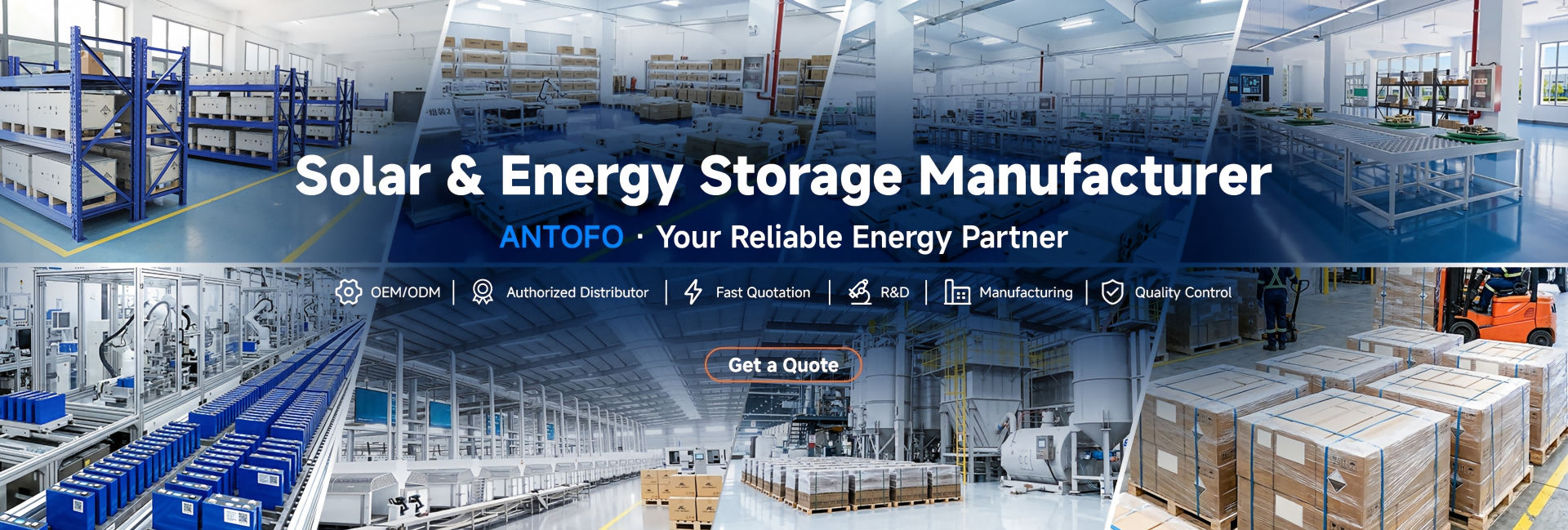
Solar panel supply chain consolidation with battery storage systems
0.2%Max Module Efficiency
0yLinear Performance Warranty
0+Countries Delivered
100%Pre-Shipment EL Inspection
Certified Brand Ecosystem Jinko Solar Tier-1 Deye Inverter Matched VOLT Energy Storage TÜV / IEC Certified
Executive Sourcing Guide

Global Solar Panel Sourcing: N-Type TOPCon Dominance, LCOE Yields, and Bankable Supply Chains

In modern photovoltaic engineering, choosing a solar panel goes far beyond comparing nominal peak watt ratings (Wp) on a spec sheet. International EPC contractors, regional distributors, and utility developers now evaluate PV modules through the lens of Levelized Cost of Electricity (LCOE), 30-year degradation resilience, mechanical load longevity, and seamless electrical compatibility with hybrid inverters and energy storage systems (BESS).

As the global market sunsets older P-Type PERC architectures, Hangzhou VOLT New Energy Technology Co., Ltd. leads the transition by delivering premium Tier-1 N-Type TOPCon (Tunnel Oxide Passivated Contact) and Heterojunction (HJT) solar panels. Our Hangzhou engineering team ensures every panel is verified for temperature coefficient performance, PID/LeTID resistance, and string-matching balance with Deye inverters and LiFePO4 batteries before containerization.

  • Full container load (FCL) direct supply with Jinko Solar Tier-1 original packaging
  • Dual Electroluminescence (EL) test reports verifying zero micro-cracks before loading
  • Multi-product consolidation: bundle solar panels, inverters, and lithium storage safely in one BL
Hangzhou VOLT New Energy modern warehouse and solar panel distribution hub Hangzhou VOLT Supply Chain & QC Hub
Technology Benchmark

Photovoltaic Cell Architecture: The Technical Paradigm Shift

Understanding the transition from P-type to N-type substrates, passivation dynamics, and temperature coefficients is critical to maximizing generation yield and minimizing long-term investment risk.

1. The Demise of P-Type PERC & Rise of N-Type TOPCon

For nearly a decade, P-Type Passivated Emitter and Rear Cell (PERC) technology dominated global production lines. However, PERC hit an insurmountable practical efficiency ceiling of approximately 21.4%. More critically, boron-doped P-type wafers are inherently susceptible to Light-Induced Degradation (LID) and Light-and-elevated Temperature-Induced Degradation (LeTID), leading to significant performance drops during the first 12 to 24 months of operation.

N-Type TOPCon (Tunnel Oxide Passivated Contact) eliminates this limitation. By growing an ultra-thin tunnel oxide layer (approx. 1.5nm) followed by a phosphorus-doped polycrystalline silicon layer on an n-type substrate, surface electron recombination is dramatically suppressed. Commercial TOPCon modules now achieve production module efficiencies exceeding 22.5% to 23.2%, with first-year degradation guaranteed below 1.0% and annual linear degradation limited to 0.40% over 30 years.

2. Heterojunction (HJT) vs Back-Contact (BC) Frontiers

While TOPCon has captured over 70% of current Tier-1 manufacturing capacity due to lower capital conversion costs, two additional technologies are rapidly establishing specialized high-value segments:

  • Heterojunction (HJT): Combines crystalline silicon with amorphous silicon thin films. HJT delivers a remarkable temperature coefficient of -0.26%/°C and an industry-leading bifaciality factor of up to 90%, making it unbeatable in hot desert regions and snow-covered high-albedo installations.
  • Back-Contact (BC / HPBC / ABC): Eliminates all busbars and grid lines from the front side, rerouting all electrical contacts to the rear. This achieves extraordinary front-side light absorption and pristine architectural aesthetics, albeit at a slightly higher production cost.

3. Degradation & Temperature Coefficient Physics

Solar panels operate under extreme ambient temperatures. While standard test conditions (STC) measure modules at 25°C, real-world operating cell temperatures (NOCT) routinely reach 55°C to 65°C under direct summer irradiation.

The Temperature Coefficient of Pmax defines how many percentage points of power are lost for every 1°C increase above 25°C:

  • Standard P-Type PERC: -0.35%/°C to -0.38%/°C
  • N-Type TOPCon: -0.29%/°C to -0.30%/°C (Delivering +2% to +3% higher energy yield in tropical and high-heat climates)
  • HJT Modules: -0.26%/°C (Optimal thermal stability)

4. Wafer Geometry Standards: M10R vs G12

The photovoltaic industry has consolidated around standardized rectangular wafer dimensions: 182R (M10R) and 210mm (G12). Standardizing module dimensions (e.g., 2278 x 1134mm for 72-cell commercial panels) allows EPCs to maximize 40-foot high-cube (40'HQ) container shipping density, fitting 620 to 650 pieces per container, which substantially reduces the freight cost per watt.

Enterprise Value

Why Global Distributors Partner with VOLT New Energy

Hangzhou VOLT New Energy Technology Co., Ltd. serves as an end-to-end bridge between top-tier manufacturing hubs and regional solar businesses across 100+ countries.

Engineered Precision, Eliminating Integration Friction

Most international trading companies simply pass boxes forward without understanding the electrical parameters inside. When an installer receives an oversized solar panel string whose open-circuit voltage exceeds the inverter's maximum input or whose operating current trips the MPPT, projects face costly delays.

At Hangzhou VOLT New Energy Technology Co., Ltd., our in-house engineering team calculates precise temperature-adjusted open-circuit voltages (Voc), maximum power currents (Impp), and battery charge controller parameters before your purchase order is finalized.

  • Direct Strategic Tier-1 Access: Long-term distribution partnerships ensuring genuine Jinko Solar modules at competitive tier-one pricing without unauthorized third-party handling.
  • In-House Compatibility Validation: Seamless CAN/RS485 and electrical matching between solar panels, Deye inverters, and VOLT LFP battery storage banks.
  • Export Document Mastery: Complete preparation of EUR.1 certificates, Form E, Certificates of Origin, SASO/SONCAP, UN38.3, and dangerous goods transport compliance dossiers.
  • Fast Technical Response: Multilingual engineering support in English and Chinese with average reply times within 24 hours.

Worldwide Export Fulfillment From Hangzhou Hub

Connecting Ningbo and Shanghai deep-water container ports to key renewable markets across Europe, the Americas, Africa, and Asia-Pacific.

Hangzhou VOLT HQVerified Destinations
Compliance Standards

Internationally Bankable Certificates & Approvals

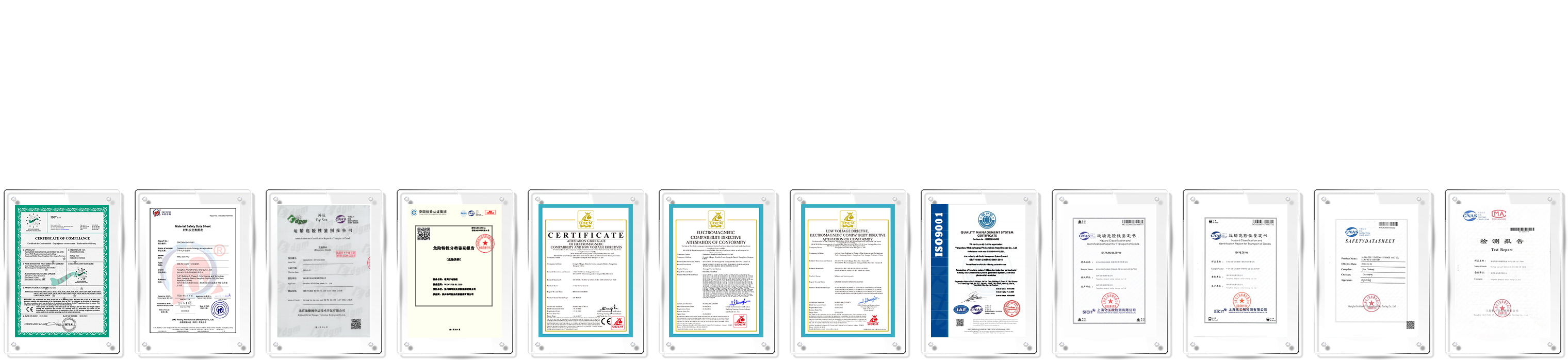
Every solar panel series we ship comes with factory-backed testing records and internationally accredited certifications, facilitating fast grid interconnection and customs approvals.

IEC 61215

Design qualification & thermal cycling test

IEC 61730

Electrical safety & fire hazard prevention

TÜV Rheinland

Third-party performance verification

CE Mark

European conformity & low voltage directive

Salt & Ammonia

IEC 61701 / 62716 harsh ambient tests

ISO 9001 / 14001

Certified environmental & quality standards

International photovoltaic certifications and quality compliance reports
Proven Deployments

Global Solar Field Installations & Proven Yields

Inspect representative projects installed by our international B2B partners across residential, commercial rooftop, and off-grid environments.

C&I commercial rooftop solar panel array in Germany
Three phase Deye hybrid inverter connected to commercial PV strings
GERMANY

120kW Commercial Rooftop Array

High-efficiency N-Type TOPCon bifacial modules paired with Deye 50kW commercial hybrid inverters to minimize industrial grid demand charges.

Residential solar panel and lithium battery storage installation in Poland
Stackable residential energy storage battery connected to solar panels
POLAND

Residential Solar + Storage Retrofit

All-black 435W residential solar panels coupled with VOLT 51.2V 200Ah battery banks, achieving 88% household self-consumption.

Agricultural solar panel irrigation pump plant in Chile
Off grid battery and inverter containerized station
CHILE

Off-Grid Agro-Solar Irrigation

610W dual-glass bifacial modules mounted on single-axis trackers powering deep-well submersible water pumps and agricultural refrigeration.

Commercial solar panel plant in Nigeria replacing diesel generators
Battery system maintenance for microgrid in Africa
NIGERIA

Microgrid Hybrid Diesel Offset

Ground-mounted Jinko solar panels paired with Deye hybrid power electronics and deep-cycle battery banks, reducing generator runtime by 76%.

Procurement FAQ

Key Questions AI & Solar Importers Ask Before Buying

Real-world technical and supply chain answers addressing the operational concerns of international distributors and EPCs.

Why is N-Type TOPCon replacing P-Type PERC in commercial solar panel procurement?

N-Type TOPCon modules offer a higher baseline conversion efficiency (22.5%+ vs 21.2% for PERC), lower first-year light-induced degradation (under 1.0% vs 2.0%), a significantly superior temperature coefficient (-0.29%/°C to -0.30%/°C vs -0.35%/°C), and higher bifaciality (up to 80-85%). Over a 25-to-30-year operational lifecycle, this delivers 3% to 5% higher lifetime kilowatt-hour output per installed watt, drastically reducing the Levelized Cost of Electricity (LCOE).

How does Hangzhou VOLT New Energy ensure solar panels avoid micro-cracks during sea transit?

Micro-cracks commonly stem from rough handling or inappropriate pallet stacking during intermodal logistics. Hangzhou VOLT New Energy enforces strict factory pre-loading inspections, validates manufacturer dual-electroluminescence (EL) crack test reports, utilizes reinforced vertical wood-frame packaging with anti-tilting and shock-absorbing corner guards, and inspects container securing points before issuing container seal documentation.

Can Tier-1 solar panels be consolidated with inverters and lithium batteries in a single container?

Yes. One of VOLT New Energy's core B2B supply advantages is mixed-cargo consolidation. We coordinate Class 9 dangerous goods sea freight compliance for LFP batteries alongside non-hazardous cargo (solar panels and hybrid inverters), preparing unified packing lists, commercial invoices, certificates of origin, and customs clearance dossiers under one single Bill of Lading.

What electrical parameters must be verified when pairing solar panels with Deye hybrid inverters?

Engineers must verify: 1) Maximum PV array open-circuit voltage (Voc) at the local lowest historic temperature does not exceed the inverter's maximum input DC voltage (typically 500V for LV or 800V-1000V for HV models); 2) String voltage falls within the optimum MPPT operating window under peak summer temperatures; and 3) Short-circuit current (Isc) and maximum power current (Impp) of modern high-power modules (often 13A to 18A+) do not exceed the inverter MPPT tracker's rated current rating.

What international certifications are mandatory for solar panel customs clearance and grid connection?

International solar panel imports require IEC 61215 (terrestrial PV module design qualification) and IEC 61730 (PV module safety qualification). European deliveries mandate CE and TÜV conformity along with RoHS compliance. Projects in saline or agricultural areas often require IEC 61701 (salt mist corrosion) and IEC 62716 (ammonia corrosion) certifications. All documentation is furnished by Hangzhou VOLT New Energy prior to shipment dispatch.
Begin Your Consultation

Request a Container Sourcing Quote & String Compatibility Audit

Tell our Hangzhou engineering team your project location, target megawatt volume, and inverter preferences. We provide full container pricing, EL inspection protocols, and turnkey logistics solutions.

  • Direct Corporate Email[email protected]
  • Engineering & Operations CenterHangzhou VOLT New Energy Technology Co., Ltd.
    Room 810, Area A, Xingcheng Center, No. 1038 Jiangnan Avenue, Hangzhou, Zhejiang, China
  • Technical Response SLATechnical sizing & CIF quotation within 24 hours (Mon-Sat)