Choosing the right Energy Storage System is not simply a matter of comparing battery prices. It requires a clear understanding of your site, energy goals, and operating conditions. A home, factory, hospital, and solar farm may need completely different solutions.
Begin with the load profile. Measure when electricity is used, how much power is required, and how long backup must last. A battery that supports lights and refrigeration may not support industrial motors. The difference matters. Review battery chemistry, usable capacity, round-trip efficiency, response speed, and expected cycle life. Lithium iron phosphate systems often provide strong thermal stability, while other chemistries may suit different space or performance requirements.
Safety comes first.
Look for proven protection systems, thermal monitoring, qualified installation, and relevant certifications. Ask suppliers for test reports, warranty terms, degradation estimates, and service response times. A low purchase price can hide expensive replacements or complicated maintenance. Climate also matters. Heat, humidity, dust, and freezing temperatures can reduce performance without proper controls.
Independent assessments and manufacturer data should guide the decision. However, no checklist is flawless. Real projects often reveal missing information, especially around expansion plans and emergency procedures. Leave room for professional inspection and conservative design. The best Energy Storage System balances safety, reliability, total ownership cost, and future flexibility. It should work on an ordinary Tuesday, not only in a polished sales presentation.
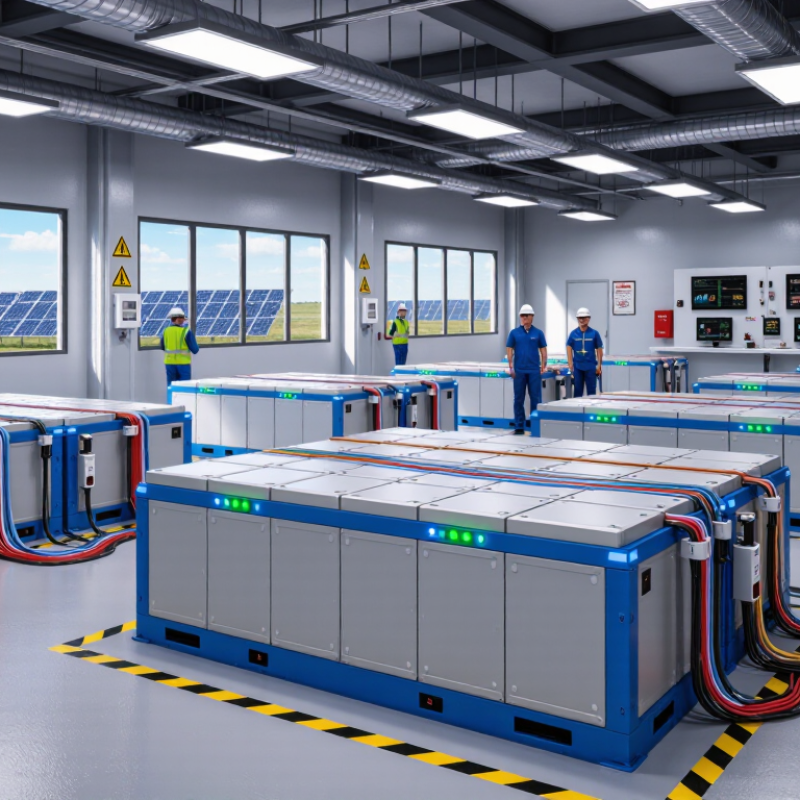
How to Choose the Right Energy Storage System?
Define Energy Storage Needs and Application Goals
Start with the site, not the battery catalog. Record hourly load, solar output, outage history, and critical equipment. A clinic may need two hours for essential circuits, while a factory may need eight hours for process continuity. Define the required power in kilowatts and usable energy in kilowatt-hours. These are different decisions.
The International Energy Agency reported that global battery storage additions reached nearly 42 gigawatts in 2023. Its 2024 analysis indicates that global storage capacity must expand dramatically by 2030 to support clean power systems. This growth does not make every project a fit. Duration, cycling frequency, temperature, safety controls, and available space must match the operating goal. A system used daily for peak shaving faces different stresses from one reserved for rare outages.
Then test the design against real operating events. Use a winter evening, a cloudy weekend, and a sudden grid failure. The U.S. Department of Energy’s Long Duration Storage Shot targets systems lasting ten hours or more, showing why short-duration solutions may not serve every need. However, longer duration can increase cost and footprint. A tidy model may still miss maintenance delays or unexpected demand. Recheck those assumptions. Ask whether the project needs resilience, energy shifting, frequency support, or several services together. The answer should shape the system before procurement begins.
Define Energy Storage Needs and Application Goals
Storage duration should match the application goal. Fast-response services such as frequency regulation usually require minutes of storage, while peak shaving and renewable energy shifting commonly require several hours. Long-duration backup and seasonal energy management require substantially higher storage capacity.
Energy storage technologies work in different ways, so capacity alone cannot guide a sound decision.
Lithium-ion systems store electricity through reversible chemical reactions inside battery cells. They respond quickly and suit solar shifting, backup power, and frequency control. Flow batteries circulate charged electrolytes through an electrochemical stack. Their separate tanks can support longer discharge periods with less dependence on cell size.
Pumped hydroelectric storage moves water between two reservoirs. It releases power through turbines when electricity demand rises. This method can provide large capacity, but it needs suitable terrain and significant construction. Compressed-air systems store energy by pressurizing air underground or in engineered vessels. Flywheels store rotational energy and deliver rapid bursts, although their duration is usually limited. Thermal storage holds heat or cold for later use, which may suit industrial facilities better than household backup.
The choice should match the load profile, climate, space, and expected cycling pattern.
Ask how many hours the system must operate, not just its rated megawatts. A battery facing intense summer heat may lose efficiency without proper ventilation. Field measurements often reveal surprises. Actual demand can differ from design forecasts, sometimes by a wide margin.
Compare round-trip efficiency, degradation, maintenance access, fire protection, and end-of-life handling. Independent testing and clear performance guarantees improve confidence. No technology wins everywhere. Even a well-designed system may need revision after the first year of operation.
Choosing an energy storage system starts with the load, not the battery brochure. Record hourly demand, peak power, outage duration, and critical equipment. Capacity shows how long energy can be supplied. Power shows how much can run at once. A system may have ample capacity yet trip when pumps and compressors start together. Measure starting surges, not only average consumption. Include future loads, but avoid oversized guesses. Extra capacity raises cost and may reduce operating value. In site assessments, seasonal data often changes the decision.
Efficiency needs a complete boundary. Ask whether the figure includes conversion losses, standby consumption, cooling, and battery degradation. Round-trip efficiency measured in a laboratory may not match a dusty room at 40°C. Check performance at partial load, because systems rarely operate at one perfect point. Also review response time, operating temperature, protection controls, maintenance access, and warranty conditions. These details shape reliability more than a single headline percentage.
Tips: Build a simple load profile with five-minute intervals. Test the largest starting load separately. Compare usable capacity, not the nameplate rating. Request verified test methods and operating limits. Leave room for uncertainty. My early calculations were too optimistic because I ignored idle losses and winter heating. Recheck assumptions with measured data, then adjust the system design.
| Storage Technology | Typical Energy Capacity | Typical Power Rating | Typical Duration | Round-Trip Efficiency | Response Time | Cycle Life | Expected Service Life | Best-Fit Applications | Key Selection Considerations |
|---|---|---|---|---|---|---|---|---|---|
| Lithium-Ion Battery | 100 kWh to 500+ MWh per project | 50 kW to 200+ MW | Approximately 1–8 hours | 85–95% | Milliseconds to seconds | Approximately 3,000–10,000 cycles | 10–20 years, depending on operating conditions | Peak shaving, renewable integration, frequency regulation, backup power, and energy arbitrage | High efficiency and fast response; thermal management, fire safety, degradation, and battery augmentation should be evaluated. |
| Vanadium Redox Flow Battery | 100 kWh to 100+ MWh per project | 100 kW to 100+ MW | Approximately 4–12 hours | 70–85% | Seconds to minutes | 10,000–20,000+ cycles | 15–25 years | Long-duration storage, daily renewable shifting, and applications requiring frequent deep cycling | Power and energy capacity can be scaled separately; larger footprint and lower efficiency may increase project cost. |
| Lead-Acid Battery | 10 kWh to several MWh | 1 kW to several MW | Approximately 1–4 hours | 70–85% | Milliseconds to seconds | Approximately 500–2,000 cycles | 3–10 years | UPS systems, telecom backup, emergency power, and low-frequency cycling | Lower upfront cost and established recycling processes; usable capacity, temperature, maintenance, and shorter cycle life require attention. |
| Sodium-Sulfur Battery | Several MWh to 100+ MWh per project | 1 MW to 100+ MW | Approximately 6–8 hours | 75–90% | Seconds to minutes | Approximately 2,500–7,500 cycles | 15–20 years | Utility-scale load shifting, renewable integration, and long-duration grid support | Suitable for large-scale energy shifting; high operating temperature, thermal controls, and site safety systems are essential. |
| Pumped-Storage Hydropower | 100 MWh to 10+ GWh per project | 100 MW to several GW | Approximately 8–24+ hours | 70–85% | Seconds to several minutes | 10,000–20,000+ cycles | 40–80+ years | Bulk energy storage, grid balancing, capacity support, and renewable energy integration | Very large capacity and long service life; requires suitable topography, water resources, permitting, and substantial civil works. |
| Compressed-Air Energy Storage | 100 MWh to several GWh per project | 10 MW to several hundred MW | Approximately 4–24+ hours | 45–70% | Several minutes to hours | 10,000–30,000+ cycles | 20–40+ years | Long-duration and bulk grid storage where suitable geological formations are available | Potentially low cost at large scale; geological conditions, compression equipment, auxiliary energy use, and project complexity are critical factors. |
| Flywheel Energy Storage | 5 kWh to several MWh | 100 kW to tens of MW | Seconds to approximately 30 minutes | 80–95% | Milliseconds | 100,000–1,000,000+ cycles | 15–25 years | Frequency regulation, power quality, voltage support, and short-duration backup | Extremely fast response and high cycle capability; self-discharge, enclosure requirements, and limited energy duration should be considered. |
Note: The figures shown are representative industry ranges for comparison only. Actual performance depends on system design, ambient temperature, depth of discharge, operating profile, state-of-charge limits, balance-of-system equipment, maintenance, and grid connection requirements.
Choosing an energy storage system requires more than comparing advertised capacity. Safety begins with chemistry, enclosure design, thermal controls, detection, ventilation, and emergency access. NFPA 855 emphasizes separation distances, fire detection, and response planning for stationary systems. The International Energy Agency’s 2024 Batteries and Secure Energy Transitions report says global energy storage capacity must increase sixfold by 2030. That growth makes traceable safety testing and trained installers essential. Safety comes first.
Lifespan is not a single number. Ask for cycle-life curves at your expected temperature, depth of discharge, and charging rate. Lazard’s 2024 Levelized Cost of Storage report models lithium-ion projects across operating lives of up to 20 years. Actual results can differ sharply. NREL research shows that heat and operating conditions accelerate battery degradation. A shaded equipment pad, clear airflow, and conservative charging limits can protect usable capacity. Small details matter.
Installation planning should include cable routes, structural loading, drainage, noise, network security, and firefighter access. Maintenance contracts should specify inspection intervals, alarm response times, spare-part availability, and capacity testing. Remote monitoring helps, but it cannot replace an on-site inspection after unusual heat or repeated alarms. Paper guarantees are not enough. A perfect forecast is impossible, so leave space for future expansion and budget for replacement components. That assumption can fail.
Choosing an energy storage system starts with its job, not its battery size. A two-hour system may support evening peaks, while a longer-duration system may protect operations during cloudy, windless periods. The International Energy Agency reported that battery storage costs fell by about 90% between 2010 and 2023. Lower prices help, but they do not reveal the project’s real cost.
Build a total-cost model across the system’s full life. Include equipment, installation, permitting, grid connection, financing, software, insurance, maintenance, and eventual replacement. Add energy losses and capacity degradation. For example, a battery rated at 10 MWh may deliver less usable energy after several years of daily cycling. NREL’s Annual Technology Baseline shows that storage economics depend strongly on duration, utilization, and financing assumptions. Small changes matter.
Run the numbers hourly.
Compare levelized cost of storage with the value of avoided demand charges, energy arbitrage, backup service, and renewable curtailment. A system with a lower purchase price may lose more energy through poor efficiency or require earlier augmentation. I have seen spreadsheets ignore transformer upgrades and winter performance. That is a costly omission. Assumptions also need stress testing: lower revenues, higher interest rates, slower degradation, and unexpected downtime. Lazard’s Levelized Cost of Storage analysis is useful for benchmarking, but its ranges are not a substitute for site-specific engineering. The best-fit system is the one that remains financially credible when optimistic assumptions are removed.
Start with hourly electricity use, solar output, outages, and critical equipment. A small clinic may need two hours for essential circuits. A factory may require eight hours for process continuity. Power and usable energy are different measurements. Do not mix them.
Power describes how much electricity the system delivers at one moment. It is measured in kilowatts. Usable energy describes how long the system can operate. It is measured in kilowatt-hours. A high-power system may still have short runtime.
Test a winter evening, a cloudy weekend, and a sudden grid failure. Include heating, cooling, pumps, and essential machinery. Maintenance delays can change the result. Unexpected demand matters too. Recheck the assumptions.
Match the technology with duration, climate, space, and cycling frequency. Lithium-based systems respond quickly for solar shifting and backup. Flow systems may suit longer discharge periods. Pumped hydro needs suitable terrain and major construction. Thermal storage may fit industrial heating or cooling loads.
No. Compare discharge duration, usable capacity, efficiency, and degradation. A system rated at ten megawatts may not deliver ten hours. Check actual operating limits. Capacity alone can mislead.
Heat can reduce efficiency and increase cooling requirements. A battery room may need ventilation and temperature control. Humidity, dust, and flooding risks also deserve attention. Field conditions are rarely perfect. Measure them directly.
Review fire protection, ventilation, monitoring, access routes, and emergency procedures. Technicians need safe space around cabinets, tanks, or rotating equipment. Ask how inspections and repairs will occur. A tidy design may still be difficult to maintain.
Determine whether the site needs many hours of continuous operation. Longer duration can improve resilience during extended outages. It can also increase cost, space, and construction complexity. A ten-hour target may not fit every project. The trade-off needs another look.
Yes, especially after the first year of operation. Real demand may differ from forecasts by a wide margin. Review cycling, efficiency, outages, and maintenance records. Even a careful design can need revision. That is normal.
Choosing the right Energy Storage System begins with clearly defining your energy needs, application goals, and expected operating conditions. Consider whether the system will support renewable energy integration, backup power, peak demand management, or off-grid operation. Different storage technologies have distinct operating principles, advantages, and limitations, so compare them according to response speed, scalability, environmental conditions, and suitability for your application.
A complete evaluation should include usable capacity, output power, round-trip efficiency, reliability, safety, expected lifespan, installation requirements, and maintenance needs. It is also important to assess available space, operating temperatures, monitoring functions, and system expansion options. Finally, calculate the total cost, including equipment, installation, operation, maintenance, replacement, and end-of-life expenses. By balancing technical performance, safety, long-term reliability, and overall value, users can select an Energy Storage System that effectively meets present requirements while remaining adaptable to future energy demands.