China has become a major sourcing base for global Lithium Battery buyers. Its manufacturers support electric vehicles, solar storage, medical equipment, industrial tools, and backup power systems. Yet factory scale alone does not prove reliability. A polished showroom can hide weak process control.
Experienced buyers inspect more than product photographs. They review cell chemistry, energy density, cycle life, thermal management, protection systems, and production traceability. They also examine test reports, warranty terms, communication speed, and after-sales support. Small details matter. A clean welding line, labeled cells, and consistent batch records often reveal more than a sales presentation.
Professor John B. Goodenough, a pioneer of lithium-ion technology, emphasized that a battery should “store a lot of energy in a small volume.” That principle remains important, but modern procurement demands more. Safety, service life, responsible materials, and application fit must be measured together. A high-capacity pack may still disappoint if it overheats, degrades quickly, or cannot receive technical support.
This guide introduces China’s top Lithium Battery manufacturers for global buyers. It compares their capabilities, product focus, certifications, customization experience, and export readiness. The discussion also considers an uncomfortable reality: supplier rankings can change quickly. Market reputation is useful, but it is never enough. Buyers should verify current documents, request samples, and test performance under real operating conditions before signing a large contract. Mistakes remain possible, even with careful research.
What Defines a Leading Lithium Battery Manufacturer in China
China Top Lithium Battery Manufacturers for Global Buyers
What Defines a Leading Lithium Battery Manufacturer in China
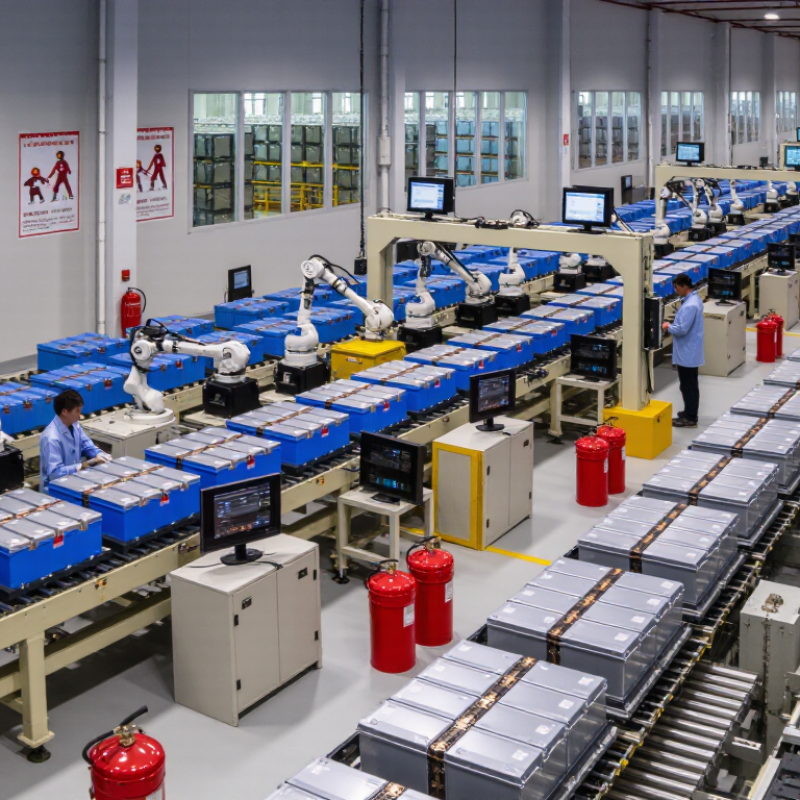
A leading lithium battery manufacturer is not defined by factory size alone. It is defined by repeatable engineering, controlled production, and honest technical communication. Experienced manufacturers track each cell from incoming inspection to final shipment. Their records include capacity results, internal resistance, welding checks, and formation data.
Look for practical quality evidence. A serious supplier can explain how it manages thermal performance, cycle life, and battery management systems. It should provide test reports, safety documentation, and clear production specifications. During evaluation, ask for sample data from several batches, not one perfect report. A pilot order can reveal packaging quality, labeling accuracy, and response speed.
Details matter.
Reliable factories inspect modules at multiple stages. They test charging behavior, discharge consistency, insulation, and protection functions under controlled conditions. They also understand the buyer’s operating environment, including temperature, storage time, installation space, and transport requirements. Compliance documents should match the destination market and the actual battery configuration.
No manufacturer is flawless. The strongest suppliers admit limitations and explain corrective actions. A delayed answer is sometimes more informative than a polished sales promise. Buyers should verify production capacity, warranty procedures, spare-part support, and change-control practices before signing long-term agreements. A small specification change can affect safety, service life, and field performance.
China Top Lithium Battery Manufacturers for Global Buyers - What Defines a Leading Lithium Battery Manufacturer in China
| Evaluation Dimension | Typical Technical Reference | What Leading Manufacturers Usually Demonstrate | Buyer Verification Points |
|---|---|---|---|
| Battery Chemistry | Lithium iron phosphate (LFP) and nickel-manganese-cobalt (NMC) are common lithium-ion chemistries. | Clear chemistry selection based on safety, energy density, operating temperature, cost, and application requirements. | Request cell chemistry documentation, safety data, performance curves, and application-specific test results. |
| Cell-to-Pack Energy Density | Commercial lithium-ion battery packs commonly fall within approximately 100–200 Wh/kg, depending on chemistry and pack design. | Published energy-density figures are supported by defined test conditions and distinguish cell-level results from pack-level results. | Confirm whether the stated figure is measured at cell, module, or complete-pack level and review the test temperature and discharge rate. |
| Cycle Life | Many LFP systems are specified for approximately 2,000–6,000 cycles; actual life depends on depth of discharge, temperature, and charging conditions. | Cycle-life claims include a defined end-of-life threshold, commonly 70% or 80% remaining capacity, rather than an unsupported cycle number. | Check the charge/discharge current, depth of discharge, ambient temperature, rest periods, and end-of-life definition. |
| Nominal Voltage | Typical nominal voltage is about 3.2 V for LFP cells and about 3.6–3.7 V for many NMC cells. | Battery configurations are clearly specified, such as series and parallel cell counts, nominal voltage, operating voltage range, and capacity. | Verify voltage compatibility with the charger, inverter, motor controller, and energy-management system. |
| Battery Management System | A BMS normally monitors voltage, current, temperature, state of charge, and protection events. | The BMS includes overcharge, over-discharge, overcurrent, short-circuit, and over-temperature protection, with configurable communication functions where required. | Review BMS protection thresholds, communication protocols, data logs, firmware controls, and fault-response behavior. |
| Safety Testing | UN 38.3 is widely used for the transport testing of lithium cells and batteries. | Products are tested against relevant transport, electrical, mechanical, and thermal safety requirements for the target market. | Request current test reports, certificates, report numbers, product configurations, and laboratory information. |
| Quality Management | ISO 9001 is an internationally recognized quality-management-system standard. | Documented incoming-material inspection, process controls, traceability, final testing, corrective actions, and quality audits are in place. | Verify certificate scope, validity, production-site address, inspection records, and batch-level traceability. |
| Production Consistency | Cell matching, welding quality, insulation, sealing, and thermal management directly affect pack reliability. | Automated or controlled production processes are combined with end-of-line testing and statistical process monitoring. | Ask for process flow charts, inspection plans, defect-rate records, calibration records, and sample test data. |
| Operating Temperature | Many lithium battery systems specify charging near 0°C to 45°C and discharging across a wider range, subject to the product design. | The manufacturer defines operating limits, low-temperature charging protection, thermal management, and derating behavior. | Confirm temperature limits for the complete pack, not only the cells, and request hot, cold, and thermal-abuse test results. |
| Customization Capability | Customization may involve voltage, capacity, enclosure, connectors, communication, mounting, thermal design, and software parameters. | Engineering support covers requirements analysis, prototype development, design validation, pilot production, and controlled design changes. | Request drawings, specifications, validation plans, prototype timelines, minimum order quantities, and change-control procedures. |
| Warranty and After-Sales Support | Commercial warranties often define a period, an energy-throughput limit, a cycle limit, or a retained-capacity threshold. | Warranty terms clearly state exclusions, operating conditions, claim procedures, technical support channels, and replacement responsibilities. | Review warranty duration, capacity-retention terms, response times, spare-parts policy, and remote diagnostic support. |
| Supply and Export Readiness | Lithium battery shipments require appropriate packaging, documentation, labeling, and transport compliance. | The supplier provides stable production capacity, export documentation, packaging specifications, lead-time commitments, and shipment support. | Confirm monthly capacity, lead time, Incoterms, packaging test results, shipping documents, and contingency plans. |
| Total Cost of Ownership | Purchase price is only one component; replacement frequency, efficiency, installation, maintenance, warranty, and recycling also affect lifetime cost. | The supplier provides transparent technical and commercial assumptions for comparing usable energy, service life, efficiency, and support costs. | Calculate cost per usable kWh or operating cycle using verified capacity, efficiency, cycle-life, warranty, and logistics data. |
FAQS
Repeatable engineering, controlled production, and honest technical communication matter more than factory size. Details matter.
Request capacity results, internal resistance, welding checks, formation data, and inspection records from several production batches.
Ask about thermal performance, charging behavior, discharge consistency, insulation, and protection functions under controlled conditions.
One perfect report may hide variation. Test several units after charging, discharging, and resting.
Check legal registration, production address, export experience, test reports, safety documents, and certification validity.
Inspect cell storage, humidity control, welding equipment, final inspection stations, and batch-recording methods.
Very important. A reliable supplier should trace cells from incoming inspection to packed cartons.
It should define coverage, failure response, replacement terms, support procedures, and spare-part availability.
Not perfectly. Temperature, storage time, installation space, and usage patterns can change real-world results.
Conflicting documents, delayed answers, inaccurate labels, poor packaging, or unexplained specification changes deserve attention. I once trusted presentation too much.
Conclusion
China has become a major source of Lithium Battery products for global buyers, offering a wide range of technologies, including lithium-ion, lithium iron phosphate, pouch, cylindrical, and prismatic formats. A leading manufacturer is defined by stable production capacity, strong research and development, reliable safety controls, consistent cell performance, and the ability to provide complete battery systems for applications such as energy storage, electric mobility, industrial equipment, and consumer devices.
When evaluating suppliers, international buyers should review certifications, testing procedures, traceability systems, warranty terms, and quality management practices. Export experience, packaging compliance, shipping capabilities, and clear communication are equally important. Buyers should also assess whether a supplier can support customized voltage, capacity, dimensions, connectors, battery management systems, and branding requirements. A dependable partnership is built through transparent documentation, sample testing, production audits, realistic delivery schedules, and responsive after-sales service. By comparing technical expertise, product quality, customization flexibility, and international support, buyers can select a suitable Chinese Lithium Battery supplier for long-term cooperation.