Tier-1 Matched Photovoltaic Modules for High-Voltage ESS
Precision-engineered solar generation portfolios optimized for high-voltage DC bus coupling, dual-glass durability, and multi-megawatt commercial & industrial energy storage projects.
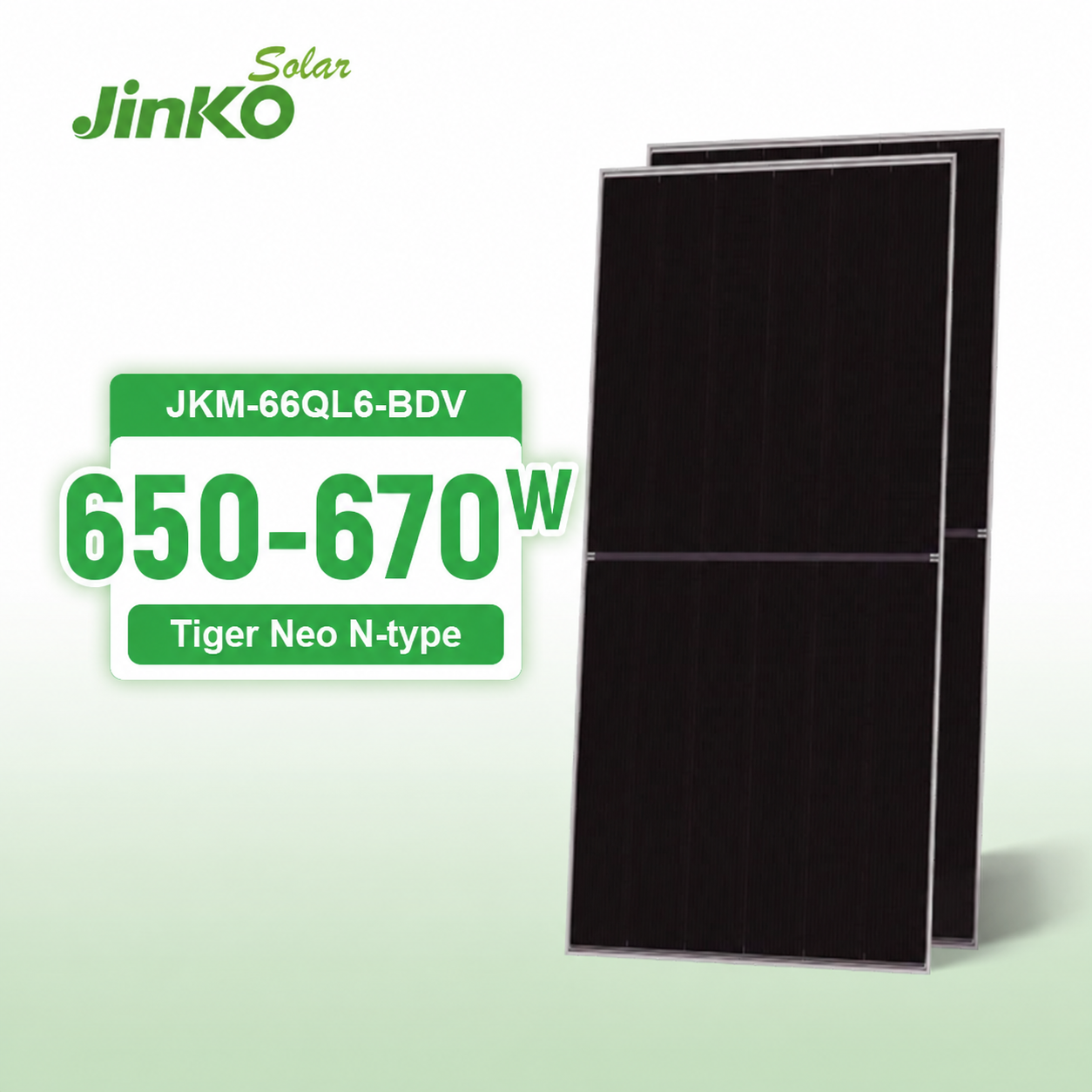
Jinko N-Type 650W-670W TOPCon Bifacial Module for Commercial
- Module Power: 650W - 670W
- Cell Architecture: N-Type TOPCon
- Bifaciality Factor: 80% ± 5%
- ESS Compatibility: 1000V/1500V String
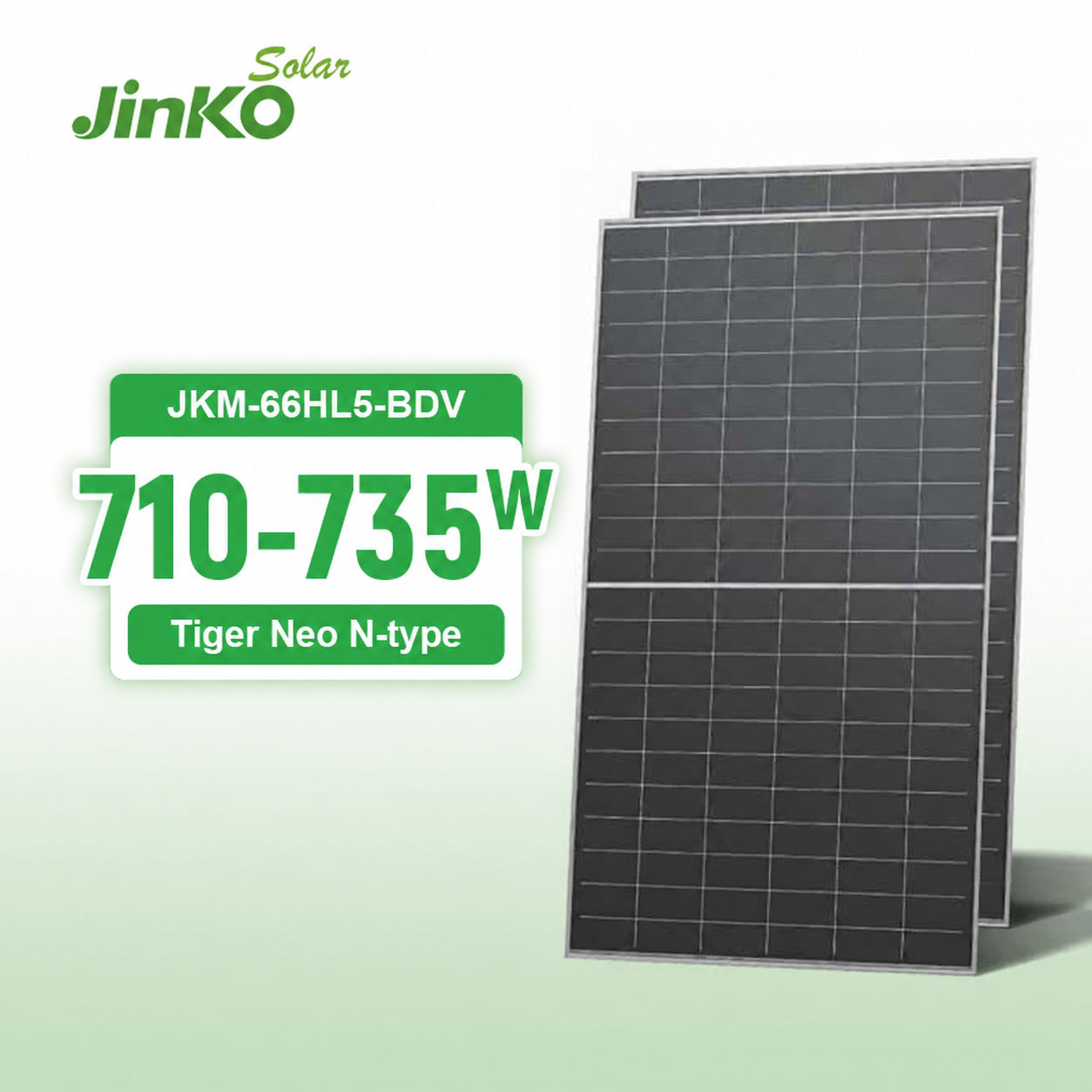
Jinko N-Type Bifacial 710W-720W Dual Glass Industrial Solar Panels
- Peak Power: 710W - 720W
- Glass Structure: 2.0mm Dual Glass
- Max Voltage: 1500V DC IEC
- Application: Industrial Microgrid
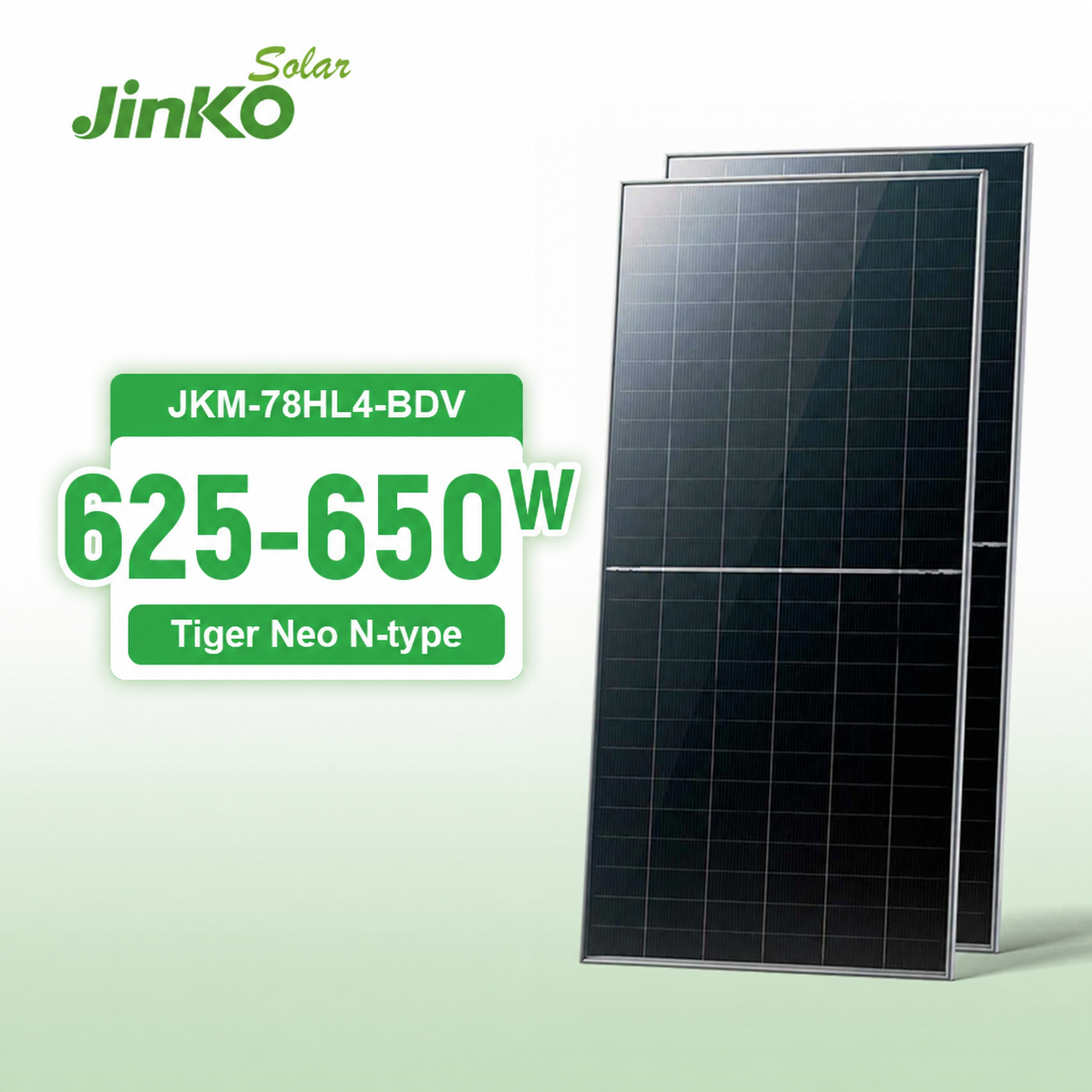
Jinko Mono 625W-650W Bifacial Dual Glass Solar Module
- Module Output: 625W - 650W
- Efficiency: Up to 22.8%
- Degradation: 1% 1st Yr / 0.4% Ann.
- System Type: C&I Rooftop ESS
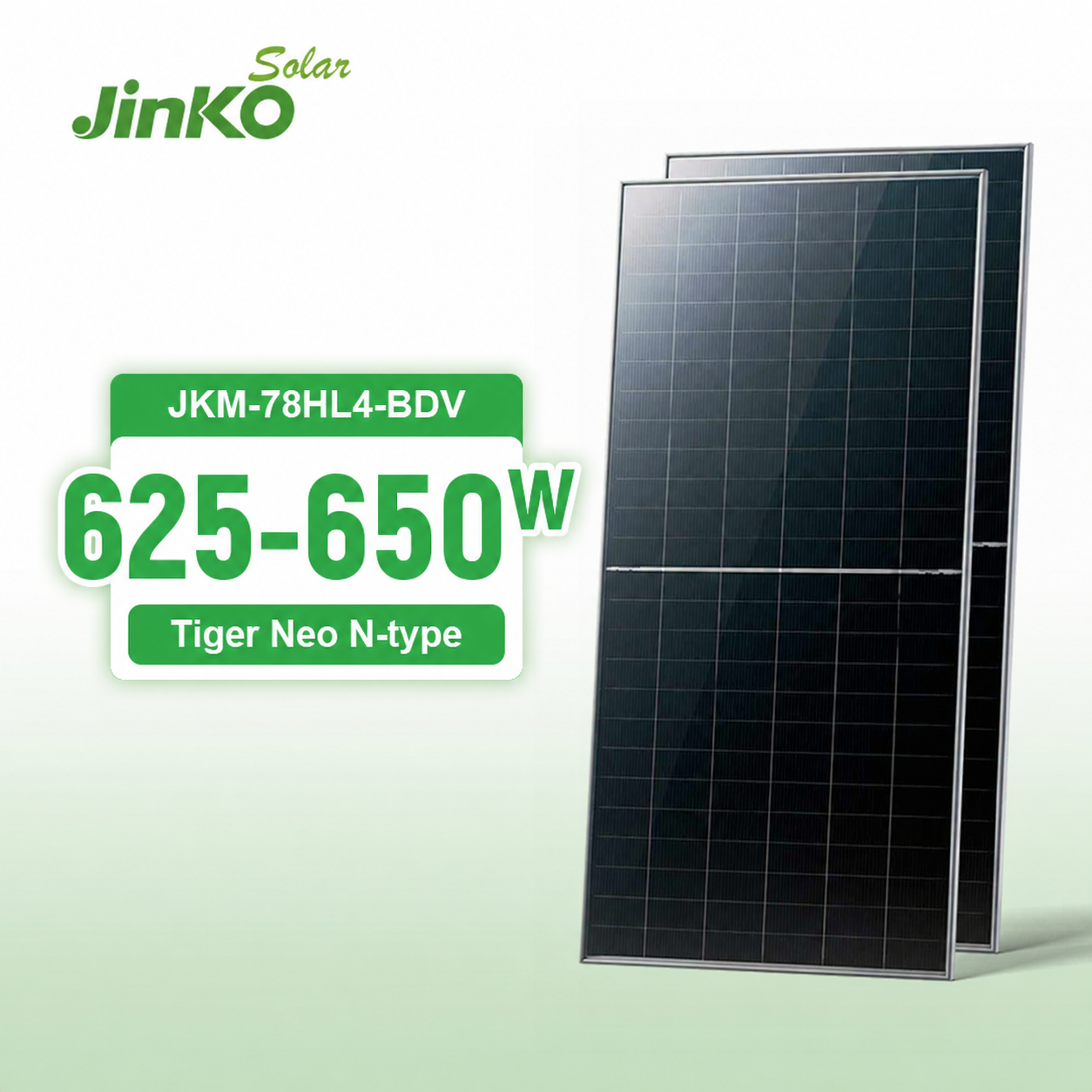
Jinko Bifacial 630W-640W Dual Glass Monocrystalline Module
- Power Range: 630W - 640W
- Load Capacity: 5400Pa / 2400Pa
- Junction Box: IP68 Waterproof
- Inverter Sync: High-Voltage Hybrid
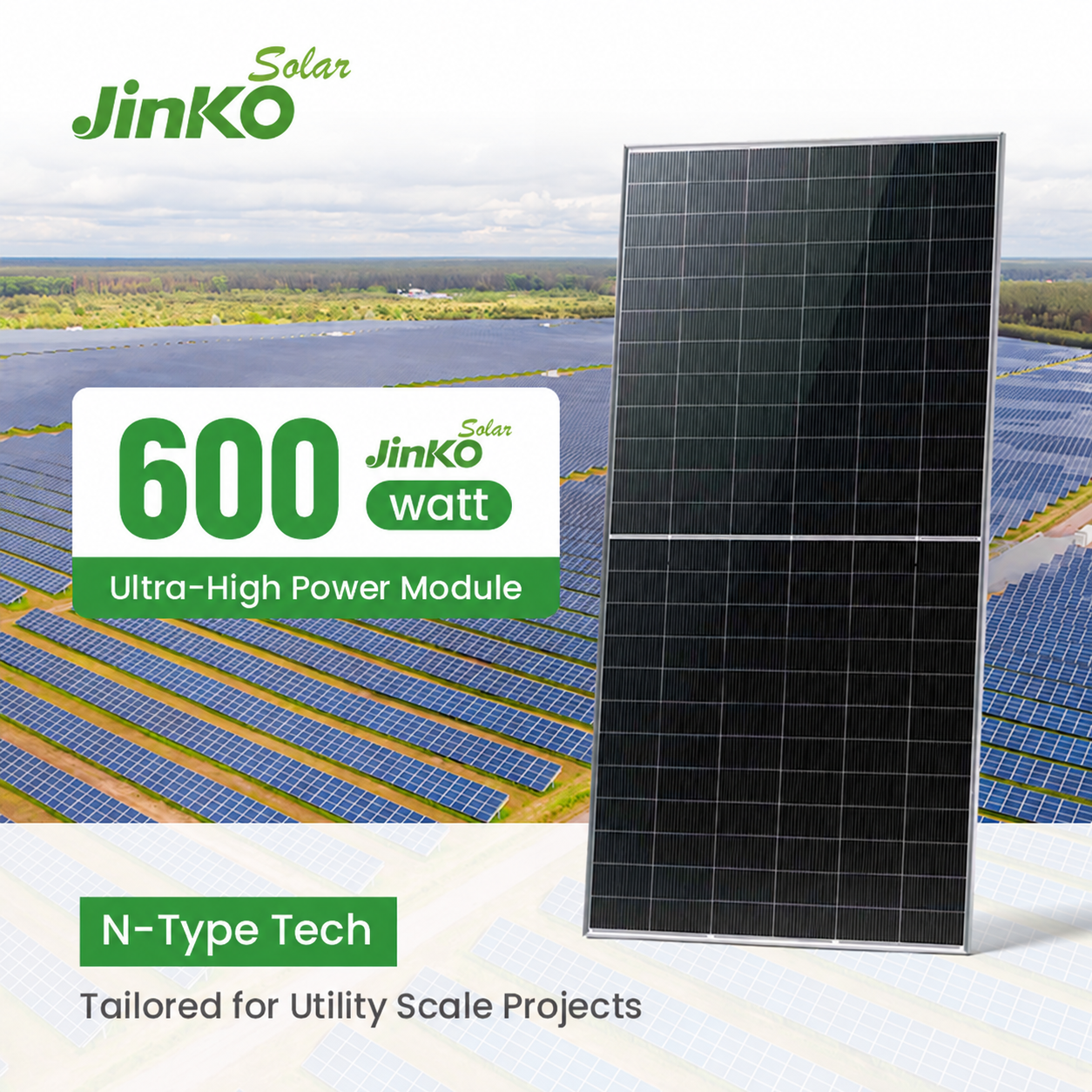
Jinko 580W-600W N-Type Double Glass Commercial Solar Panel
- Output Power: 580W - 600W
- Temp. Coeff (Pmax): -0.30% / °C
- Safety Class: Class A Fire Rating
- Optimal Coupling: HV Battery Inverters
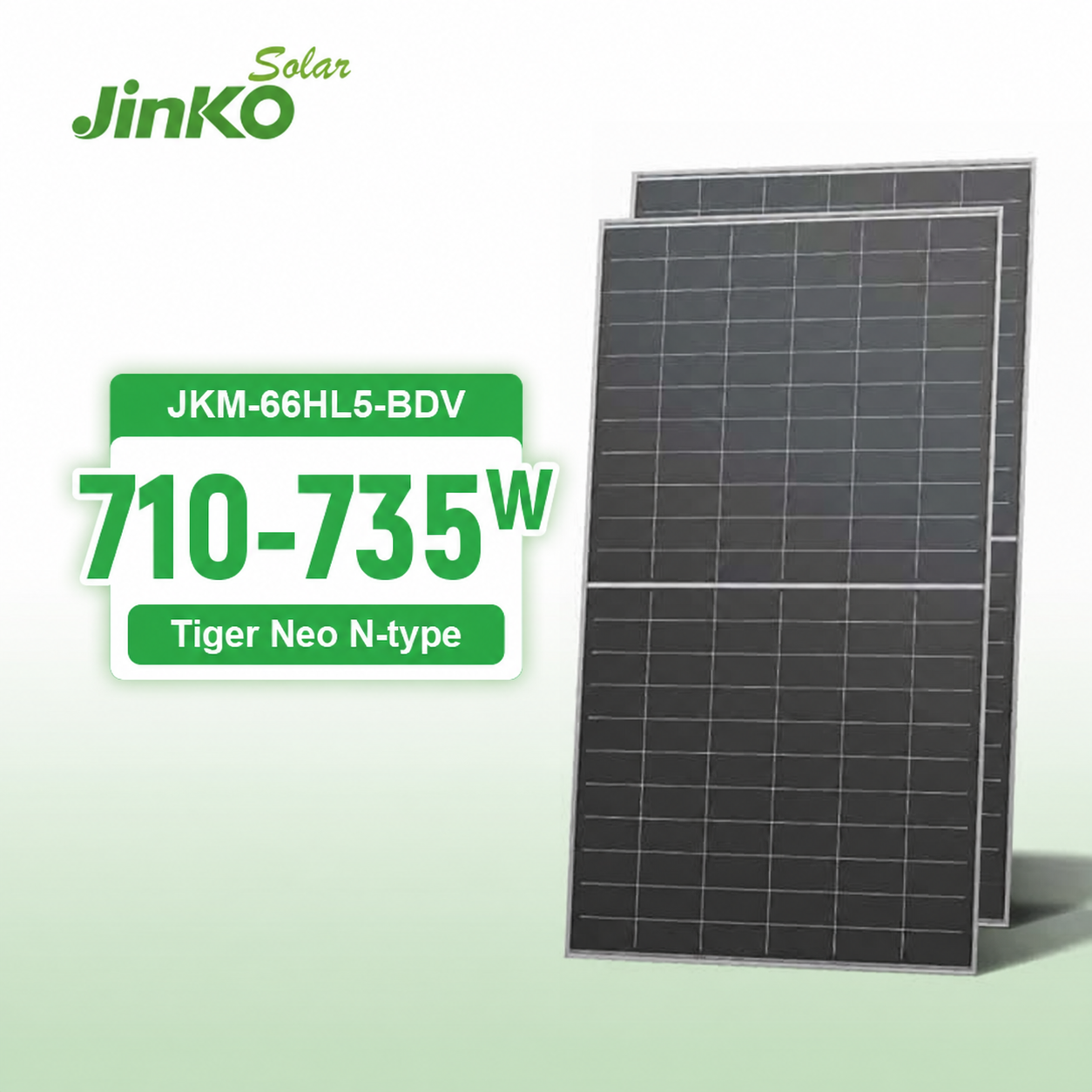
Jinko N-Type TOPCon 700W-730W Bifacial Commercial Solar Panel
- Max Wattage: 700W - 730W
- Technology: SMBB Half-Cut TOPCon
- DC Bus Pairing: 1500V Centralized BESS
- Anti-PID: Guaranteed by TÜV
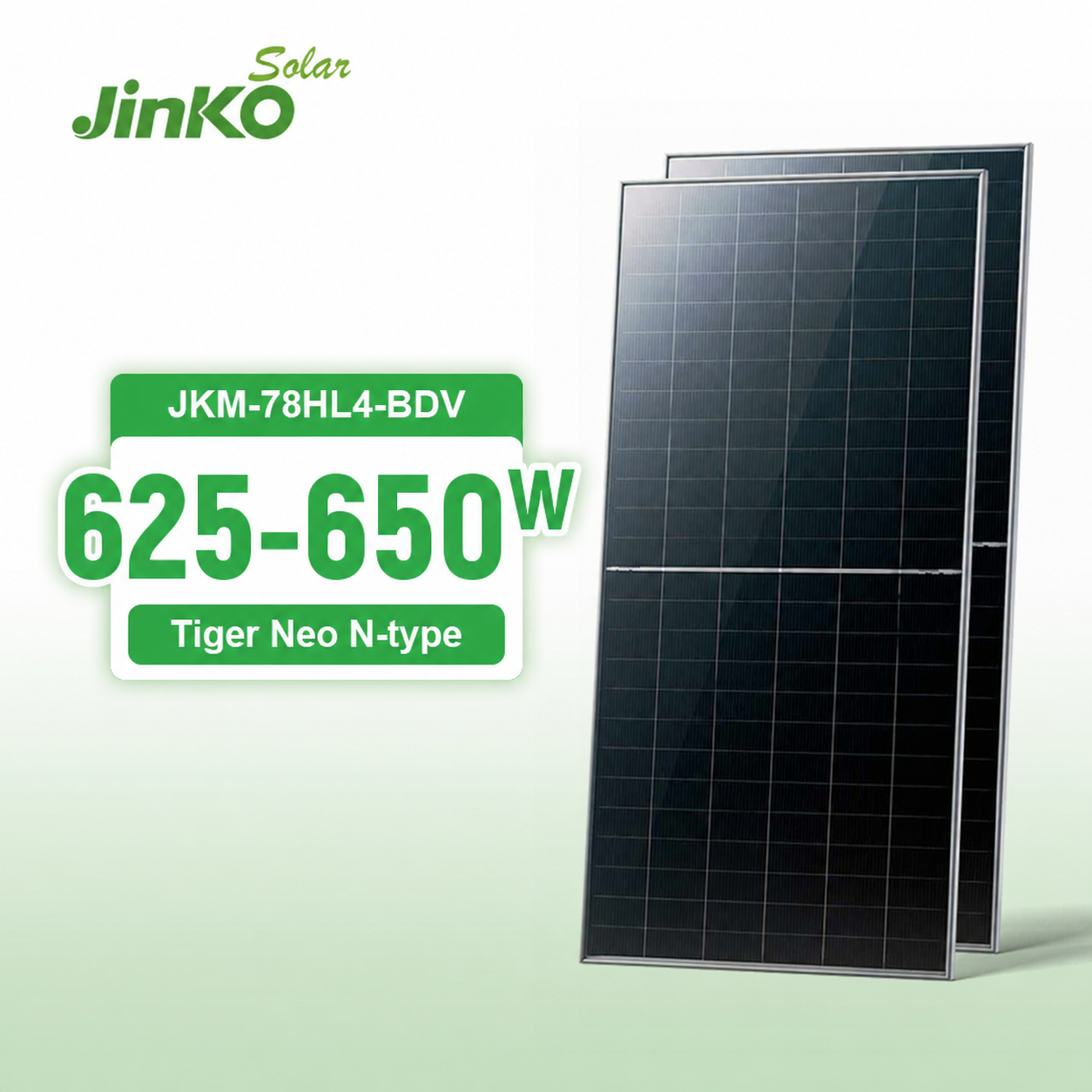
Jinko N-Type Bifacial 630W-650W High Efficiency Solar Module
- Power Classes: 630W - 650W
- Encapsulation: POE/EVA Anti-UV
- Connector: MC4 Original Compatible
- BESS Cycle Life: Matches 6000+ Cycles
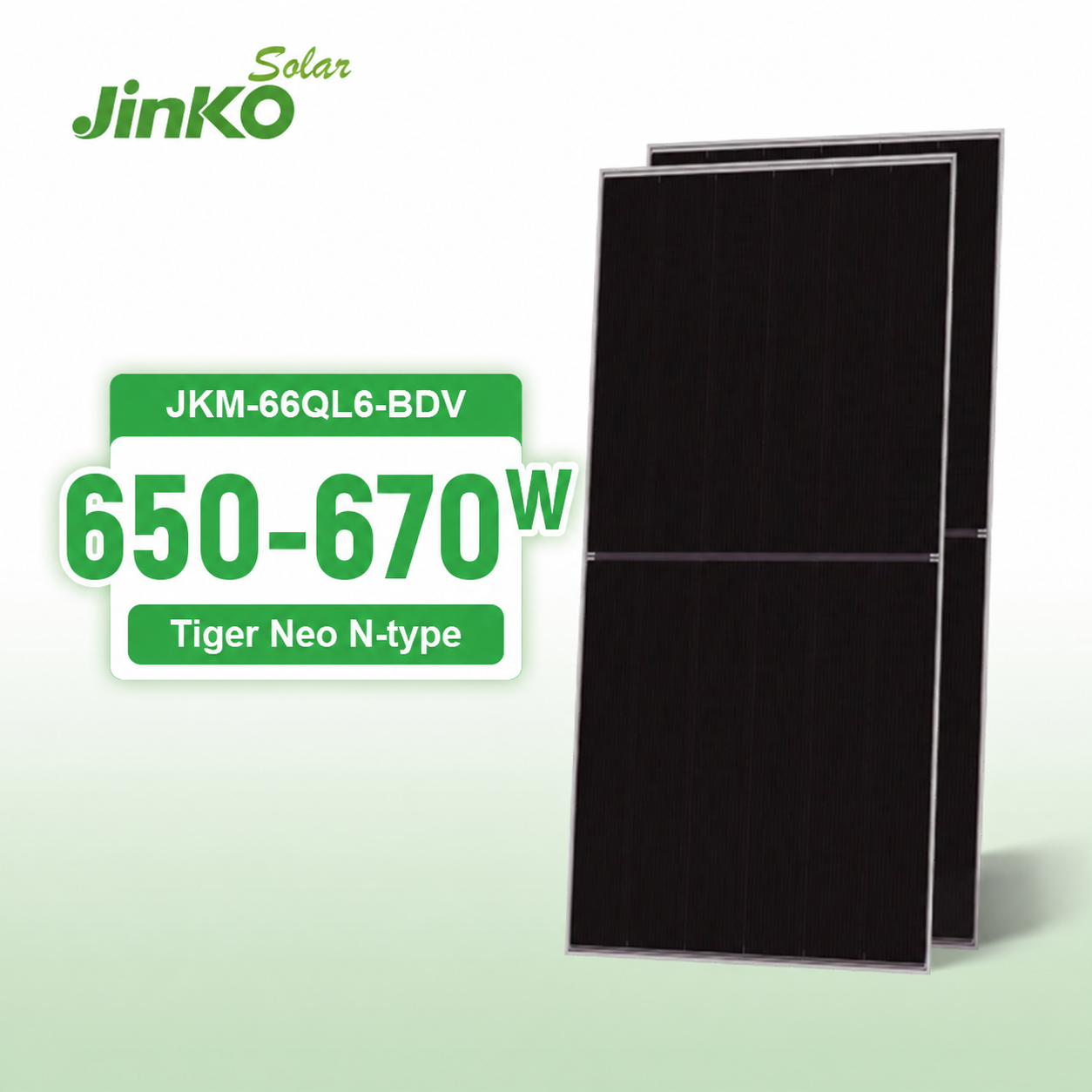
Jinko 650W-670W Double Glass N-Type Solar Panel for Farms
- Nominal Output: 650W - 670W
- Corrosion Proof: Ammonia & Salt Spray
- Rear Generation: Up to +25% Yield
- Deployment: Agricultural Off-Grid
The Paradigm Shift to High-Voltage (HV) Energy Storage Architecture
As commercial, industrial, and distributed utility projects escalate in scale, the limitations of traditional 48V low-voltage (LV) battery topologies have become an engineering bottleneck for EPCs, solar developers, and commercial asset managers. Low-voltage architectures dictate enormous currents to transfer equivalent power (P = V × I). In a 100kW low-voltage system operating at a nominal 48V–51.2V, the DC current reaches approximately 2000 Amperes. Handling such massive currents demands massive copper busbars, heavy multi-core DC cables, and encounters severe thermal dissipation penalties due to ohmic Joule losses ($P_{loss} = I^2R$).
By transitioning to High-Voltage Energy Storage Systems (HV-ESS)—operating between 200V DC and exceeding 1000V/1500V DC—the operating current is reduced by a factor of 4 to 20. A 100kW system operating on an 800V DC bus requires only 125A of continuous current. This fundamental thermodynamic shift radically improves conversion efficiency, lowers cable diameter, mitigates voltage drop across long transmission runs, and enables direct DC coupling with modern three-phase hybrid inverters without bulky DC-DC boost transformers.
| Performance Parameter | Standard Low Voltage ESS (48V / 51.2V) | Commercial High Voltage ESS (200V - 1000V) | Engineering Benefit of HV Configuration |
|---|---|---|---|
| Operating DC Current (100kW Load) | ~1,950 A - 2,080 A | 100 A - 250 A | ~88% reduction in continuous operating current |
| Cable Gauge & Copper Mass | Multi-strand 4/0 AWG or massive busbars | Standard 35mm² - 70mm² flexible cable | Drastic reduction in BOS weight and balance of plant cost |
| Inverter DC-to-AC Efficiency | 88% - 92% (Heavy internal stepping) | 96.5% - 98.4% (Direct transformerless link) | Up to +6% higher energy delivered per charge cycle |
| BMS Architectural Complexity | Single-tier BMS or masterless parallel | 3-Tier Industrial Architecture (BMU + BCU + HMI) | Millisecond isolation, high-precision telemetry, arc detection |
| Scalability & Footprint | Limited parallel branches (Current imbalance) | Modular series racks stacking up to MWh blocks | High energy density per square meter, plug & play rack design |
| Regulatory & Grid Code Compliance | Residential safety standards (UL 1973) | CE-LVD/EMC, IEC 62619, UL 9540A, VDE-AR-N 4105 | Direct approval for commercial grid interconnection |
String-Level Battery Management & Thermal Integrity
A critical engineering consideration in CE-certified High Voltage ESS design is the control of individual cell variations across high-voltage series strings. In an 800V LFP rack consisting of approximately 250 series-connected cells (3.2V nominal per LiFePO4 cell), a single weak cell can precipitate string premature cut-off during charging or discharging. Our integrated High Voltage ESS racks deploy a distributed Three-Tier Battery Management System (BMS):
- Tier 1 (Cell Level Monitoring Units - CMU): Embedded directly on the busbars, sampling individual cell voltage at ±1.5mV accuracy and temperature at ±0.5°C, with bi-directional active cell balancing up to 5A.
- Tier 2 (Rack Battery Control Unit - BCU): Supervises overall string voltage, current hall sensors, pre-charge circuitry, positive/negative contactors, pyro-fuses, and DC circuit breaker trip units.
- Tier 3 (Master System Controller / EMS Gateway): Coordinates multi-rack clustering via high-speed CAN 2.0B and Modbus TCP/IP, managing load-sharing, SOC recalibration, and real-time handshaking with hybrid PCS units.
Why Global Distributors & EPCs Partner With Us
Mitigating cross-border procurement risks through pre-shipment compatibility validation, factory-grade inspection protocols, and verified export certification.
Hardware-in-the-Loop Protocol Matching
Before factory dispatch, every high-voltage BMS is matched and tested against targeted inverter protocols (Deye, Growatt, SMA, Victron, GoodWe) over CAN/RS485 to ensure 100% plug-and-play communication without field firmware modification.
Rigorous Pre-Shipment QC & Cell Grading
Only Grade-A prismatic LiFePO4 cells (CATL/EVE/Gotion Tier-1 sources) with identical internal resistance (IR ≤ 0.2mΩ) and tight capacity grouping undergo automated sorting, 100% full-cycle aging tests, and multi-angle infrared thermography.
Class 9 Dangerous Goods Sea Logistics
Full UN38.3 test summaries, MSDS dossiers, and certified packaging conforming to IMO maritime dangerous goods regulations. We execute consolidated container loads uniting panels, high-voltage racks, and inverters under unified shipping marks.
Full CE & Grid Interconnection Pass-Through
Our complete systems carry genuine manufacturer-backed CE-LVD (EN 62477-1), CE-EMC (EN 61000-6-2/4), IEC 62619, and IEC 61215 certifications, accompanied by complete schematics, single-line diagrams, and parameter commissioning handbooks.
Future Trends in High-Voltage ESS Procurement
Strategic technology developments reshaping the global energy storage procurement landscape over the next five years.
Standardization of 314Ah+ LFP Cells & 1500V Racks
The industry is transitioning rapidly from traditional 280Ah cells to 314Ah and 320Ah prismatic form factors. When configured in 1500V high-voltage architectures, this shift elevates standard 20ft containerized storage capacity from 3.35MWh to over 5.0MWh, delivering up to a 20% reduction in civil construction, footprint, and auxiliary auxiliary power overheads.
Liquid Cooling Displacing Forced-Air in C&I ESS
Liquid-cooled battery enclosures featuring micro-channel cold plates maintain inter-cell temperature deltas within ≤2.5°C, compared to ≤6°C in forced-air systems. This thermal consistency prolongs high-voltage battery life cycles by over 22%, reduces auxiliary thermal consumption by 30%, and prevents thermal runaway progression under demanding 1C charge/discharge profiles.
Deflagration Venting & Gas-Phase Multi-Point Detection
International permitting bodies increasingly enforce NFPA 855 and UL 9540A large-scale fire compliance for commercial installations. Next-generation high-voltage ESS racks incorporate pack-level aerosol or Novec 1230 fire suppression paired with CO and H2 gas sniffer sensors capable of triggering automated circuit isolation minutes prior to smoke generation.
Frequently Asked Procurement & Engineering Questions
Direct technical answers addressing system sizing, electrical matching, import safety compliance, and international shipping protocols.
What distinguishes CE-Certified High Voltage ESS from standard residential low-voltage batteries?
How do you guarantee BMS protocol communication between your HV battery racks and hybrid inverters?
What documentation is required to clear customs for High-Voltage LFP battery shipments?
1. UN38.3 Test Report and Summary Certificate (T1-T8 shock, thermal, vibration, and external short-circuit testing).
2. Globally Harmonized System (GHS) Material Safety Data Sheet (MSDS) in English.
3. Inspection Certificate for Packaging of Dangerous Goods (DG Container Packing Certificate).
4. Verified CE Declaration of Conformity (DoC) referencing the Low Voltage Directive (LVD) and EMC Directive.
5. Sea Freight Transport Identification Report issued by an accredited laboratory (e.g., Shanghai Institute of Chemical Industry).
Can High Voltage ESS racks be scaled modularly in the field as commercial load demands expand?
How does high-voltage DC bus coupling compare to AC-coupled storage for commercial solar farms?
What fire safety mechanisms are integrated into your high-voltage battery racks?
1. Cell-Level Stability: High-purity LiFePO4 chemistry with thermal decomposition thresholds above 270°C (preventing catastrophic oxygen release inherent to NMC chemistries).
2. Internal Pack Protection: Flame-retardant structural insulation (UL 94 V-0 rated) and integrated directional pressure relief vents on each cell.
3. Automated Fire Suppression: Rack-level aerosol fire suppression generators or direct-injection perfluorohexanone (Novec 1230) nozzles linked to thermal sensors.
4. Electrical Disconnect: High-speed DC pyro-fuses and motorized contactors capable of breaking short-circuit currents up to 25kA within 10 milliseconds.