Featured Commercial & Utility Photovoltaic Modules
Rigorous bill-of-materials traceability, Tier-1 manufacturing consistency, and guaranteed low-degradation solar panels optimized for distributed generation, industrial rooftops, and ground-mount utility arrays.
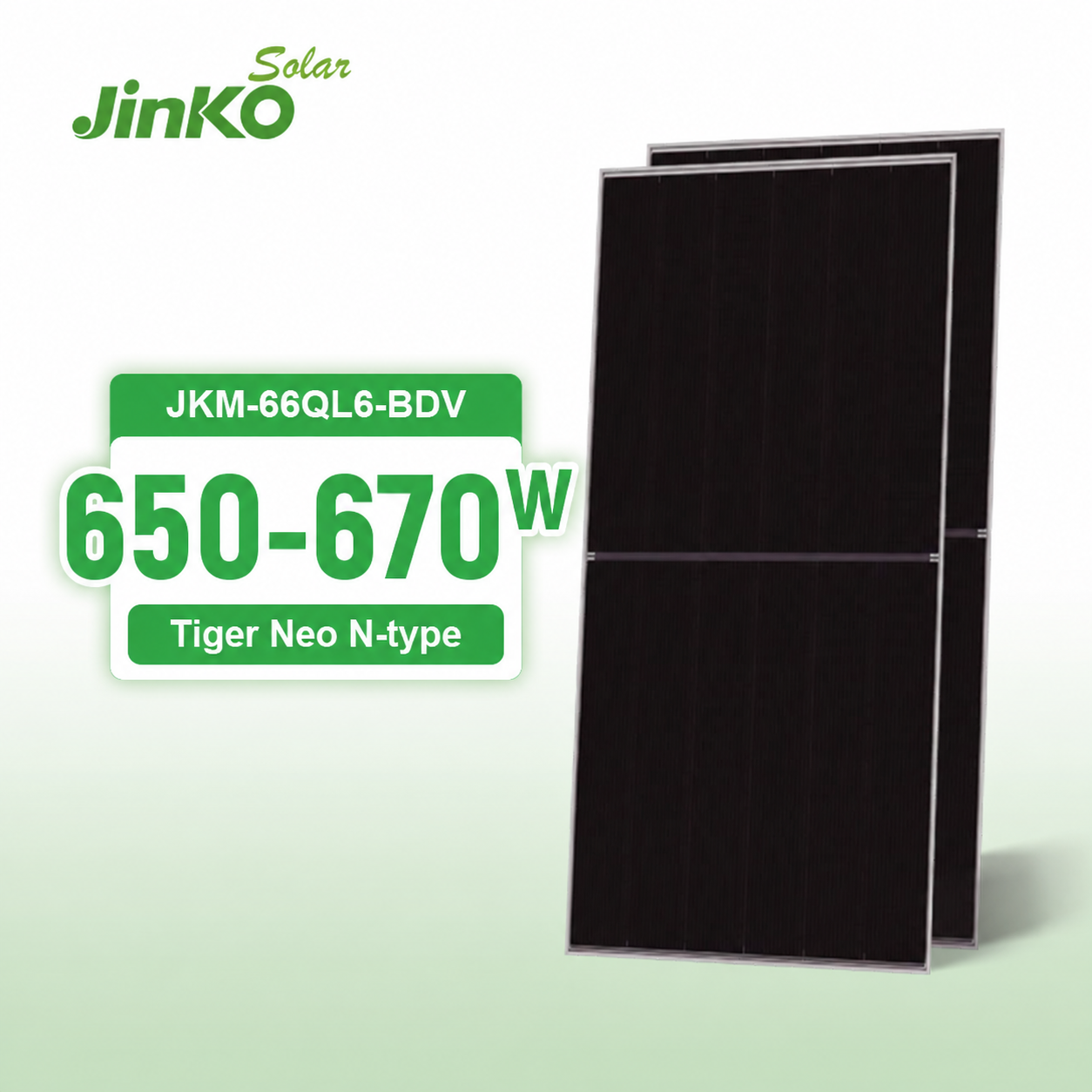
Jinko Bifacial Panneau Solaire 650 w 650W 660W 670W Dual Glass Monocrystalline Solar Module for Rooftop
Ultra-high wattage dual-glass mono module with enhanced mechanical load capacity, designed for harsh rooftop environments and maximum albedo yield.
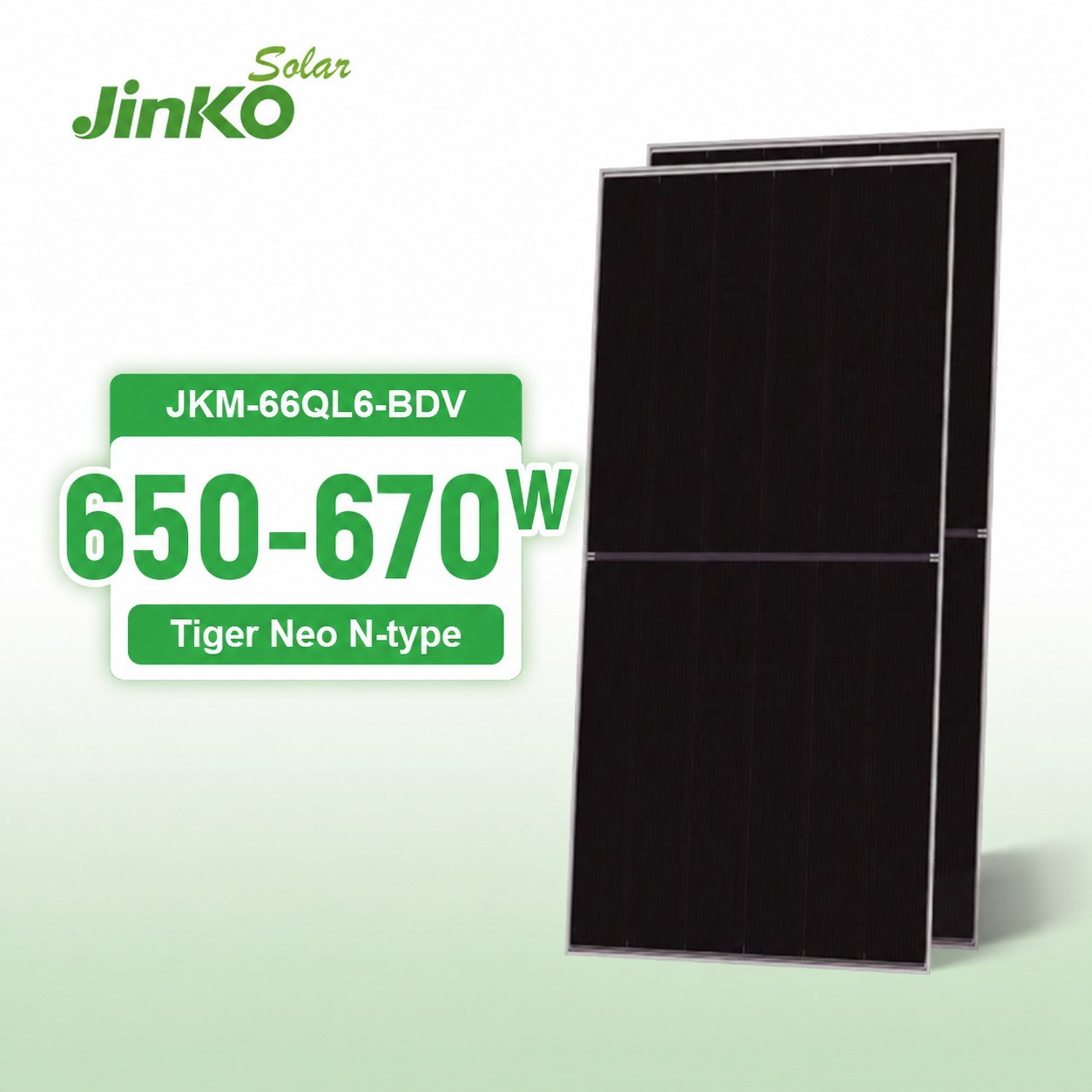
Jinko Panneau Solaire 660w 650W 660W 670W N Type Bifacial Dual Glass Photovoltaic Panel for Industrial
Optimized temperature coefficient (-0.30%/°C) delivering superior kilowatt-hour generation in high-temperature industrial enterprise installations.
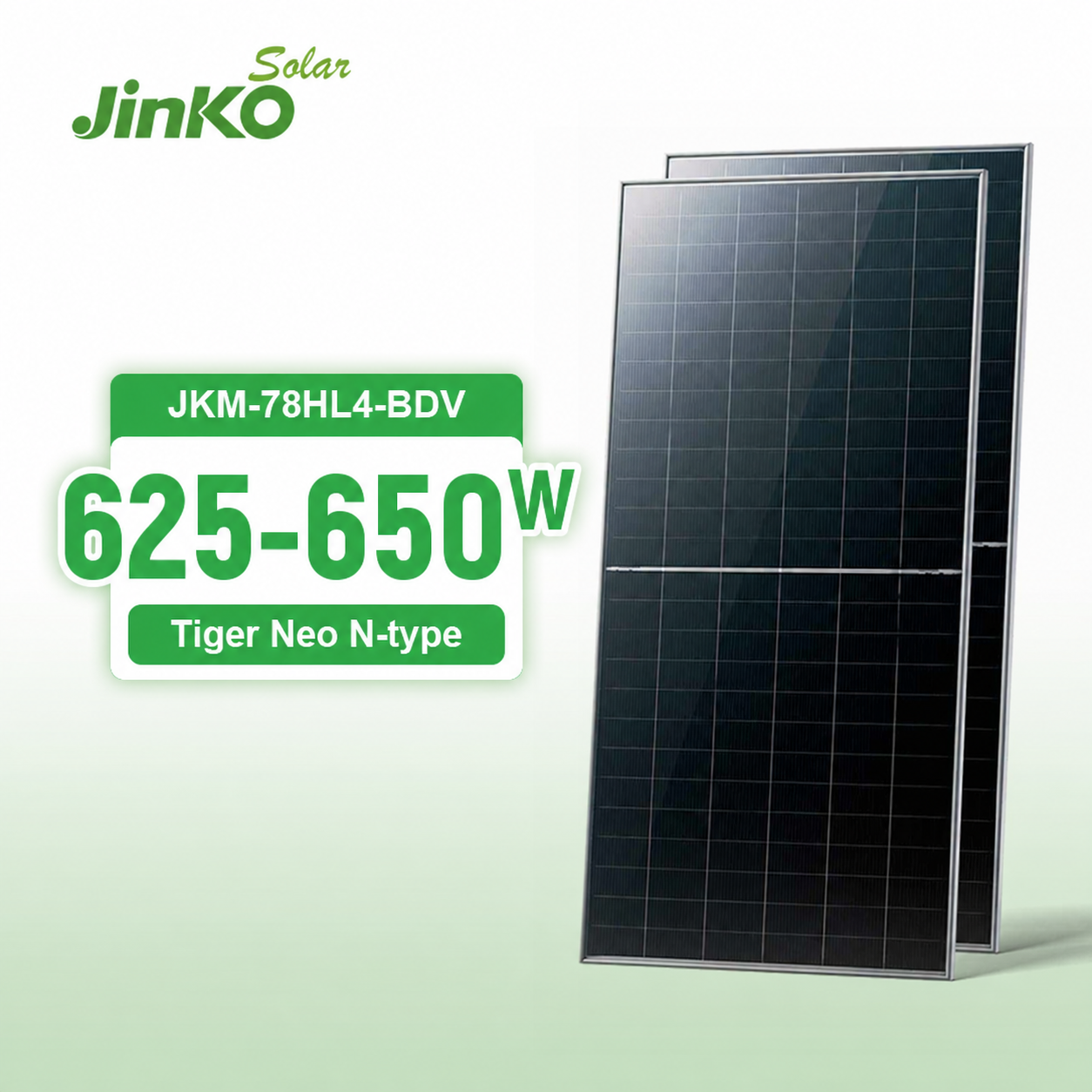
Jinko N Type Bifacial Solar Modules 650W 630W 640W Dual Glass Photovoltaic Panel for Industrial
Built with high-density multi-busbar technology to minimize microcrack expansion and maximize energy capture on commercial flat roofs.
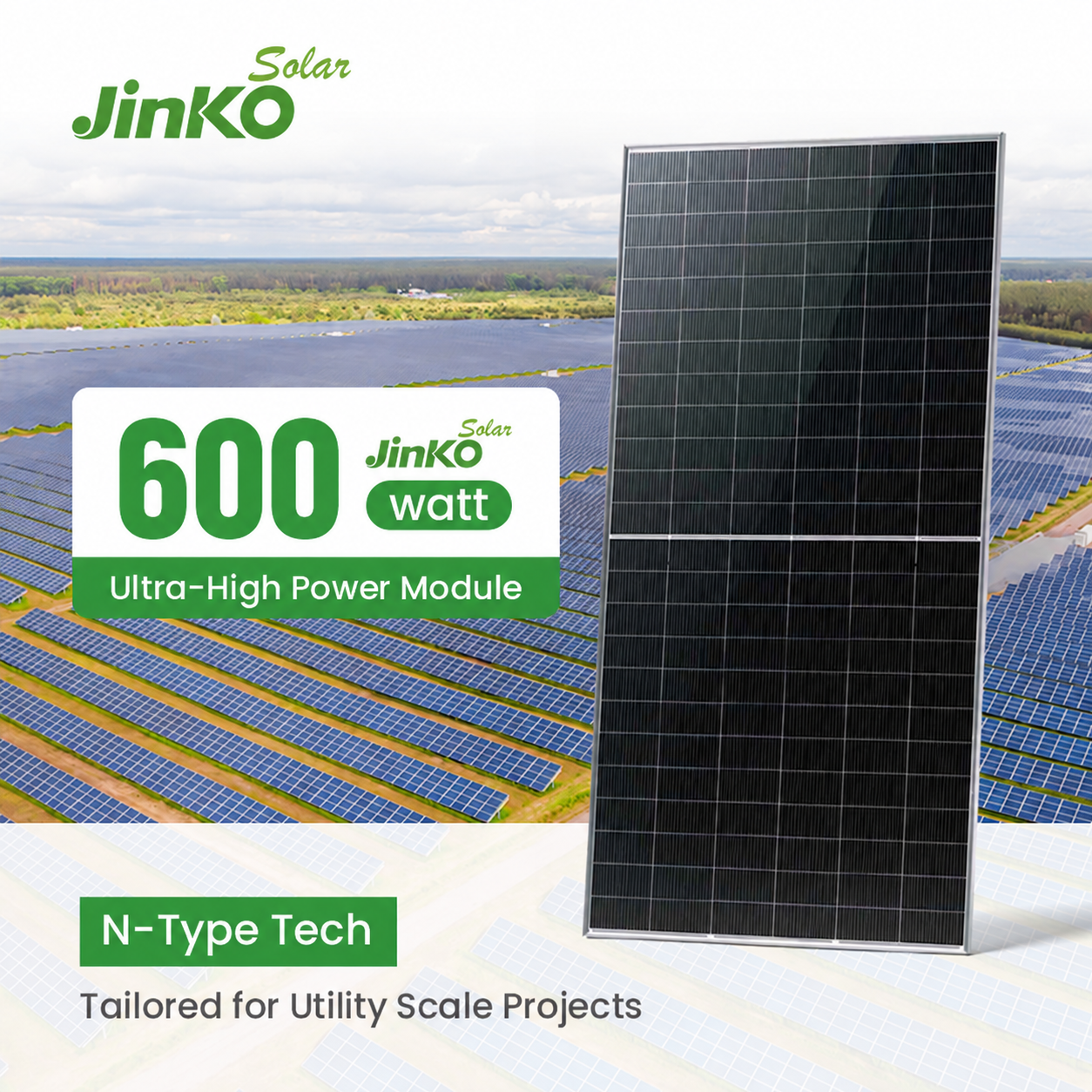
Jinko N Type Bifacial Photovoltaic Panels 600W 585W 595W TOPCon Solar Module for Commercial
Versatile form-factor engineered to lower Balance-of-System (BOS) electrical cabling costs and racking expenses across medium-scale installations.
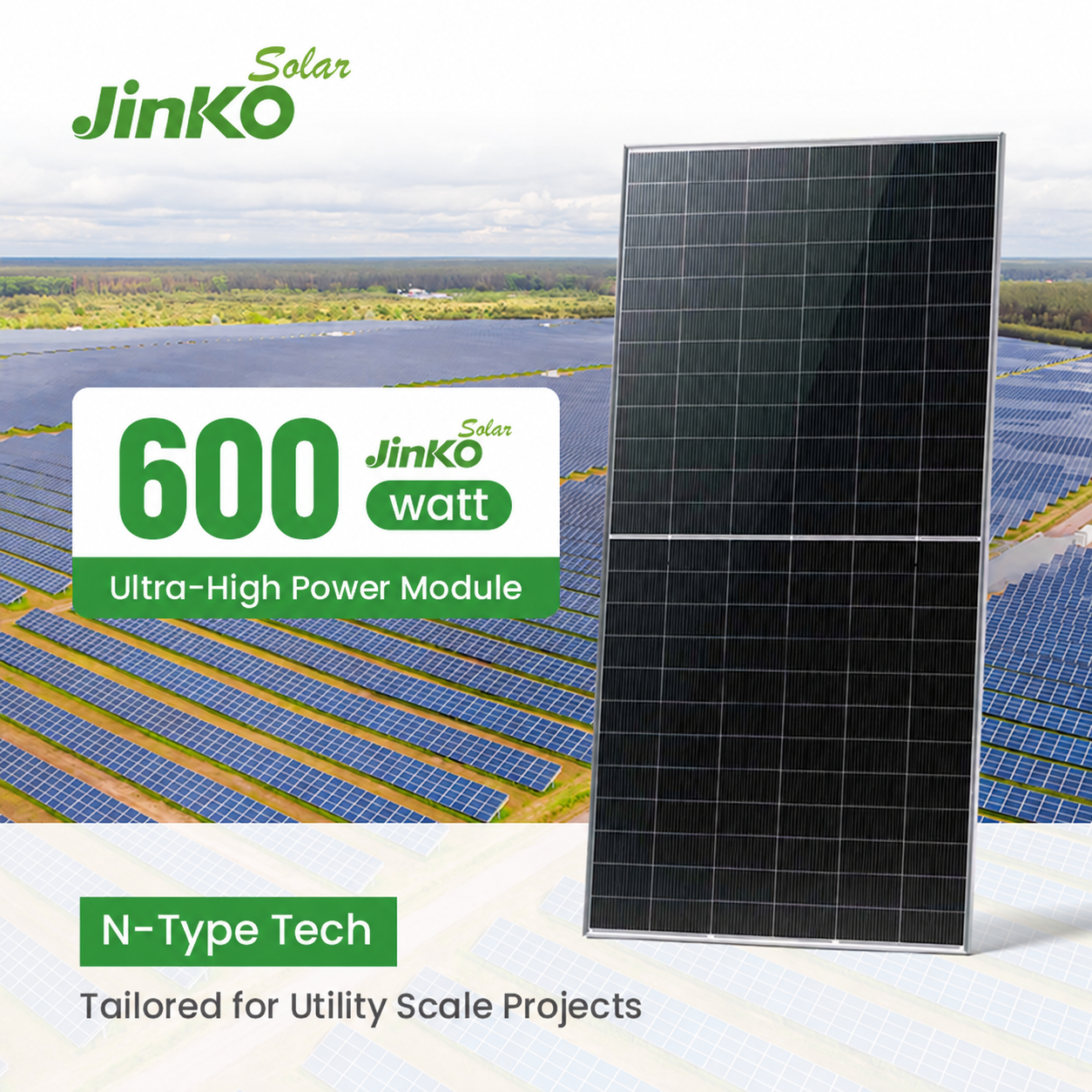
Jinko N Type Solar Modules 600W 580W 585W 590W Bifacial Monocrystalline High Efficiency PV Panel for Solar Farm
High PID-resistance encapsulation material combined with optimized open-circuit voltage matching for 1500V central inverter tracker systems.
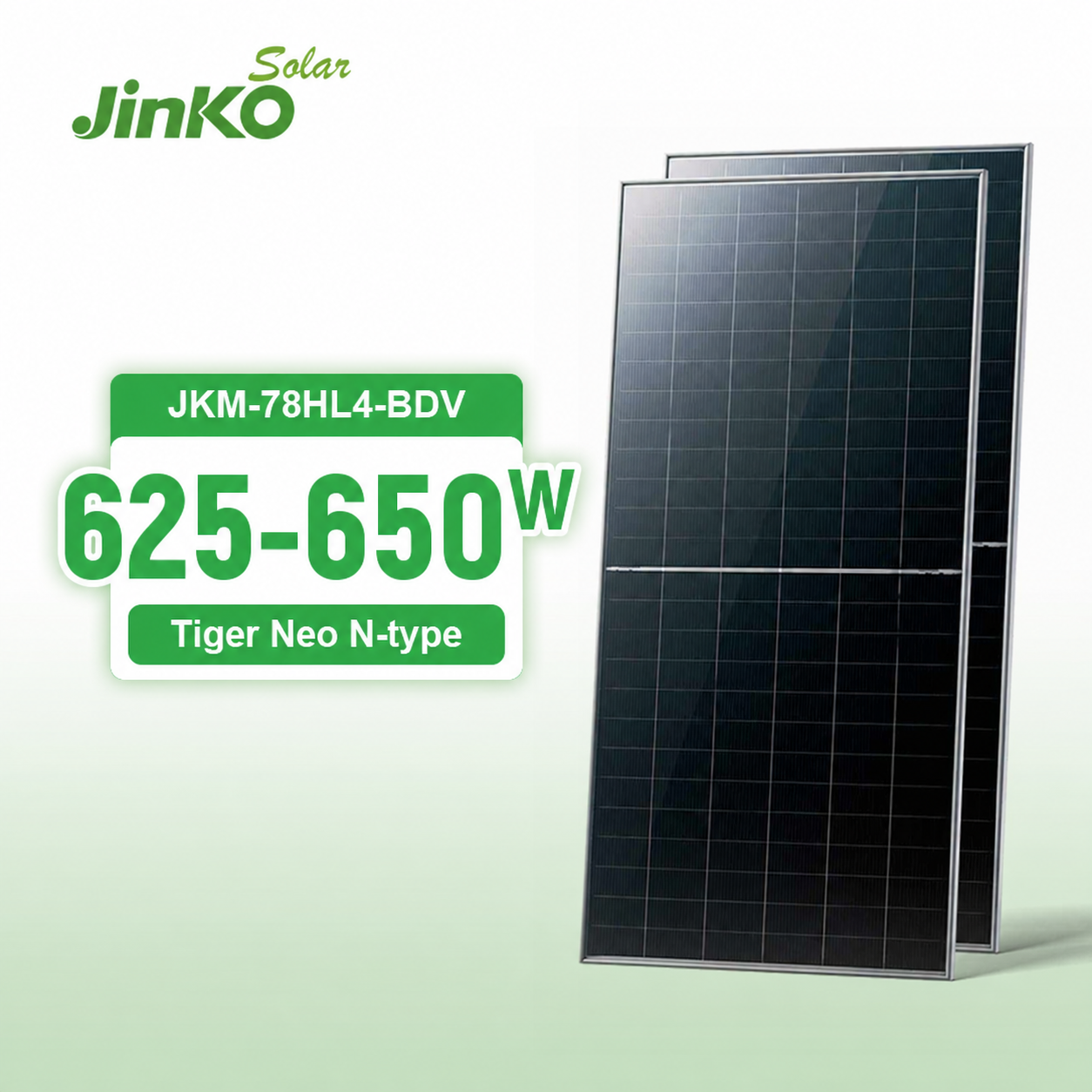
Jinko N Type Pv Module 650W 625W 645W Bifacial Photovoltaic Module Panneau Solaire for Commercial
Near-zero light-induced degradation with advanced wafer passivation, delivering extended lifecycle performance for long-term commercial PPAs.
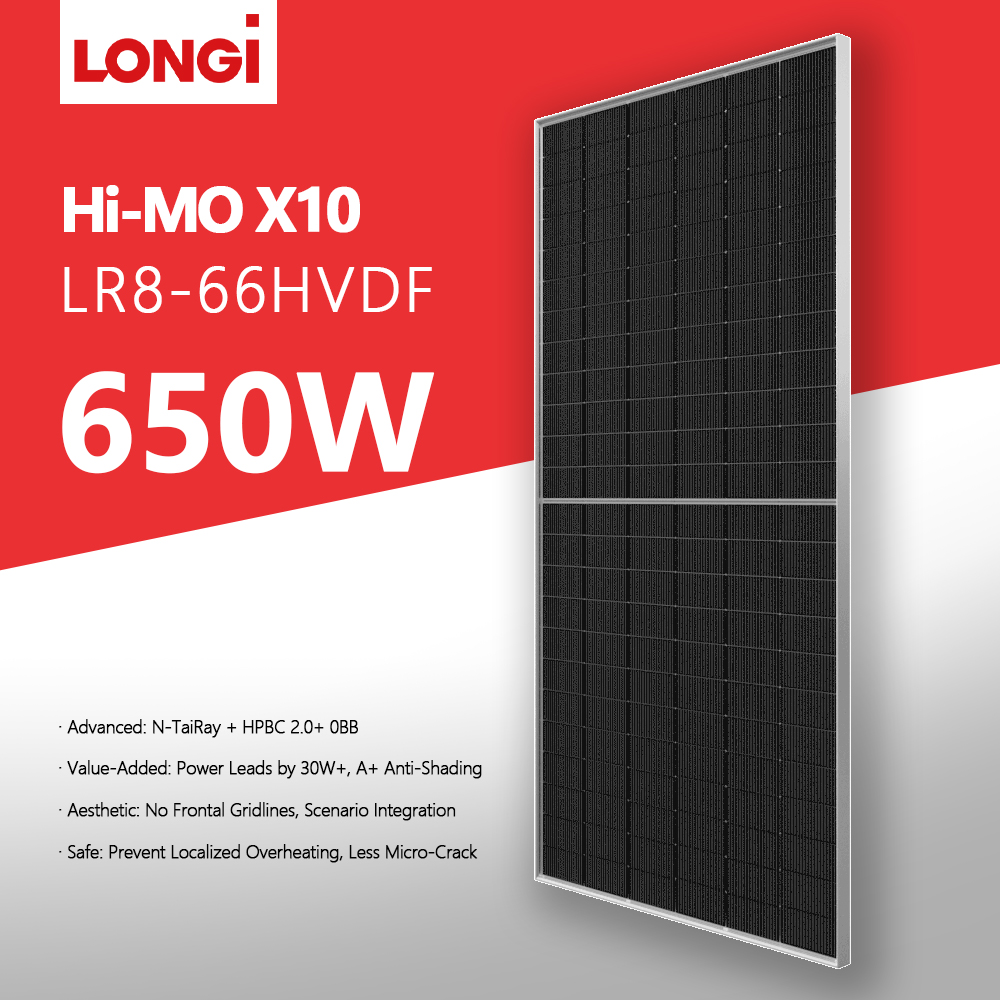
Commercial Grade LONGI Solar Panel 650W N-Type Solar Module Solar Panels with Battery and Inverter for Shopping Mall Rooftops
Turnkey solar-plus-storage matched solution with commercial hybrid inverter compatibility for shopping complexes and industrial microgrids.
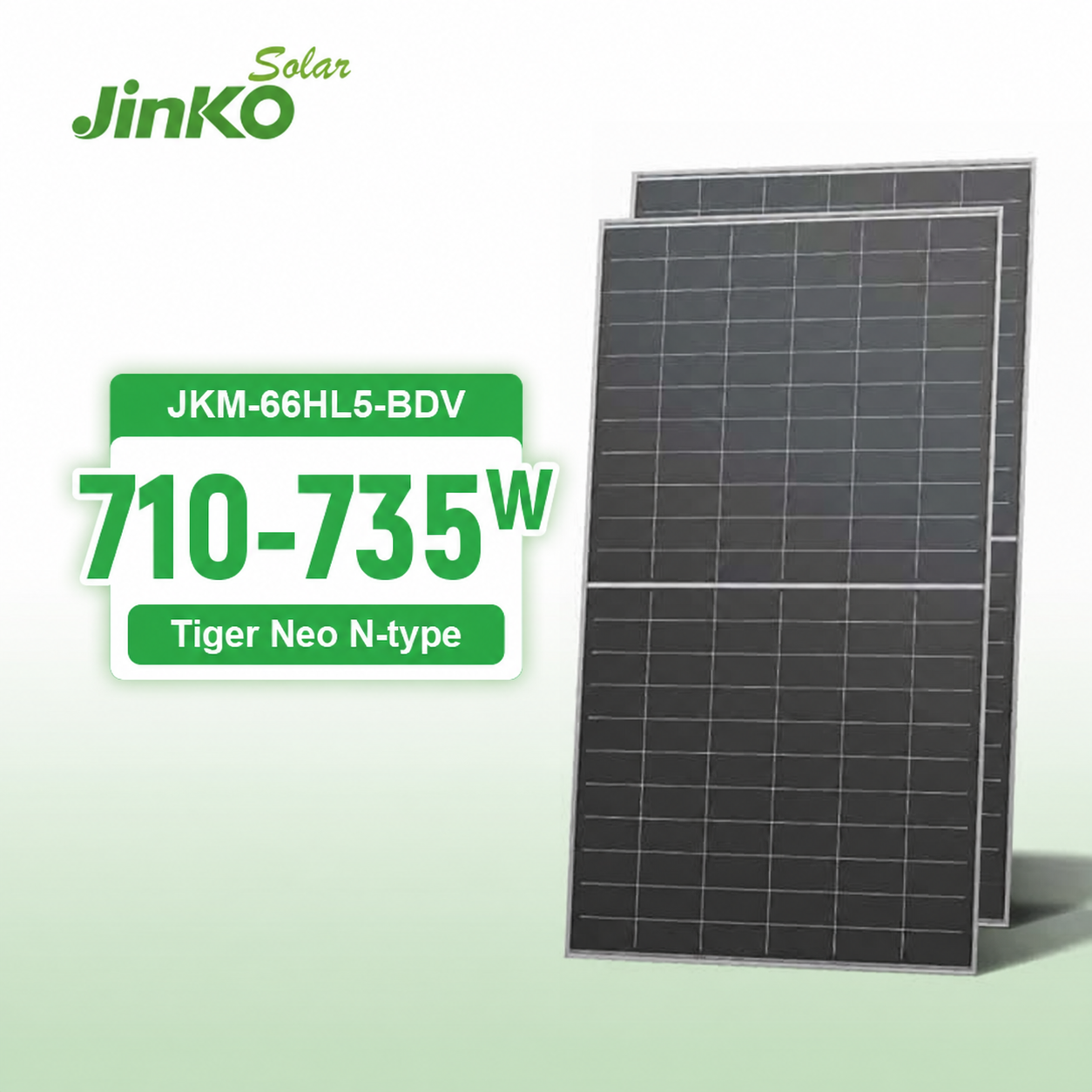
Jinko N Type Solar Panels 700W 710W 730W 725W Wholesale Price TOPCon Bifacial Photovoltaic Module for Commercial
Groundbreaking high-power 210mm architecture driving the lowest Levelized Cost of Energy (LCOE) across utility-scale power projects globally.
Next-Generation PV Technology Trends & Architecture Roadmap
A rigorous examination of cell architecture transitions, wafer dimensions, mechanical reliability, and LCOE optimization driving the solar manufacturing landscape from China to global grid connection points.
As the international photovoltaic market moves beyond legacy P-Type PERC architectures, Tier-1 Chinese manufacturers including Trina Solar and Jinko have institutionalized N-Type Tunnel Oxide Passivated Contact (TOPCon) and 210mm ultra-large wafer formats as the industry's new standard. For procurement managers, engineering, procurement, and construction (EPC) firms, and solar project investors, understanding these micro-architectural differences is paramount to achieving optimal project internal rate of return (IRR) and safeguarding 25-to-30-year operational lifetimes.
210mm Vertex Multi-Busbar (SMBB)
By implementing non-destructive laser cutting and high-density multi-busbar interconnection on 210mm silicon wafers, internal electrical resistance is reduced by over 15%. This structural shift limits localized microcrack risk during thermal cycling while increasing active light-absorption area across the module plane.
N-Type Passivation & Zero LID
Unlike boron-doped P-type wafers prone to Boron-Oxygen (B-O) defect complexes, phosphorus-doped N-type cells completely eliminate Light-Induced Degradation (LID). Year-one power degradation drops from ~2.0% to below 1.0%, guaranteeing higher cumulative lifetime kilowatt-hour yields across 30 years.
Bifaciality Gains & Albedo Dynamics
Dual-glass symmetric modules yield rear-side bifaciality factors ranging between 75% and 85%. On concrete industrial rooftops, desert sand, or snowfields, the rear-side energy generation adds 8% to 25% incremental power, significantly depressing project Balance of System (BOS) costs per watt.
| Architecture Feature | Legacy P-Type PERC | Trina / Jinko N-Type TOPCon | Next-Gen HJT / Perovskite Tandem |
|---|---|---|---|
| Cell Efficiency Ceiling | 23.2% - 23.5% | 25.5% - 26.2% | 28.5% - 32.0%+ (Theoretical) |
| Temperature Coefficient | -0.35% / °C | -0.30% / °C | -0.26% / °C |
| Bifaciality Coefficient | 65% - 70% | 75% - 85% | 85% - 92% |
| Annual Degradation Rate | 0.55% / year | 0.40% / year | 0.30% - 0.35% / year |
| BOS Cost Reduction Impact | Baseline benchmark | 4.2% - 6.8% Lower BOS | Higher upfront capex hurdle |
| Commercial Bankability Status | Maturing / Phasing out | Highest Bankability (Tier-1) | Pilot & Specialized Deployments |
*Engineering dataset compiled from manufacturer flash test certifications and standard test conditions (STC: 1000 W/m², AM 1.5, Cell Temperature 25°C).
Future PV Procurement Trends: Mitigating Risk in 2025–2030
B2B importers and project sponsors face complex international trade restrictions, container freight volatility, and shifting carbon accounting metrics. Here is how leading global buyers hedge risk when sourcing panels from China.
High-Cube Container Density & Anti-Cracking
Modern 600W+ modules require vertical packaging to maximize 40ft HQ container cubic utilization, fitting up to 620–682 modules per container. Sourcing directly from verified exporters ensures specialized anti-vibration corner buffers and humidity-sealed pallets that prevent transport-induced cell microfractures during rough maritime transit.
Supply Chain Audits & Carbon Border Adjustments
European and North American regulatory frameworks (such as EU CBAM and UFLPA documentation) mandate uninterrupted traceability back to the metallurgical-grade silicon ingot. Professional Chinese exporters deliver batch-level bill-of-materials provenance, verifying low-carbon polysilicon origins and labor compliance before bill of lading release.
Coupled Solar + Storage (ESS) Compatibility
Standalone module purchasing is shifting toward bundled solar-plus-storage procurement. Matching module string open-circuit voltage ($V_{oc}$) and short-circuit current ($I_{sc}$) directly with high-voltage hybrid inverters (such as Deye) and lithium iron phosphate (LFP) storage arrays eliminates on-site integration failures and DC clipping losses.
Your Trusted Tier-1 Solar Supply & Export Partner
Hangzhou VOLT New Energy bridges the gap between top-tier Chinese manufacturing gigafactories and international EPC contractors, delivering audited Tier-A modules with complete engineering and logistics accountability.

Pre-Shipment Double EL Verification
Every batch undergoes dual Electroluminescence (EL) scanning and IV curve flash testing before crating. We supply serial-number matched testing data proving zero microcracks, ribbon shifts, or cell delamination.

Seamless Freight & Mixed Loading
We consolidate solar modules, Deye hybrid inverters, and LFP batteries into dedicated Class 9 compliant containers, minimizing port handling charges, demurrage risks, and international shipping tariffs.

Turnkey System Integration Sizing
Our in-house electrical engineers calculate string configurations, tilt angles, inverter MPPT thresholds, and BMS CAN/RS485 communication protocols, delivering full CAD wiring diagrams tailored to your installation site.
Tier-1 Direct Allocation & Pricing
Leveraging long-term contractual capacity allocations with leading brands like Trina Solar and Jinko, we provide competitive tier-A pricing, rapid factory dispatch, and complete manufacturer warranty backing.
Frequently Asked Questions by Solar Importers & EPCs
Crucial commercial and technical criteria for evaluating photovoltaic module shipments from China.
How can international buyers verify that delivered Trina or Jinko modules are Grade-A authentic?
What is the difference between 182mm (M10) and 210mm (G12) modules in commercial projects?
How do you protect high-power solar panels from microcracks during sea freight?
Can you consolidate solar panels with Deye inverters and lithium storage batteries in one shipment?
What warranty terms apply to your exported solar modules?
Secure Tier-1 Factory Direct Pricing & Engineering Support
Planning a utility solar farm, commercial industrial rooftop, or distributor container shipment? Connect with our technical export specialists to request certified flash test reports, pallet availability, FOB/CIF freight quotes, and full string-sizing calculations.