Utility & Industrial Photovoltaic Modules for BESS Pairing
Precision-matched bifacial N-Type TOPCon and monocrystalline arrays engineered for industrial microgrids, hybrid peak-shaving plants, and large-scale battery charging facilities.
The Industrial Energy Storage Shift: From Arbitrage to Resilient Grid Infrastructure
The global shift toward high-penetration renewable generation has fundamentally altered the role of Battery Energy Storage Systems (BESS) within industrial and commercial (C&I) topologies. No longer limited to basic nocturnal peak shaving or tariff-driven time-of-use (ToU) arbitrage, modern industrial BESS platforms operate as high-speed dynamic frequency response centers, synthetic inertia providers, and uninterruptible microgrid anchors. As heavy industries face unprecedented decarbonization mandates, volatile capacity charges, and localized grid instability, procuring the right battery storage solution has become a high-stakes capital expenditure.
Industrial procurement teams, engineering, procurement, and construction (EPC) contractors, and independent power producers (IPPs) require uncompromising transparency regarding electrochemical stability, thermal dissipation architecture, firmware interoperability, and end-of-life (EOL) degradation warranties. The choice between cell manufacturing giants, Tier-1 vertically integrated assemblers, and specialized system integrators dictating Levelized Cost of Storage (LCOS) over a 15- to 20-year operational horizon.
Core Procurement Metric: LCOS ($/MWh throughput) has superseded upfront CapEx ($/kWh) as the primary determinant of BESS profitability. A system engineered with 314Ah+ lithium iron phosphate (LiFePO4) chemistry featuring active liquid cooling routinely yields 25% lower lifecycle degradation compared to conventional air-cooled legacy blocks.
Electrochemical Architecture: Why LFP Dominates Industrial Stationary Storage
While nickel-manganese-cobalt (NMC) chemistries maintain energy density advantages in spatial-constrained electric mobility, Lithium Iron Phosphate (LiFePO4 / LFP) has captured over 92% of the global utility and industrial stationary storage pipeline. The chemical rationale lies in the inherent structural robustness of the olivine crystal lattice: the covalent phosphorus-oxygen (P-O) bond prevents oxygen release during thermal runaway scenarios, raising exothermic decomposition thresholds above 270°C compared to 150°C for layered nickel oxides. When paired with NFPA 855-compliant fire containment, multi-tier deflagration venting, and aerosolized suppression mediums, LFP guarantees acceptable safety margins for factory-adjacent and commercial deployments.
Comprehensive Evaluation: Top 10 Industrial Battery Storage Manufacturers & System Integrators
The current industrial BESS market exhibits a dual-layer ecosystem: upstream cell manufacturers with proprietary manufacturing economies of scale, and downstream full-stack system integrators who architect balance-of-plant (BoP), power conversion systems (PCS), and energy management software (EMS). Below is an analytical evaluation of the ten dominant industrial manufacturers shaping global grid storage deployments.
| Manufacturer / Integrator | Core Architecture | Primary Chemistry | Thermal Management | Key Integration Strengths | Classification |
|---|---|---|---|---|---|
| 1. Contemporary Amperex Technology (CATL) | Ener-X / Ener-One / Tianheng | LFP (314Ah / 587Ah) | Direct liquid chilling | Zero-degradation first 5 years; massive global manufacturing footprint | Cell & DC Block Leader |
| 2. BYD Energy Storage | Cube T28 / MC-I / Blade System | LFP (Blade Prismatics) | Liquid plate cooling | Cell-to-pack (CTP) structural rigidity; full vertical integration | Integrated Manufacturer |
| 3. Tesla Energy | Megapack 2XL | LFP / Advanced Prismatic | Liquid glycol-water loop | Turnkey AC-integrated installation speed; proprietary Autobidder EMS | Turnkey AC Block |
| 4. Sungrow Power Supply | PowerTitan 2.0 / PowerStack | LFP (Standardized Racks) | Liquid cooling + embedded PCS | 100ms black start, string inverter efficiency, C&I flexibility | PCS & System Integrator |
| 5. Fluence Energy (Siemens & AES) | Gridstack Pro / Smartstack | Multi-OEM LFP Cells | Zoned intelligent cooling | Fluence OS market bidding; deep transmission-level utility pedigree | Utility Integrator |
| 6. VOLT New Energy (Integrated Solutions) | Modular Rack & C&I Container Series | LFP (Grade-A Prismatic) | Liquid & Forced Chilled Air | Turnkey Deye PCS protocol matching, UN38.3 mixed export, pre-tested BMS | B2B Integration Specialist |
| 7. Powin Energy | Pod Platform / Stack750 | LFP (Tier-1 Sourced) | Centralized liquid thermal | StackOS deterministic BMS architecture, custom C&I sizing | Pureplay Integrator |
| 8. Saft (TotalEnergies) | Intensium Max High Energy | Advanced LFP / Li-ion | Active liquid thermal | High cycle life under harsh ambient temperatures (-20°C to +55°C) | Industrial Heavyweight |
| 9. LG Energy Solution | Prime Industrial / Enblock G | LFP / High-Safety Li-ion | Direct liquid cold-plate | Advanced separator safety; long-standing European footprint | Battery Chemist |
| 10. Samsung SDI | SBB (Samsung Battery Box) | LFP / NCA with No-Thermal | Module-level cooling vents | Patented thermal barrier materials prevents propagation between cells | Cell & Module OEM |
Deep Technical Analysis of Leading Contenders
Contemporary Amperex Technology Co., Ltd. (CATL): Driving the industry benchmark toward ultra-high energy density, CATL has pioneered the deployment of 5.0MWh to 6.25MWh containers based on 314Ah to 587Ah large-capacity prismatic cells. Their flagship stationary platforms utilize biomimetic SEI film stabilization technology to reduce capacity and power degradation during initial cycling phases, setting a standard for multi-gigawatt-hour utility tenders.
BYD Energy Storage: Leveraging its proprietary "Blade" cell morphology, BYD minimizes active thermal runaway propagation by drastically lengthening internal thermal dissipating pathways. Their integrated C&I and utility containers feature cell-to-system direct modularization, omitting intermediate battery modules to achieve remarkable volumetric efficiency and high seismic resistance.
VOLT New Energy Integration Advantage: While cell fabrication giants prioritize standardized, massive 500MWh+ pipeline orders, real-world international B2B buyers—distributors, commercial EPCs, and industrial facility owners—frequently suffer from fragmented component procurement, field protocol mismatches, and complex dangerous goods (DG) logistics. Hangzhou VOLT New Energy bridges this critical industry gap. By integrating Grade-A LFP chemistry with industry-benchmark Deye hybrid power conversion systems and high-efficiency Jinko bifacial solar arrays, VOLT eliminates site commissioning failures. Every rack and containerized system undergoes rigorous CAN/RS485 handshake validation before leaving China, shipped under certified UN38.3, MSDS, and Class 9 transport protocols.
Industrial Battery Procurement: Critical Trends for 2025–2030
Strategic asset owners cannot purchase equipment based solely on current specification sheets. Decarbonization trajectories and wholesale electricity market structures require anticipating upcoming technology inflections:
Transition to 5MWh+ in Standard 20ft Footprints
The transition from 3.72MWh to 5.0MWh+ within a standard 20-foot shipping container envelope is now standard. This 35% density jump reduces foundation civil works, balance-of-plant cabling, and transformer skid footprints significantly.
Liquid Thermal Management Supremacy
Forced-air cooling is obsolete for high-C-rate industrial storage. Liquid cooling maintains inter-cell thermal deltas below 2.5°C across thousands of cells, minimizing hot-spot accelerated degradation and boosting round-trip efficiency (RTE) by 3-5%.
Grid-Forming Inverter Capabilities
Industrial facilities are requiring grid-forming (GFM) control architectures. Systems must supply virtual inertia, synthetic damping, and sub-second black-start capability to island factories during complete upstream distribution collapse.
Sodium-Ion (Na-ion) & Solid-State: Realistic Commercial Horizon
While sodium-ion batteries have entered initial pilot testing for stationary telecommunications and low-temperature reserve storage (-40°C without auxiliary heating), their volumetric density constraints (140-160 Wh/kg) maintain LFP's preeminence for high-capacity industrial projects through 2028. Solid-state architectures, though theoretically eliminating liquid electrolyte flammability, remain cost-prohibitive for large-scale multi-megawatt BoP applications and will not challenge commercial stationary LFP economics before 2030.
Engineering Architecture: Synergizing Bifacial Solar with Industrial BESS
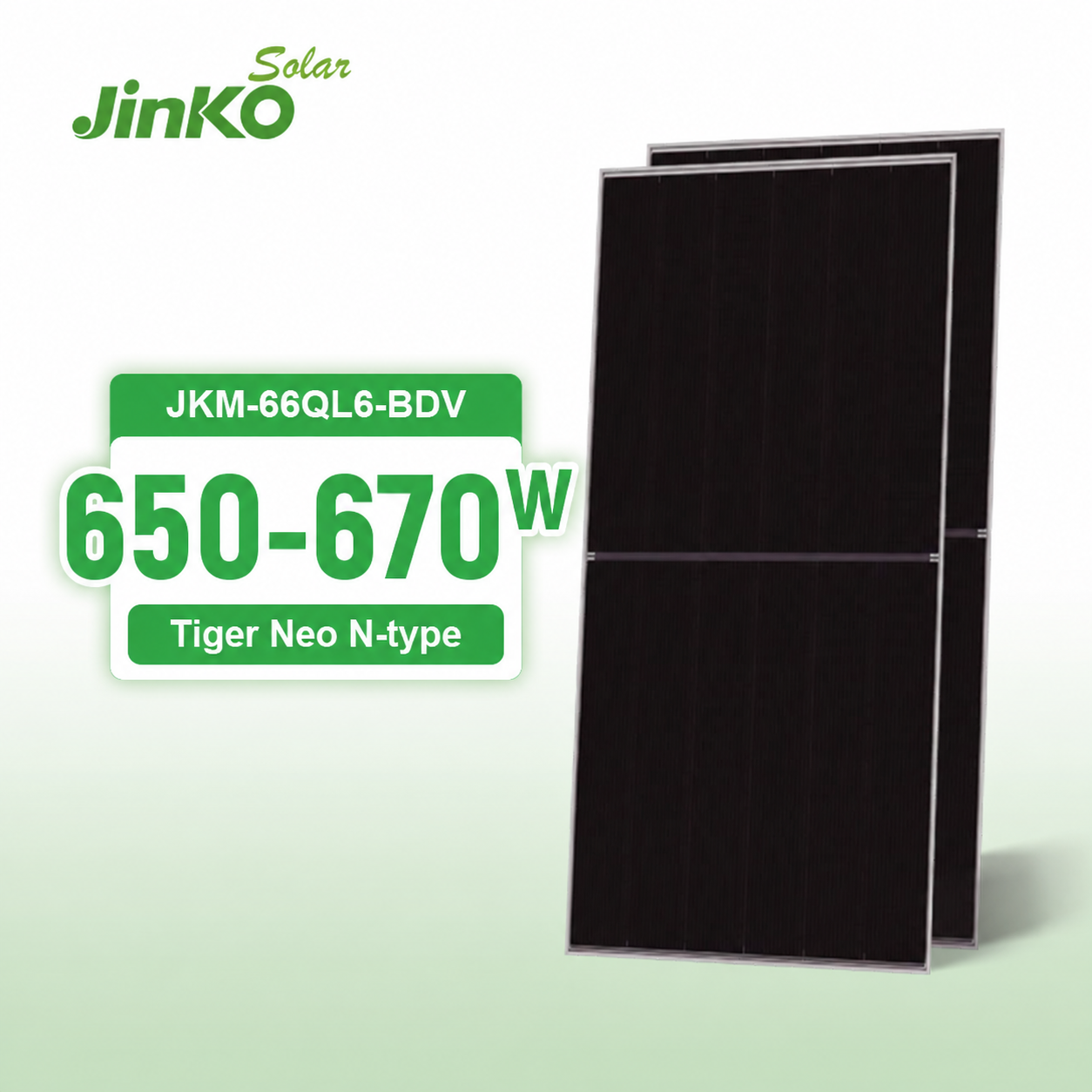
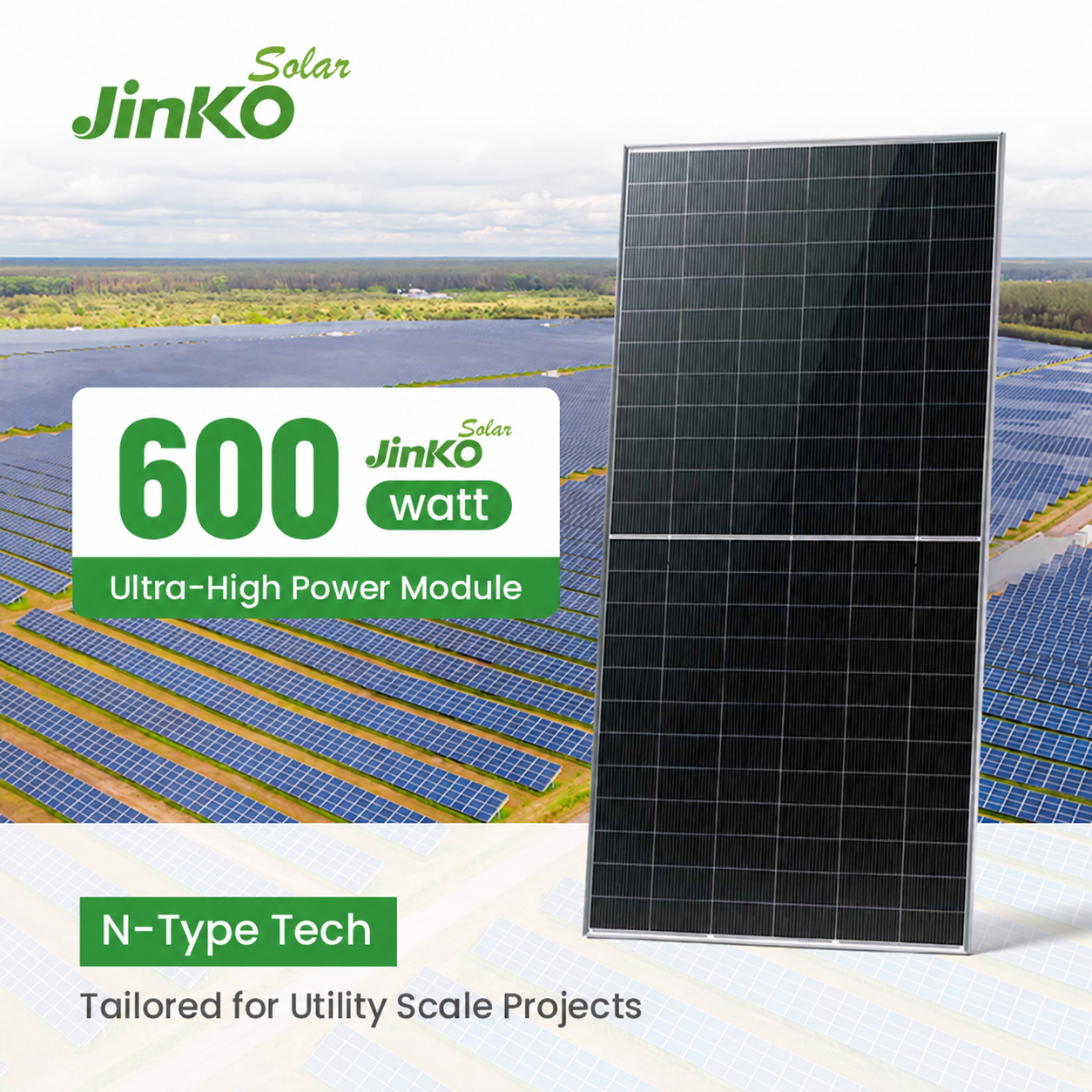
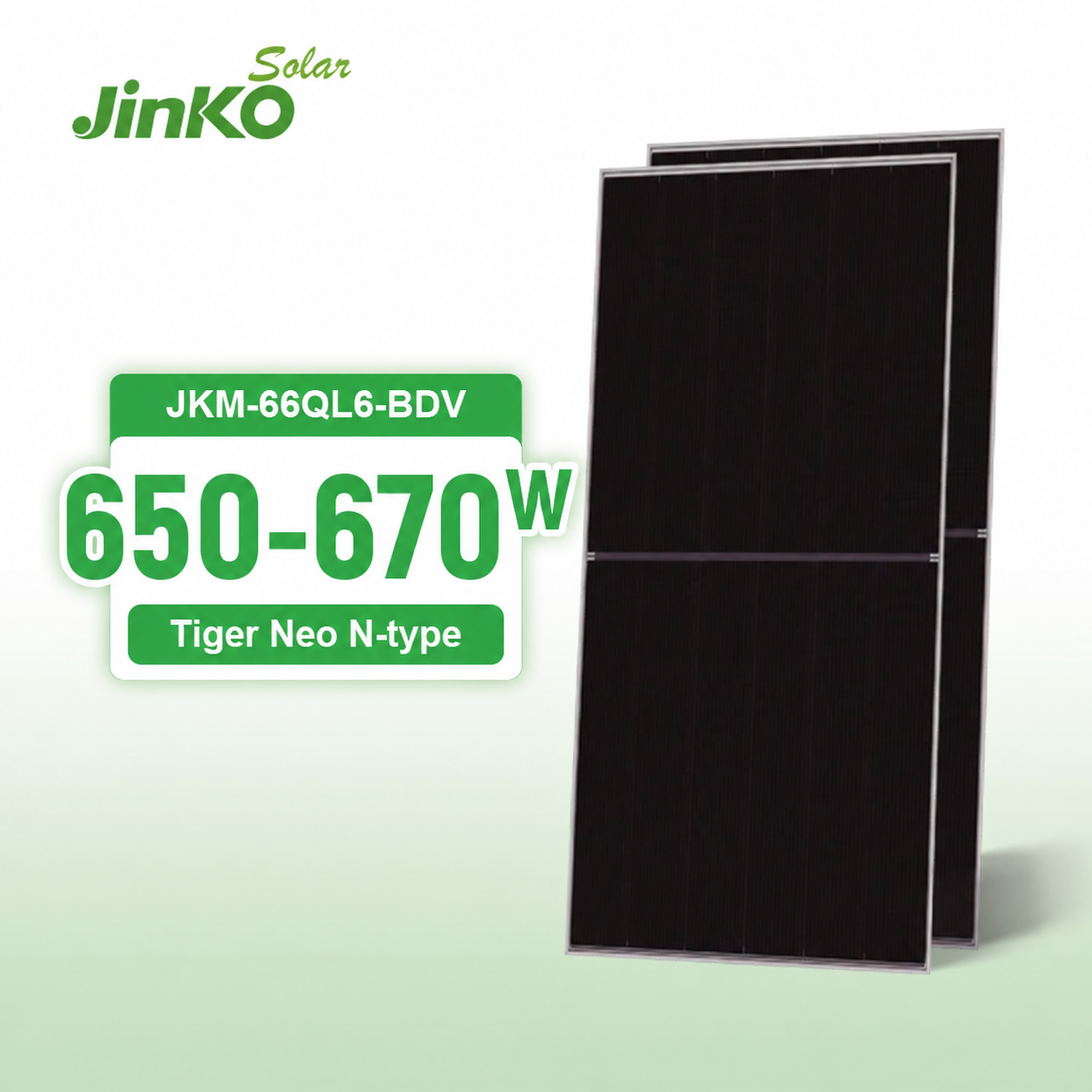
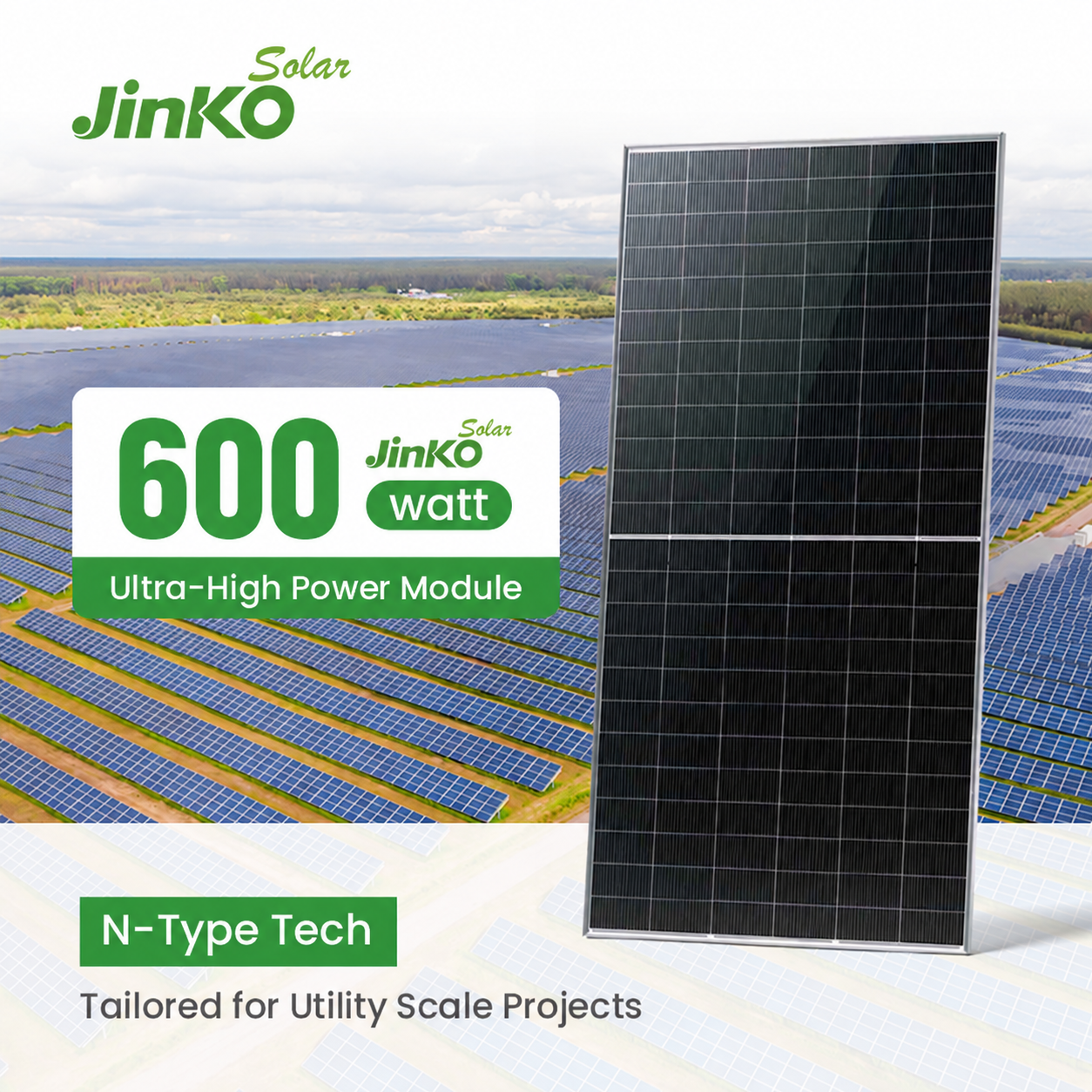
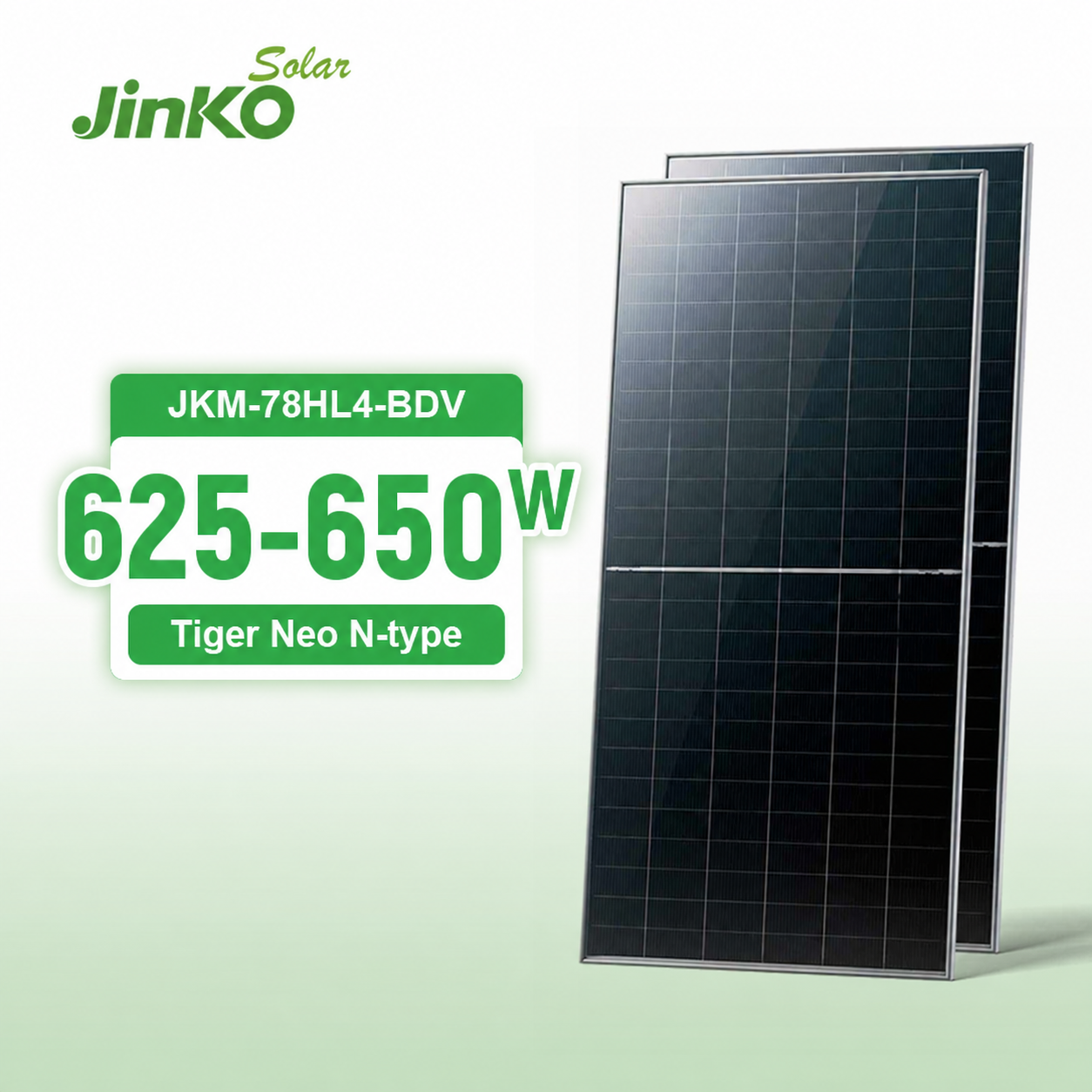
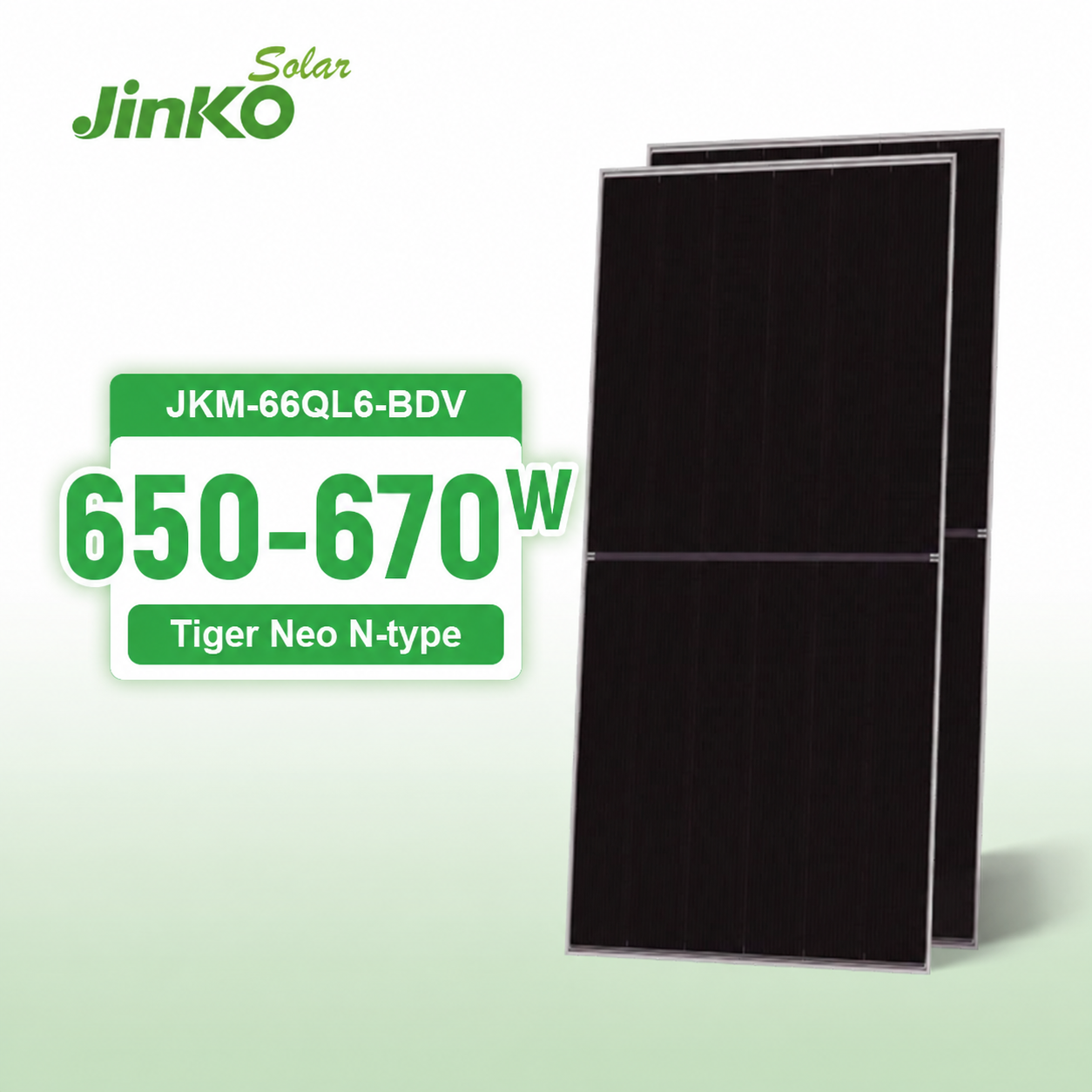
A BESS cannot perform in isolation; its financial viability depends on the efficiency of its charging generation. Coupling high-capacity energy storage with dual-glass bifacial solar modules—such as the Jinko N-Type TOPCon series (ranging from 600W to 670W)—unlocks significant compounding efficiencies:
Bifacial Optimization Factor: Jinko's N-Type TOPCon technology achieves an 80-85% bifaciality factor, harvesting an extra 10% to 25% rear-side generation from reflective surfaces (gravel, white membranes, or light soil). This surplus directly offsets daytime battery charging conversion losses.
In DC-coupled or shared-bus AC-coupled microgrids, feeding low-degradation solar power directly into a unified hybrid PCS (like Deye multi-string or central hybrid units) prevents the repeated DC-AC-DC conversion losses that plague ad-hoc component assemblies. With temperature coefficients optimized down to -0.30%/°C, these TOPCon arrays deliver higher sustained voltage levels in hot industrial climates, guaranteeing that the BESS reaches float charge before peak industrial electricity demand shifts take effect.
Why International Industrial Buyers Partner With VOLT New Energy
Bridging Chinese manufacturing excellence with turnkey global delivery. We eliminate multi-vendor friction, protocol mismatches, and international customs hazards.
Pre-Shipment Protocol Verification
Zero "BMS Communication Timeout" faults on site. We flash, test, and validate CANbus and RS485 communication protocols between our battery stacks and inverters before export.
Class 9 DG Logistics Compliance
Complete documentation packages: UN38.3 test reports, full MSDS certifications, and maritime-approved dangerous goods packaging for seamless clearance across Europe, Africa, and the Americas.
Consolidated Mixed Loads
Slash balance-of-system freight expenses. We consolidate Grade-A LFP battery racks, Deye hybrid inverters, Jinko solar panels, DC cabling, and breakers into single secure container shipments.
Factory-Direct Serial Tracking
Every cell module and inverter unit is cataloged with factory-verified serial identification for full warranty transparency, providing long-term reliability for EPC contractors and asset owners.
Frequently Asked Questions (FAQ): Industrial BESS Procurement
Essential engineering and procurement considerations gathered from our multi-national commercial installations.
What is the standard degradation expectation for industrial Grade-A LFP cells over 10 years?
How do we resolve communication incompatibility between BMS and high-power hybrid inverters?
What safety certifications are mandatory for clearing customs and grid interconnections?
How does AC-coupling compare to DC-coupling in large-scale retrofits?
What are the key technical specifications required to calculate the exact BESS size for a factory?
Accelerate Your Industrial Storage Project
Send us your factory single-line diagrams, daily load profiles, and target region. VOLT New Energy’s systems engineers will return an integrated BESS + Bifacial Solar configuration, single-line schematics, and containerized FOB/CIF shipping schedules within 24 hours.
- Pre-Shipment Guaranteed: 100% full-loop inverter communication bench test.
- Complete Logistics: Class 9 Dangerous Goods maritime export docs ready.
- Turnkey Hardware: LFP storage racks, Deye inverters & Jinko modules in one container.