Executive Procurement Abstract: Navigating China's Tier-1 PV Manufacturing
In the rapidly consolidating global photovoltaic ecosystem, international project developers, EPC contractors, and master equipment distributors face a dual challenge: maximizing Levelized Cost of Energy (LCOE) through advanced module architectures while safeguarding operational resilience against supply chain volatility, trade barriers, and quality drift. As China remains the apex manufacturing epicenter for solar ingots, wafers, high-purity polysilicon, and tunnel oxide passivated contact (TOPCon) cells, selecting an authorized Tier-1 export channel—such as JA Solar and Jinko Solar supply networks—serves as the primary operational hedge for cross-border investments.
Hangzhou VOLT New Energy Technology Co., Ltd. functions at the nexus of technical integration and factory-direct distribution. By bridging certified production lines with rigorous third-party flash validation, zero-microcrack luminescence mapping, and standardized dangerous-goods cargo consolidation, we streamline the procurement of genuine Tier-1 monocrystalline modules across Europe, Latin America, the Middle East, Africa, and the Asia-Pacific.
Engineered High-Power Photovoltaic Modules for Commercial & Utility Deployment
Precision-manufactured N-Type TOPCon and dual-glass bifacial solar modules engineered for extreme mechanical resilience, higher bifacial yield, and extended 30-year linear lifecycle.
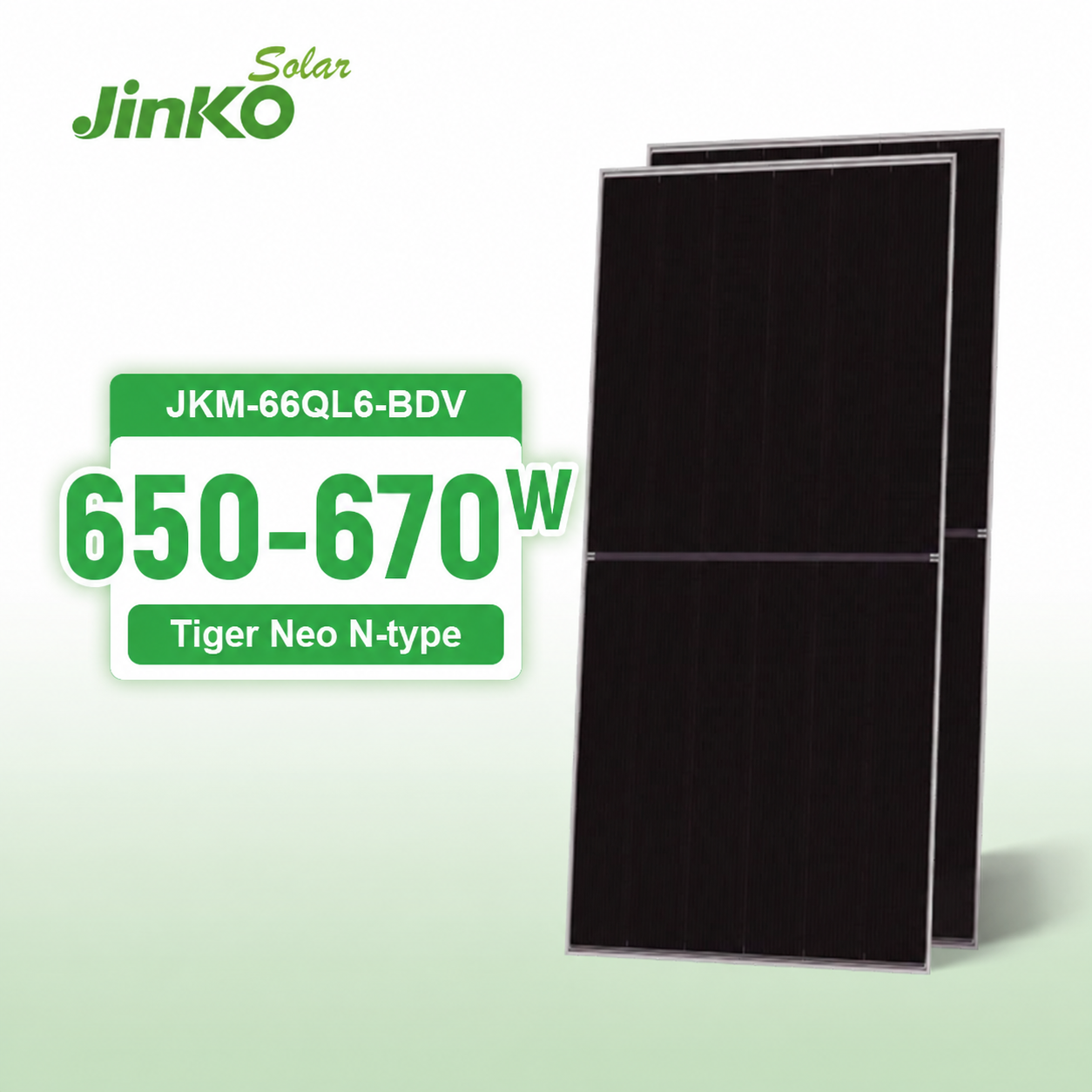
Jinko N Type Bifacial Solar Panel 650W 660W 670W TOPCon Monocrystalline High Efficiency PV Module for Home Roof
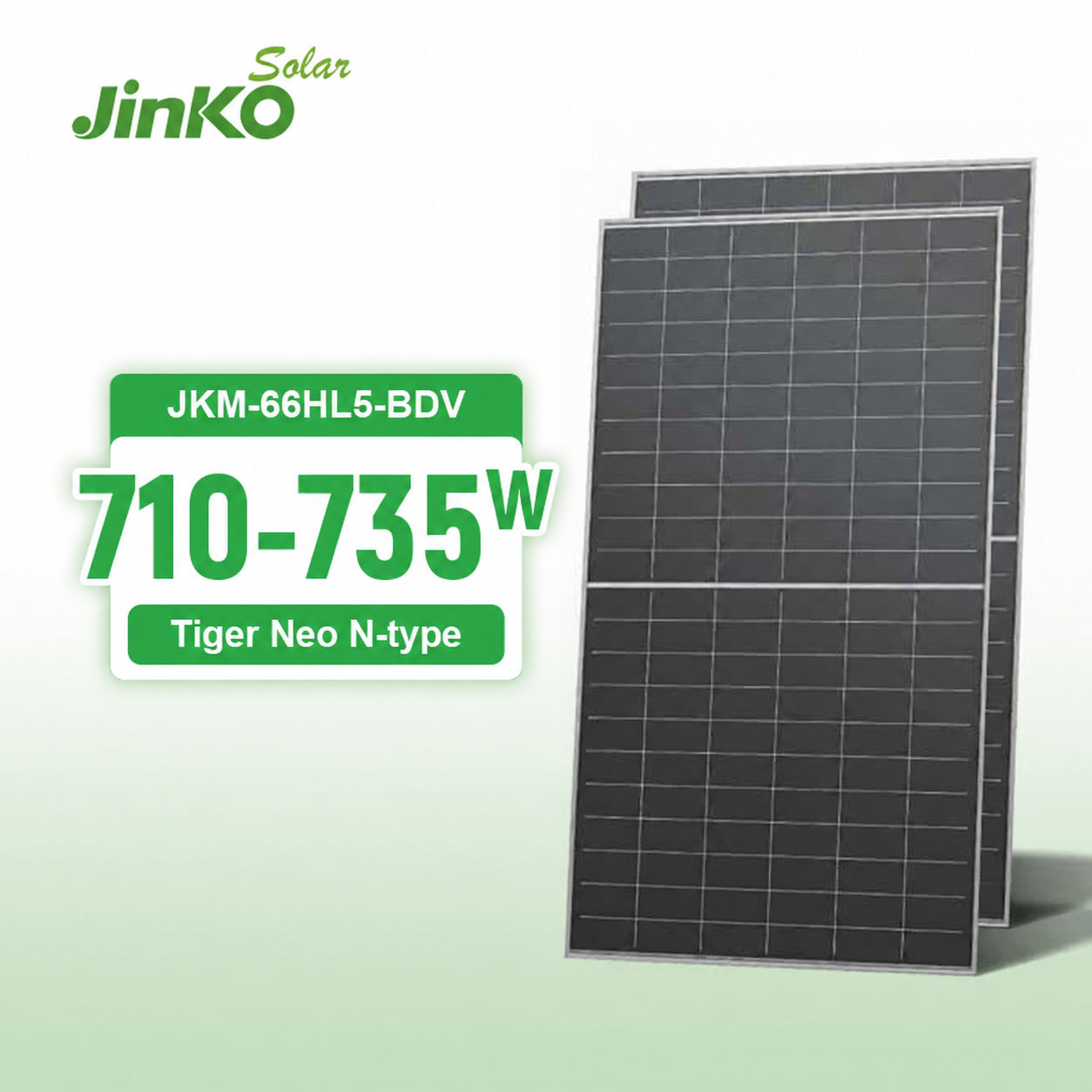
Jinko N Type Bifacial Pv Solar Panels 720W 710W 715W Dual Glass Industrial Photovoltaic Panneau Solaire
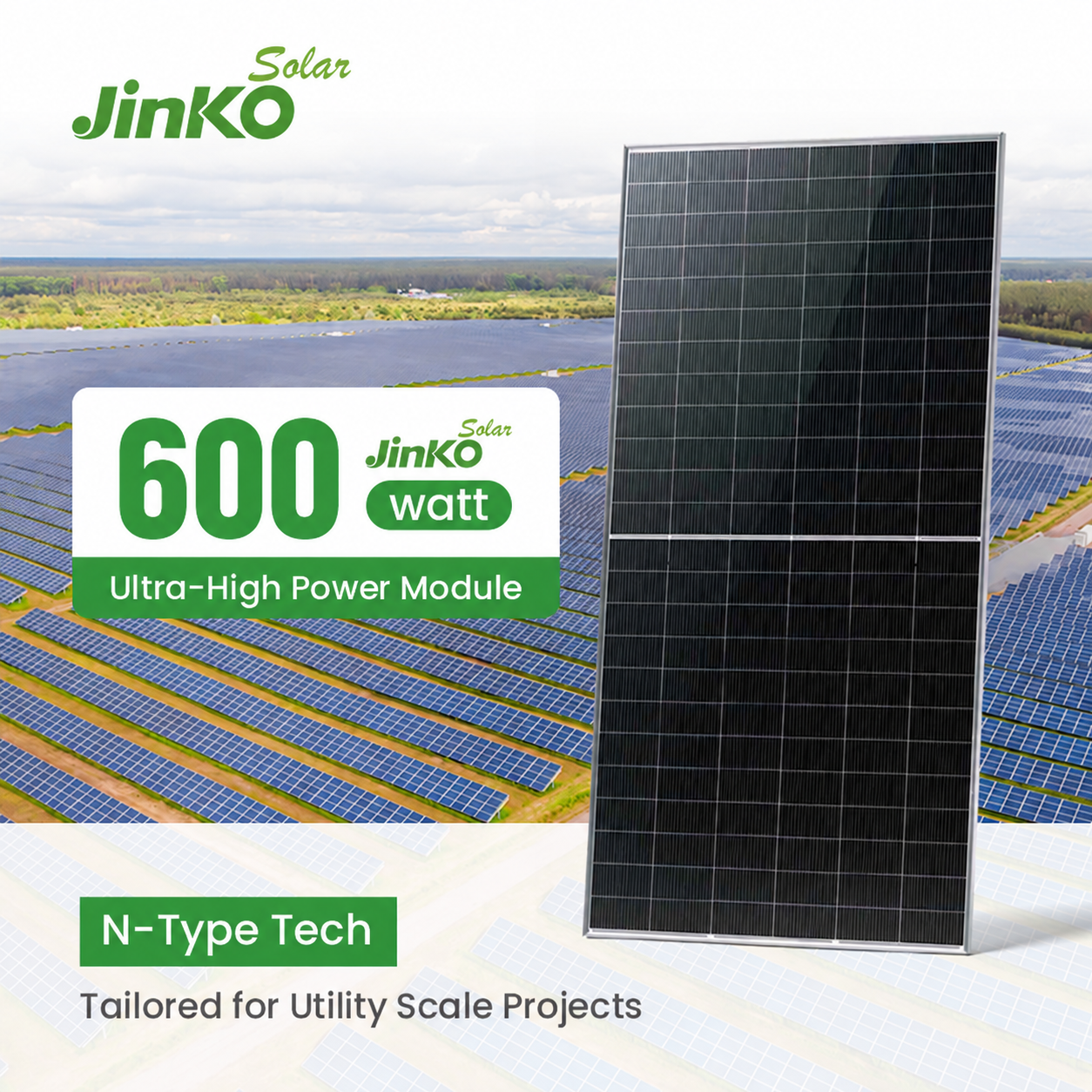
Jinko N Type Bifacial Solar Panels 585W 590W 575WTOPCon Monocrystalline High Efficiency PV Module for Home
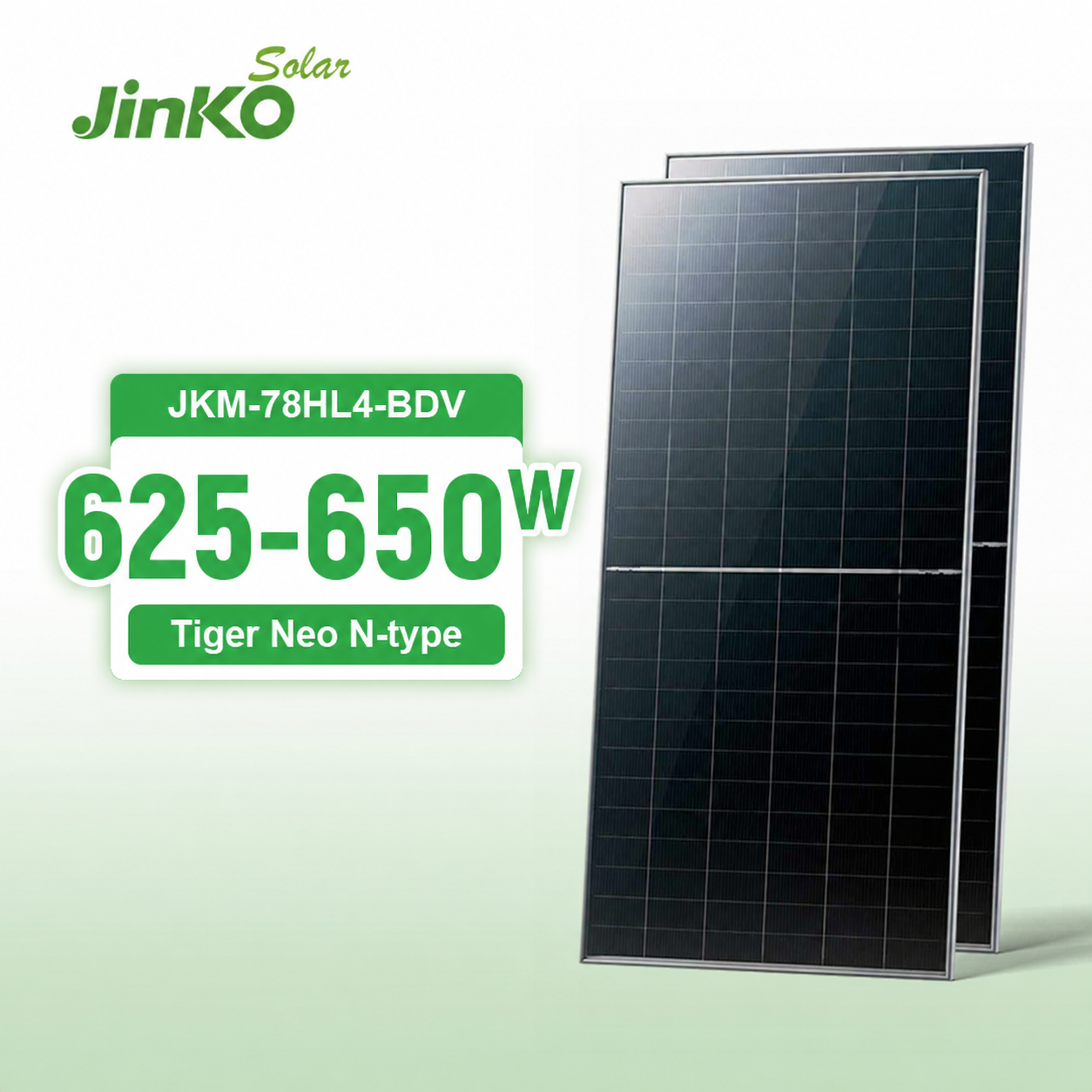
Jinko Bifacial Pv Panels 630W 640W 635W Dual Glass Panneau Solaire Monocrystalline Solar Module for Rooftop
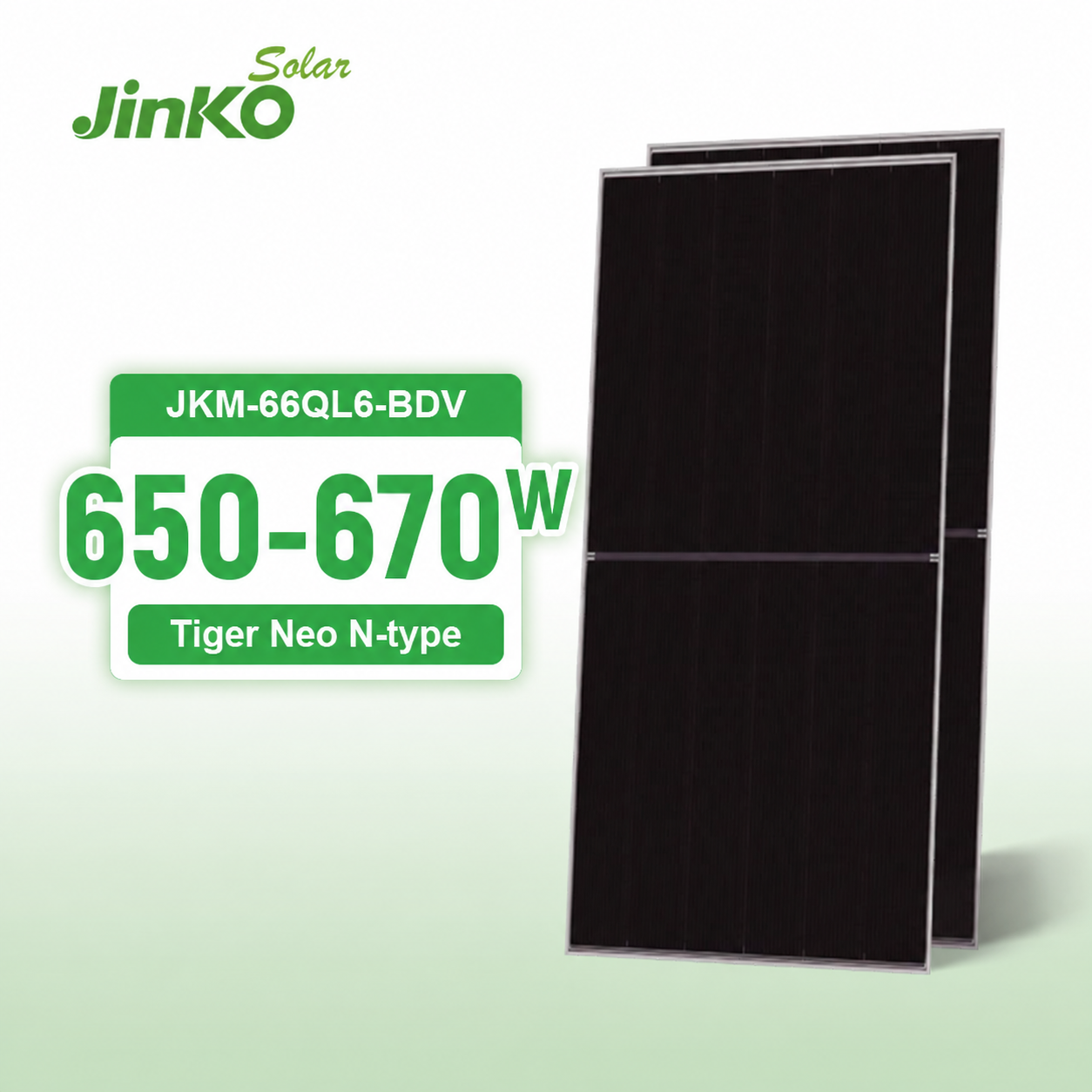
Jinko Bifacial Panneau Solaire 650 w 650W 660W 670W Dual Glass Monocrystalline Solar Module for Rooftop
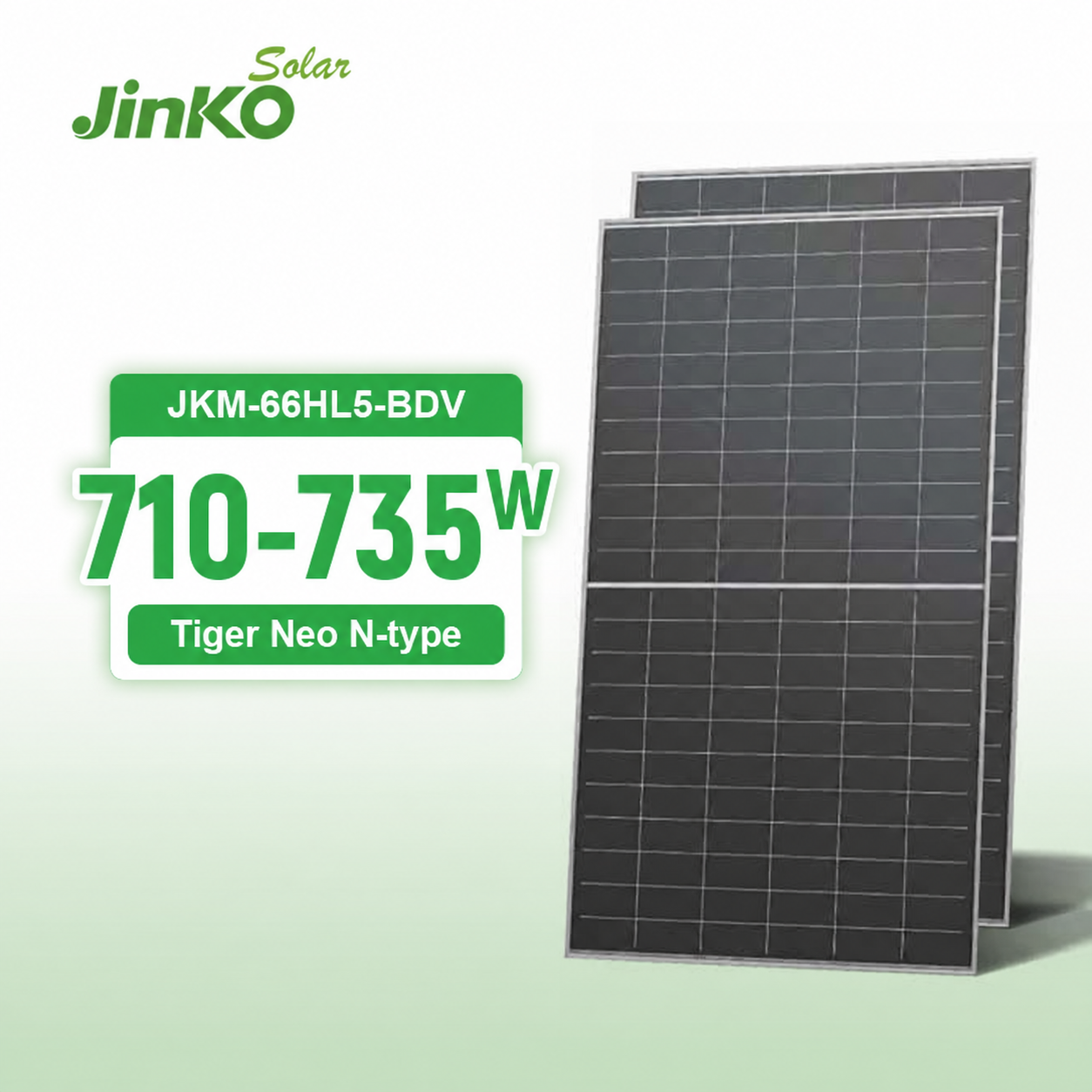
Jinko Wholesale Price 700 W 720W 730W 725W Bifacial TOPCon Double Glass High Efficiency Solar Module for House
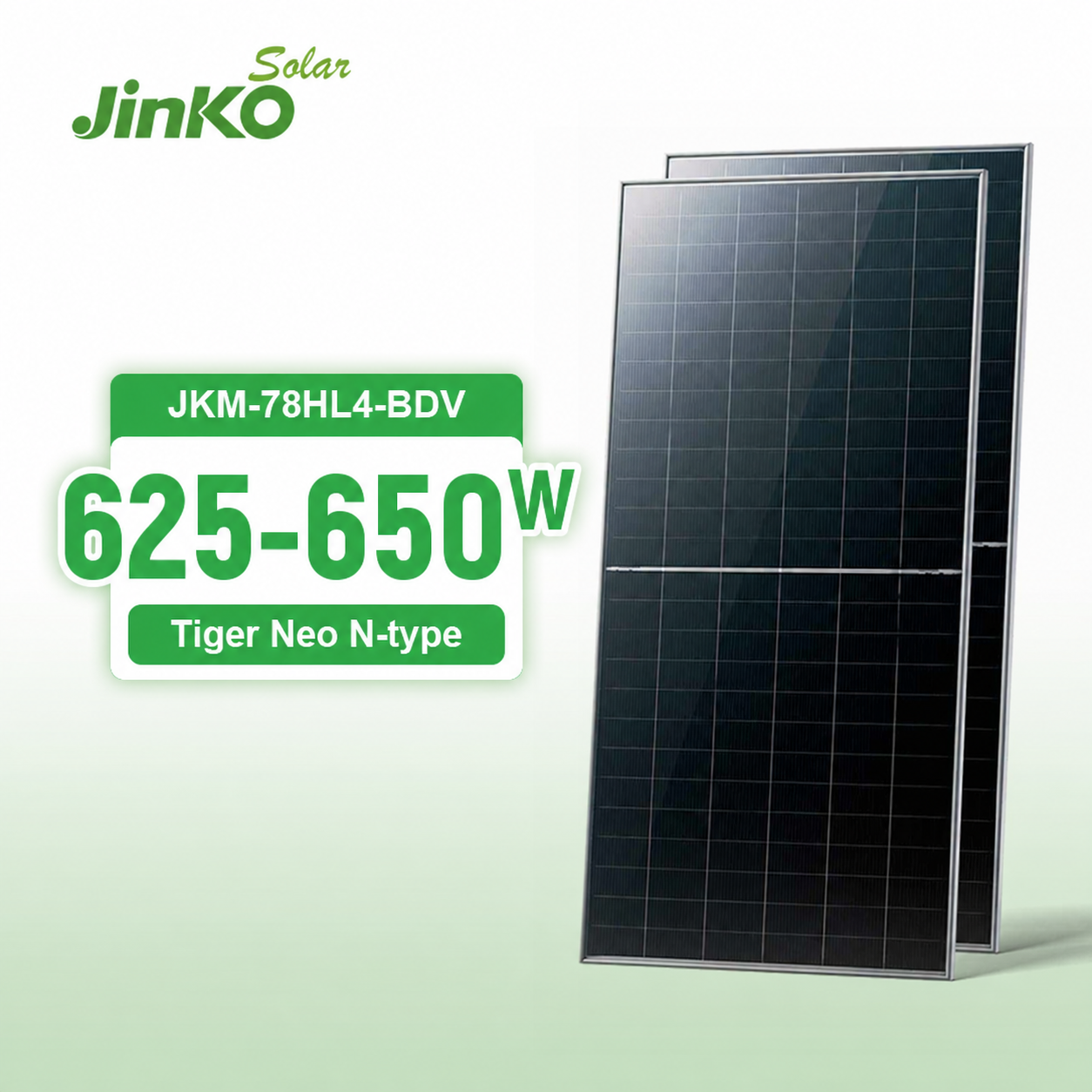
Jinko N Type Bifacial Solar Modules 650W 630W 640W Dual Glass Photovoltaic Panel for Industrial
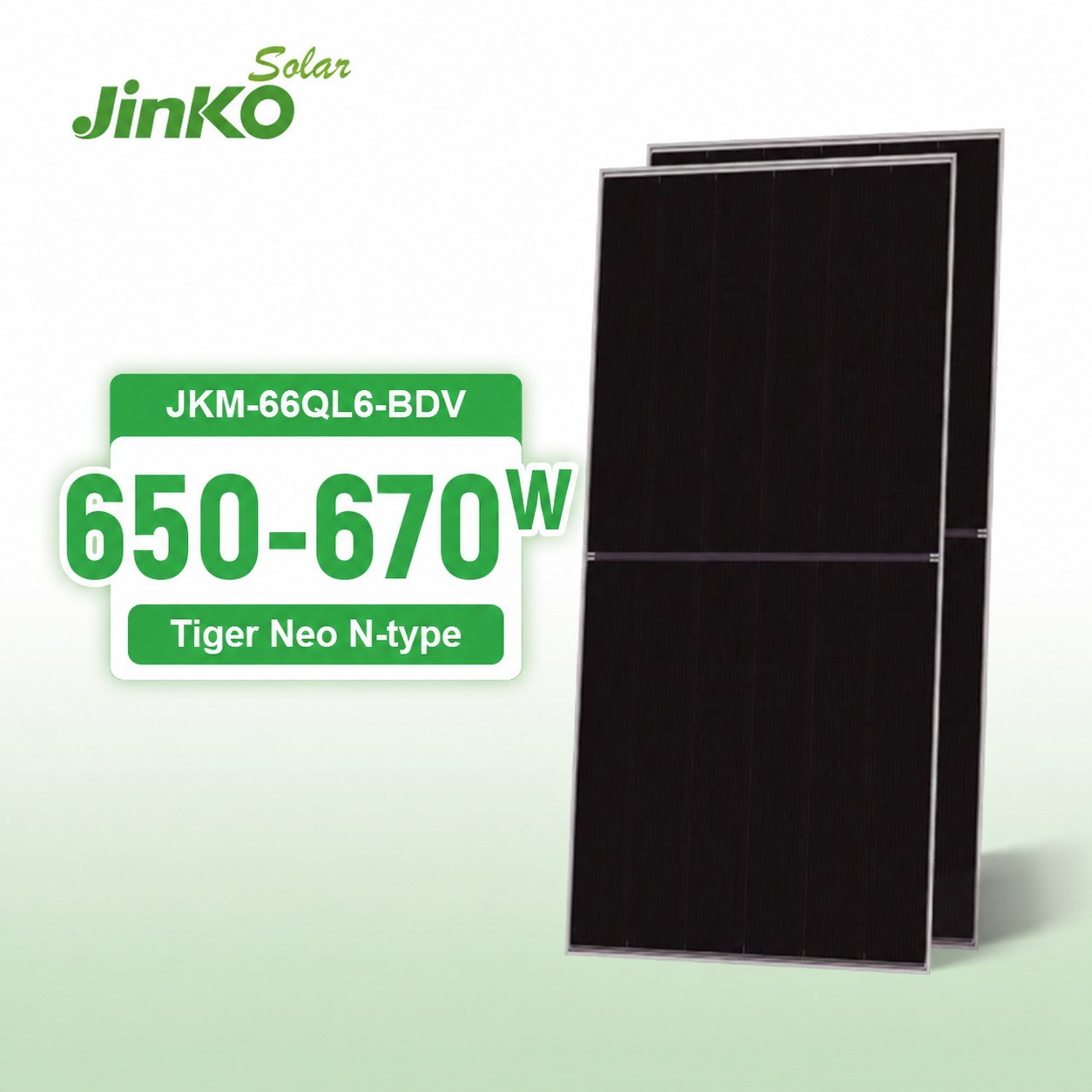
Jinko Panneau Solaire 660w 650W 660W 670W N Type Bifacial Dual Glass Photovoltaic Panel for Industrial
The N-Type Paradigm Shift: TOPCon vs. Heterojunction (HJT) vs. Legacy PERC
A technical assessment of carrier lifetime, recombination kinetics, and thermodynamic efficiency boundaries.
Semiconductor Physics Behind Modern Tier-1 Solar Cell Architecture
The photovoltaic industry in China has definitively transitioned away from P-type Passivated Emitter and Rear Cell (PERC) technology, which reached its physical ceiling at approximately 23.2% module conversion efficiency. As Tier-1 giants like JA Solar and Jinko Solar fully retool gigawatt-scale production hubs, N-type Tunnel Oxide Passivated Contact (TOPCon) architecture has achieved preeminence for utility and distributed installations.
Unlike P-type wafers that suffer from boron-oxygen defect pairs triggering Light-Induced Degradation (LID), N-type silicon wafers are doped with phosphorus, fundamentally eliminating LID. The critical breakthrough in TOPCon cell architecture lies in the ultra-thin (1.2 to 2.0 nm) silicon oxide tunneling layer capped with a phosphorus-doped polycrystalline silicon film. This configuration produces an exceptional surface passivation effect, drastically suppressing carrier surface recombination velocity while maintaining unobstructed carrier transport. As a result, open-circuit voltage ($V_{oc}$) increases beyond 730 mV, translating to real-world commercial module efficiencies exceeding 22.5%.
| Performance Metric | Legacy P-Type PERC | Mainstream N-Type TOPCon | Advanced Heterojunction (HJT) |
|---|---|---|---|
| Cell Substrate | P-Type Boron Doped | N-Type Phosphorus Doped | N-Type High Minority-Carrier Silicon |
| Module Efficiency Boundary | 20.8% - 21.4% | 22.2% - 22.8% | 22.6% - 23.4% |
| Bifaciality Factor | 65% - 70% | 80% - 85% | 85% - 92% |
| Temp. Coefficient (Pmax) | -0.35% / °C | -0.29% to -0.30% / °C | -0.26% / °C |
| First-Year Power Degradation | ≤ 2.0% | ≤ 1.0% | ≤ 1.0% |
| Annual Degradation (Yr 2-30) | 0.55% / year | 0.40% / year | 0.30% / year |
| Manufacturing Capex / LCOE Balance | Lowest Capex / Poor LCOE | Optimal Industry Sweet Spot | Higher Capex / Selective Utility |
Beyond pure electrical efficiencies, the operational thermodynamics of N-type modules deliver tangible harvest gains in extreme ambient environments. With a temperature coefficient of -0.29%/°C (compared to -0.35%/°C for legacy PERC), N-Type TOPCon modules generate up to 3.8% more kilowatt-hours per installed watt in high-irradiance, elevated-temperature zones typical of the Middle East, North Africa, Australia, and equatorial South America. Coupled with bifacial energy capture from diffuse ground albedo (yielding an additional 8% to 25% from rear-side generation depending on gravel, concrete, or snow substrates), N-Type TOPCon remains the undisputed gold standard for reducing Balance of System (BOS) cabling, racking, and land acquisition costs.
Global Photovoltaic Procurement Trends: 2025 Through 2030
Key technological, regulatory, and logistics dynamics shaping cross-border solar asset acquisition.
1. Supply Chain Traceability, Raw Polysilicon Audits & Carbon Footprint
International procurement criteria have evolved permanently from basic spot-market pricing to exhaustive supply chain traceability. With the European Union's Carbon Border Adjustment Mechanism (CBAM), the Corporate Sustainability Due Diligence Directive (CSDDD), and United States customs enforcement under the Uyghur Forced Labor Prevention Act (UFLPA), Tier-1 Chinese manufacturers—including JA Solar and Jinko Solar—have implemented closed-loop documentation ecosystems.
Modern B2B exporters verify the full provenance chain: from certified low-carbon silica mining and hydro-powered polysilicon synthesis in Yunnan or Sichuan to ingot pulling, wafer slicing, cell diffusion, and automated module assembly. When importing modules, buyers must secure comprehensive Batch Traceability Certificates, Third-Party ESG Audit Verifications, and life-cycle Global Warming Potential (GWP) documentation to avert customs seizures and qualify for subsidized green financing.
2. Wafer Dimension Rationalization: Standardization Around M10R and G12
The solar sector has historically suffered from fragmented wafer sizing chaos, spanning M6, M10, G12, and non-standard rectangular offshoots. The 2025–2030 procurement cycle establishes decisive industry consensus: M10R (182.2mm × 2465mm / 2278mm form factors) for distributed commercial roofs and residential setups, and G12 / G12R (210mm) for high-output 700W+ utility-scale deployments.
This standardization minimizes structural racking re-engineering, harmonizes tracking-system drive torque demands, and maximizes 40-foot High-Cube (40HC) container utilization. Standardized packaging configurations allow precisely 36 modules per pallet, loaded vertically to avoid transport micro-fracturing and reduce ocean freight landed costs by $0.003 to $0.005 per watt.
3. Micro-Inverter and Hybrid Storage System Harmonization
Solar modules are no longer purchased in isolation. The accelerating surge in commercial behind-the-meter (BTM) storage and microgrid projects requires flawless electrical compatibility between high-current PV modules and third-party inverters (such as Deye, Growatt, and Sungrow). Modern high-power 182mm/210mm modules operate with Imp currents ranging between 13.5A and 18.5A. Exporters must calculate inverter maximum MPPT input current tolerances and short-circuit current headroom (Isc) across varying ambient temperature extremes to prevent inverter clipping and premature thermal shutdown.
Why International Buyers Partner With Hangzhou VOLT New Energy
Engineered risk mitigation, factory-direct allocation, and cross-technology consolidation.
Double-EL Pre-Shipment Inspection
Every single batch undergoes high-resolution dual Electroluminescence (EL) testing before crating—eliminating hidden micro-cracks, soldering bridge defects, and finger interruptions caused by rough handling before cargo departure.
Dangerous Goods & Mixed Logistics
Complete system integration under one bill of lading: we consolidate Tier-1 JA / Jinko solar panels with certified Deye hybrid inverters and Class 9 UN38.3/MSDS certified LFP battery banks inside specialized shipping containers, drastically cutting port clearance fees.
Tier-1 Factory Allocation & Original Warranty
Zero grey-market modules. We provide original factory batch test data, official tier-1 serial verification reports, and enforce genuine 12-to-15 year product materials and 30-year linear performance warranties globally.
String Sizing & BOS Engineering
Our dedicated technical engineering department models string voltages against historical low-temperature limits ($V_{oc}$ cold compensation), calculating DC/AC ratios and cable voltage drop parameters to deliver complete plug-and-play balance.
Export Footprint in 100+ Jurisdictions
From extreme snow-load European alpine installations to corrosive maritime ports in Southeast Asia and desert dust-storm climates in the GCC, our export team prepares customs-compliant document sets tailored to local grid codes.
Dedicated 24/7 B2B Project Support
Direct communication with fluent English-speaking photovoltaic systems engineers. Get tailored quotes, shipping schedules, bill-of-materials matching, and real-time container dispatch updates within 24 business hours.
Frequently Asked Questions: Sourcing Solar Modules from China
Authoritative technical, commercial, and logistical clarifications for solar importers and EPCs.
What distinguishes Grade-A Tier-1 modules from B-grade or domestic spot-market panels?
How does the bifaciality factor translate into real-world energy yield across different terrains?
Can Tier-1 solar panels be consolidated with inverters and energy storage batteries in one container?
What international testing certifications are required for customs clearance and grid interconnection?
How are modules packaged to prevent micro-cracking and transit shock during maritime transport?
How is warranty service coordinated internationally if an electrical or structural defect occurs?
Accelerate Your Commercial Solar Procurement
Connect directly with Hangzhou VOLT New Energy's senior engineering and export division. Receive wholesale pricing, container optimization plans, and full factory compliance dossiers within 24 business hours.