High-Efficiency Solar Modules & Compatible Energy Storage for Tijuana
Combining our high-cycle lithium iron phosphate (LiFePO4) rack batteries with world-class Tier-1 N-Type TOPCon bifacial modules to deliver maximum yield per square meter for commercial rooftops and industrial plants across Otay Mesa and El Florido.
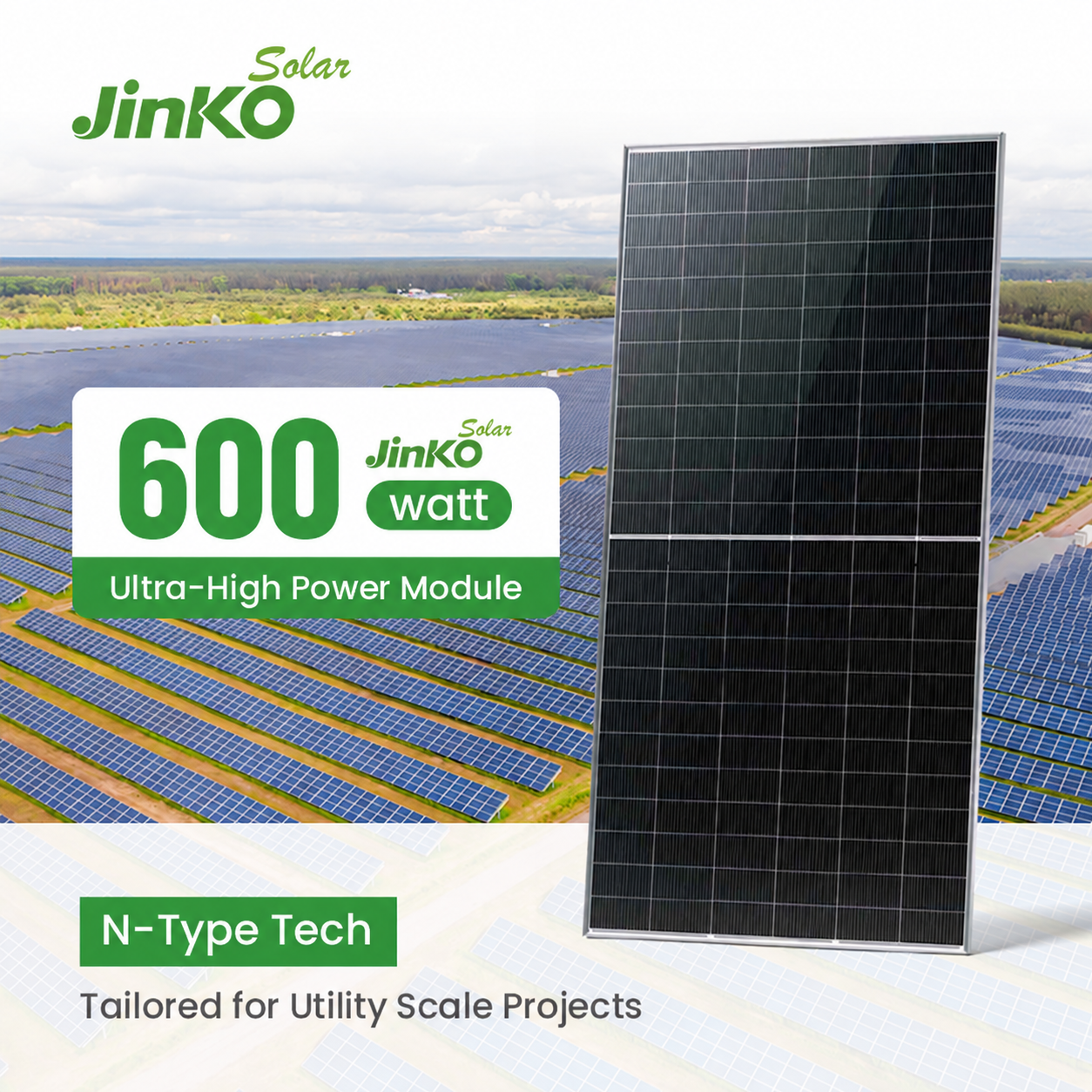
Jinko N Type Bifacial 600W TOPCon Solar Module
Ultra-low temperature coefficient (-0.29%/°C), engineered for high-heat desert climates and industrial warehouse rooftops in Baja California.
View Specifications →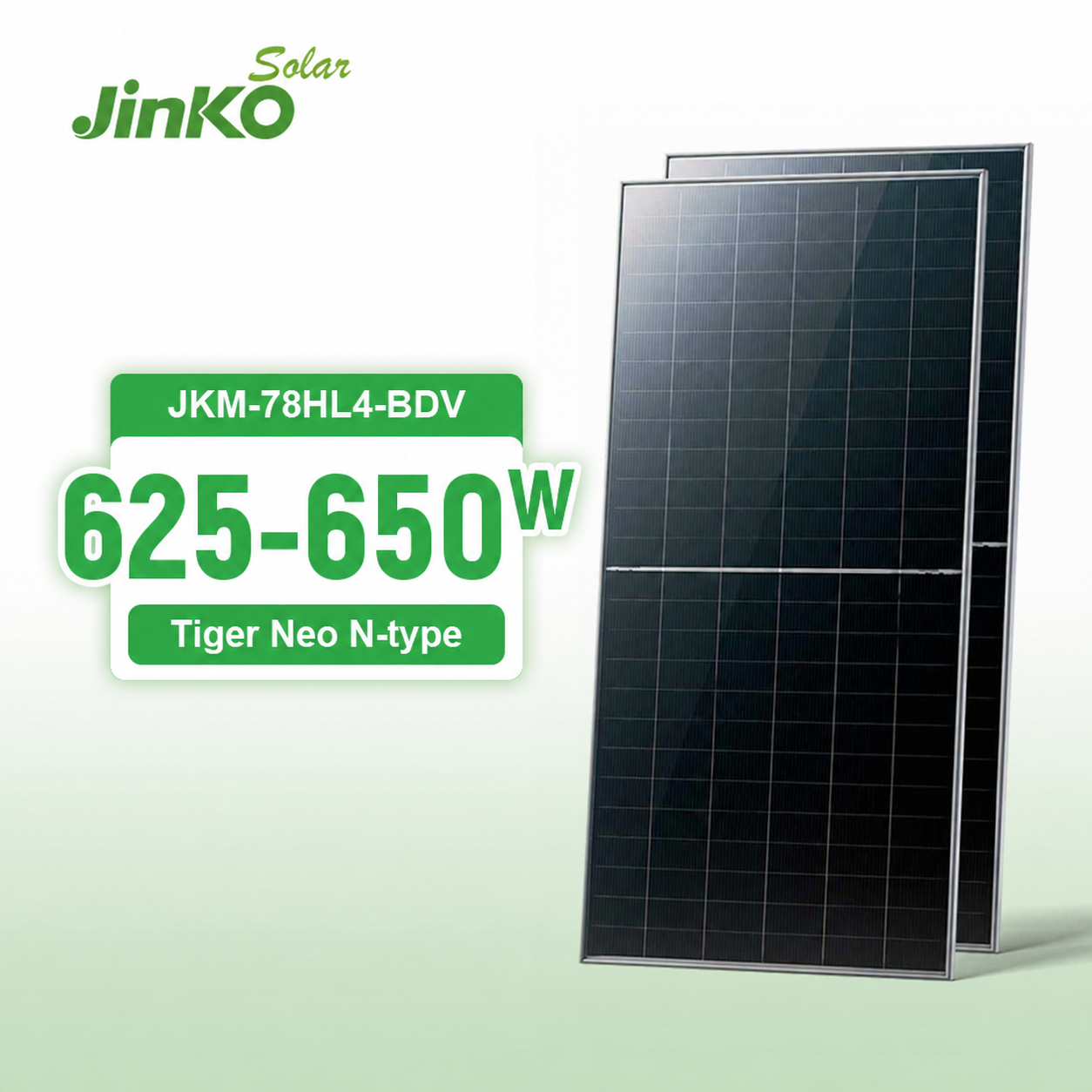
Jinko N Type Bifacial Monocrystalline 625W-640W
Optimized for commercial rooftops with high rear-side bifacial gain (up to 80%±5%), providing seamless synergy with 48V/51.2V server rack banks.
View Specifications →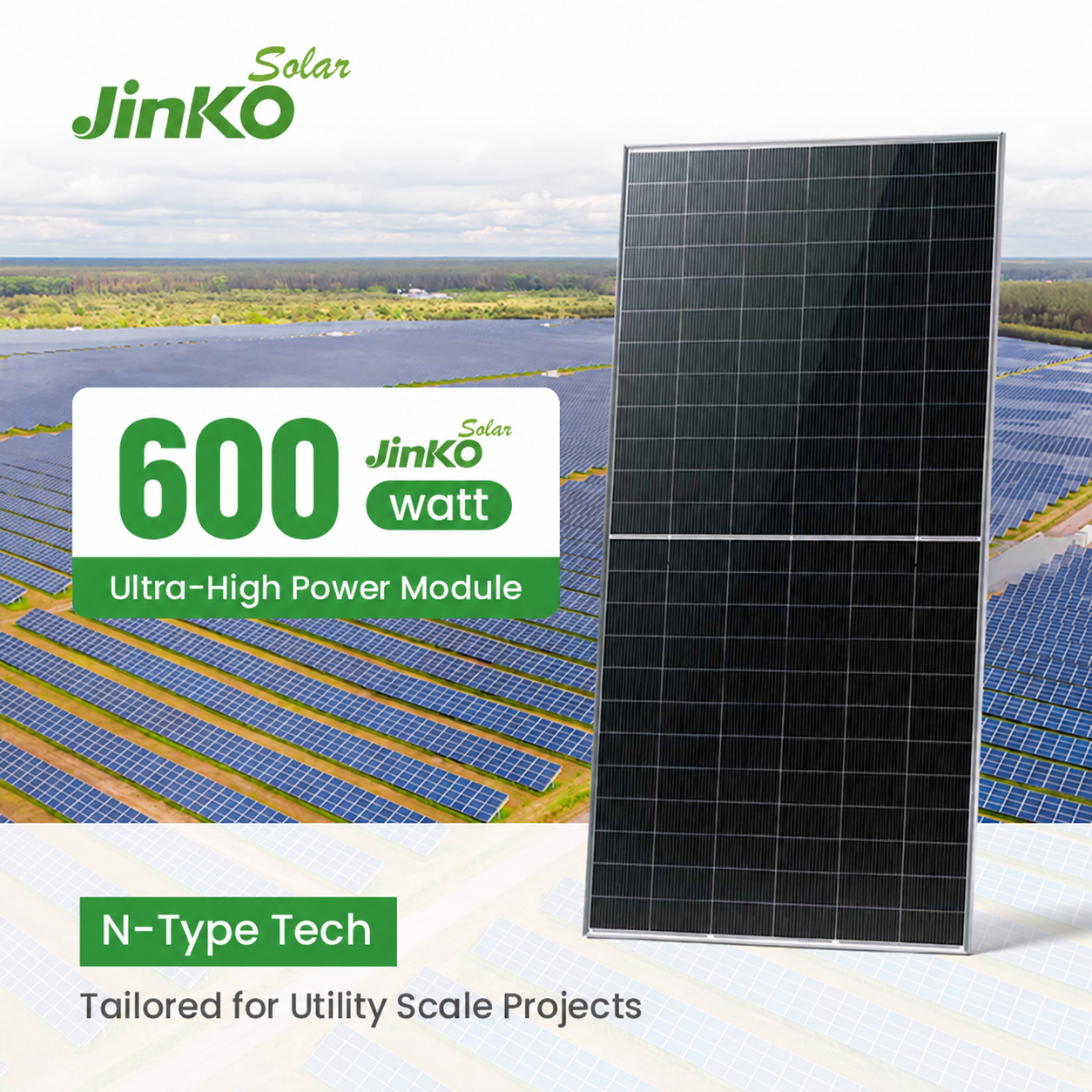
Jinko N Type Bifacial 600W Dual Glass Module
2.0mm+2.0mm dual-glass structure resistant to micro-cracks, harsh humidity, and marine salt mists drifting from the Pacific coast near Tijuana.
View Specifications →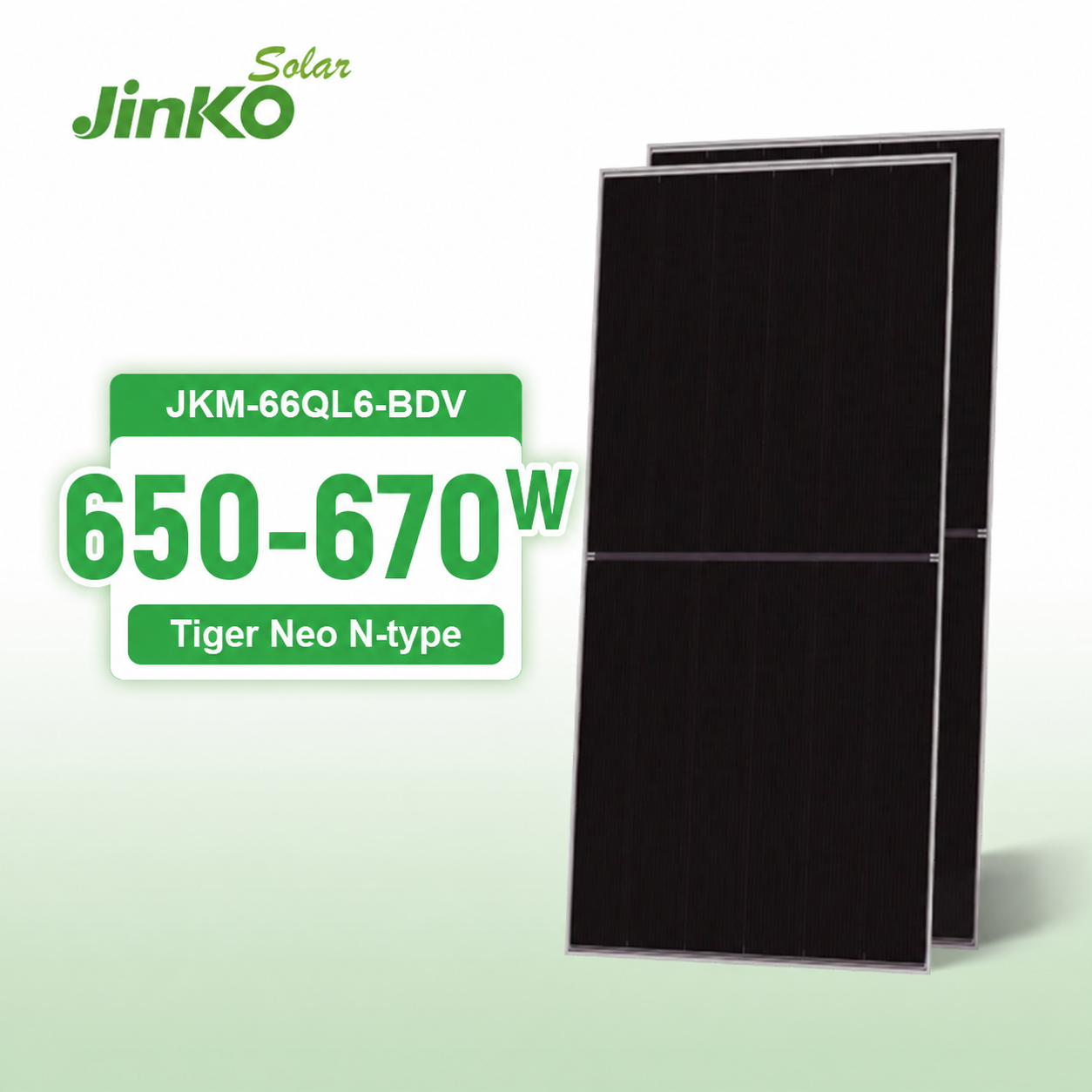
Jinko Bifacial Double Glass N Type 650W-670W
Engineered for large ground-mount arrays and high-capacity microgrids supporting agricultural water pumping in Valle de Mexicali and Tecate.
View Specifications →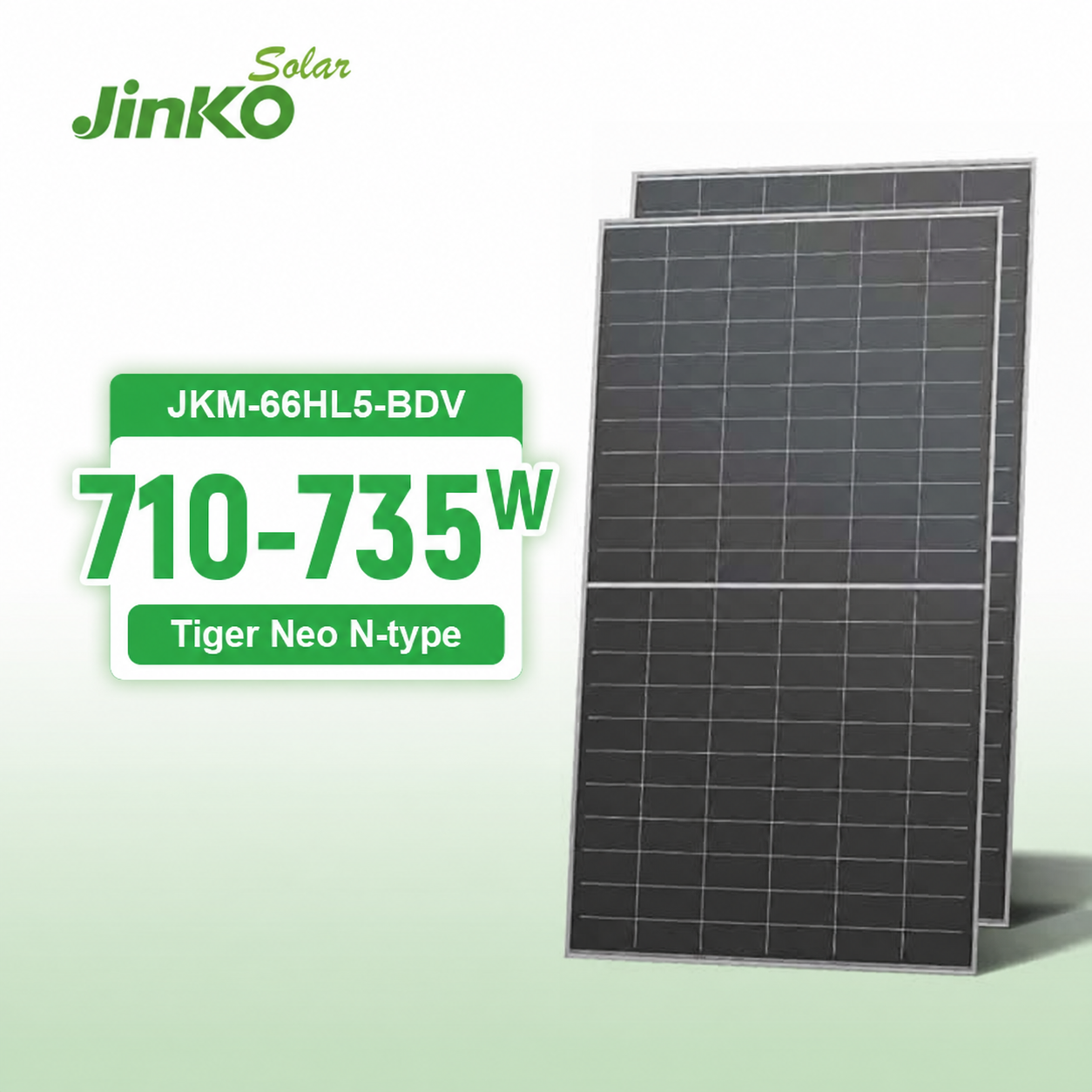
Jinko N-Type TOPCon Bifacial Panels 700W-730W
Massive 700W+ density delivers lowest Levelized Cost of Electricity (LCOE) for multi-megawatt industrial park projects in the Tijuana-Rosarito hub.
View Specifications →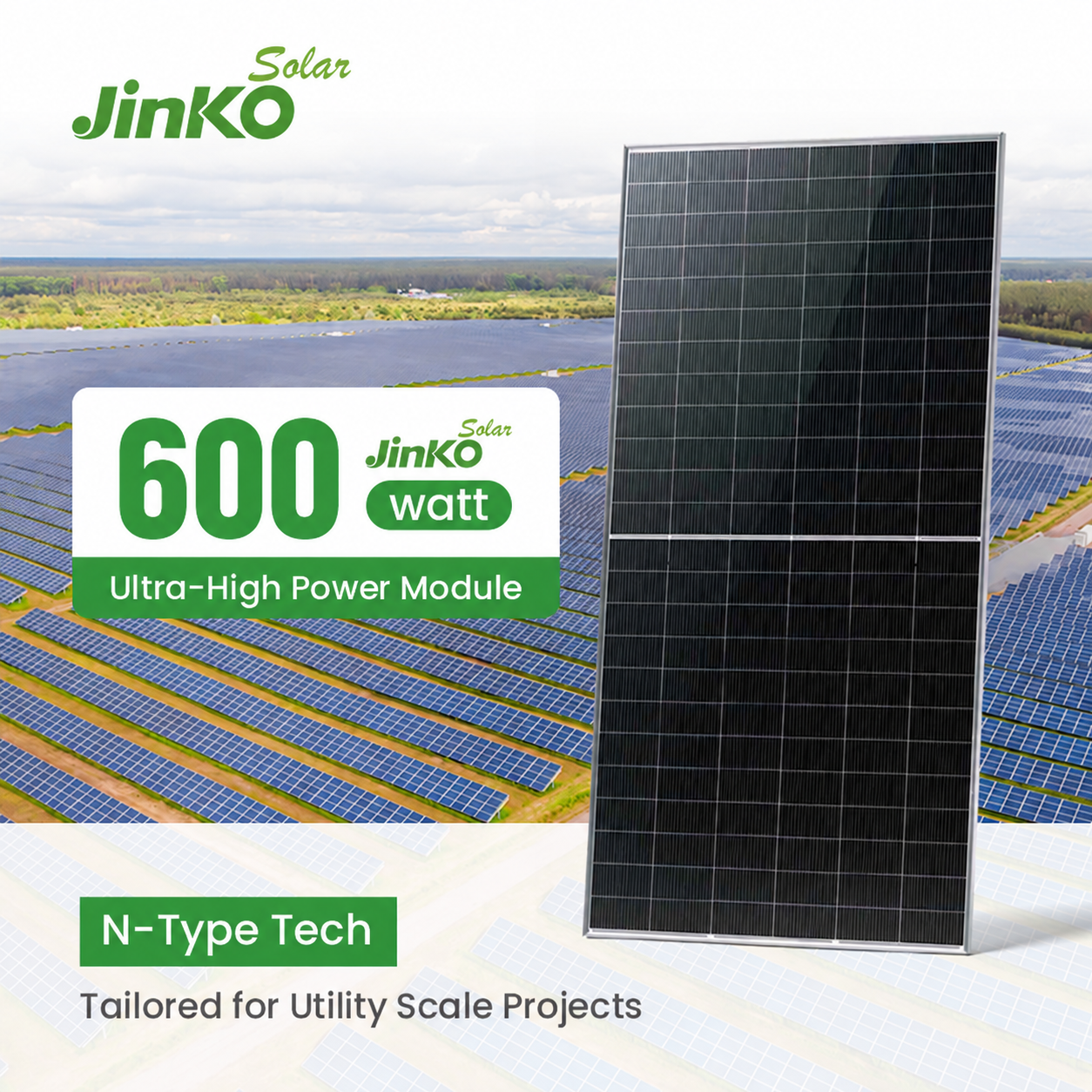
Jinko N-Type Bifacial Monocrystalline 585W Module
Optimal dimensions for commercial factory rooftops and residential carports, compatible with 3-phase Deye hybrid inverters and low-voltage battery banks.
View Specifications →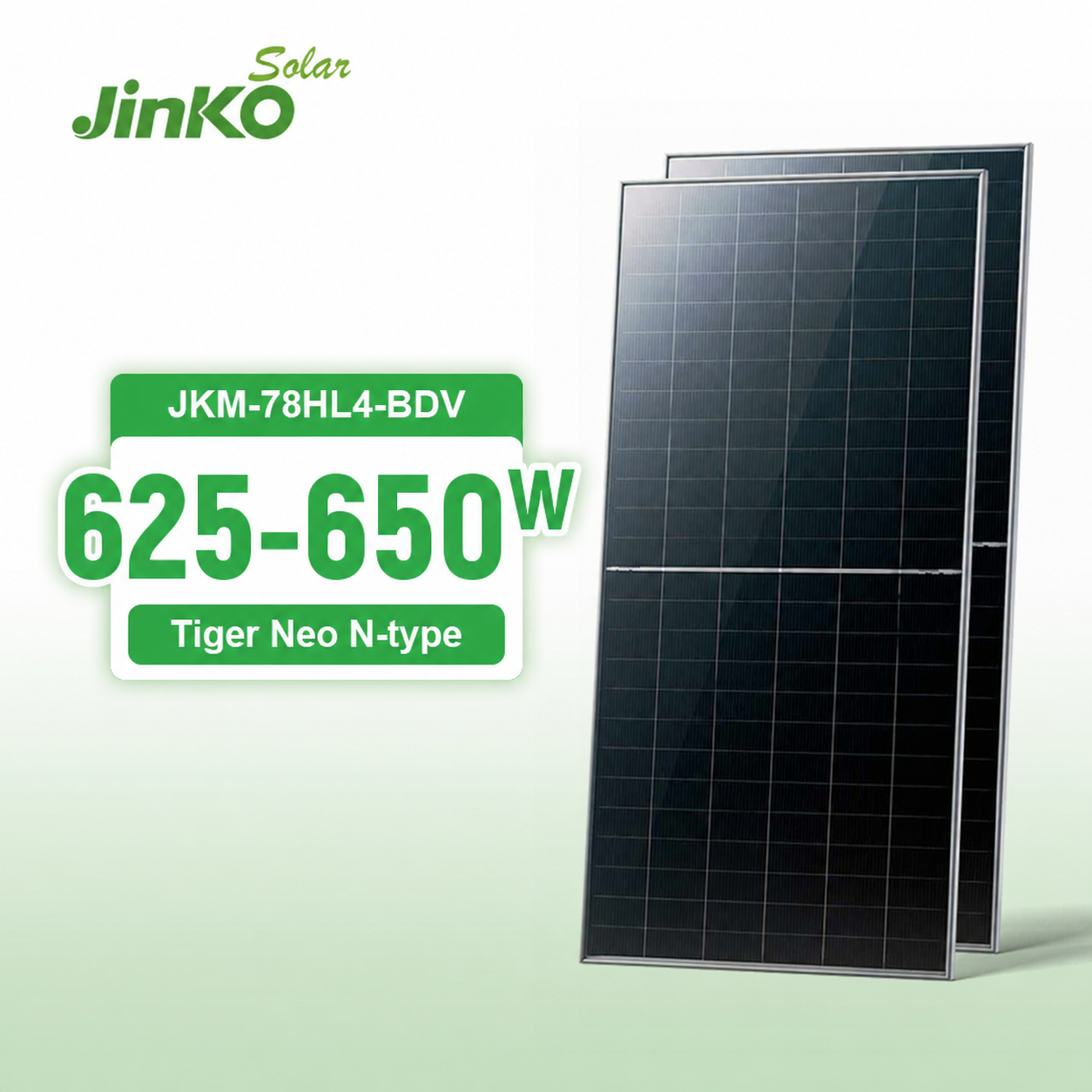
Jinko N-Type Bifacial PV 650W Double Glass
Features enhanced 16BB (Busbar) technology, superior mechanical load resistance (5400 Pa front), and zero Light Induced Degradation (LID).
View Specifications →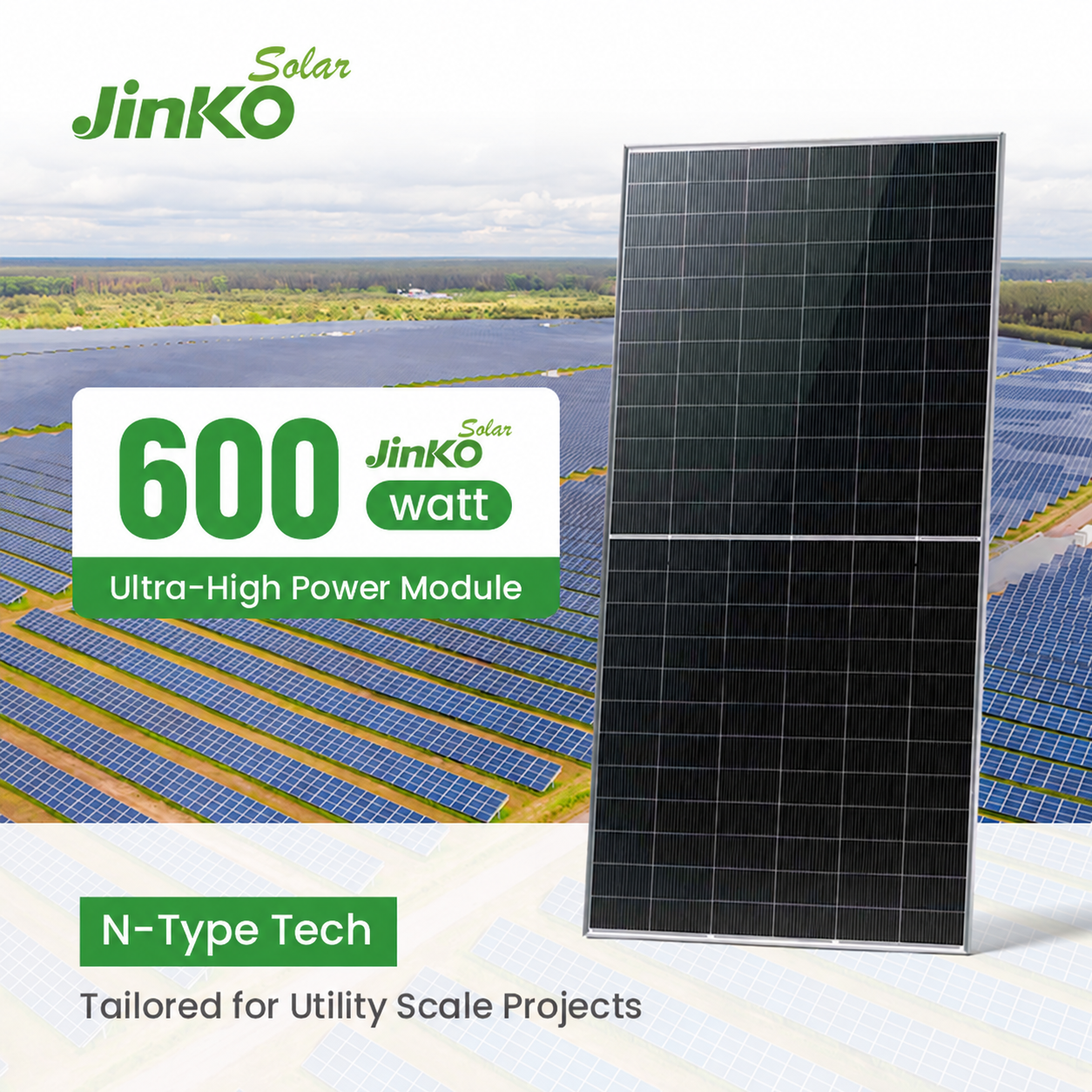
Jinko Bifacial 600W Dual Glass Solar Module
The gold standard for nearshoring EPC contractors requiring reliable 30-year linear performance warranty paired with Antofo rack storage systems.
View Specifications →Overcoming Baja California's Isolated Power Grid with Server Rack BESS
Why the booming export manufacturing cluster in Tijuana cannot rely solely on the CFE grid, and how 48V/51.2V server rack lithium architecture creates resilient energy autonomy.
The city of Tijuana, anchored by prominent industrial corridors such as the Otay Mesa Industrial Zone, Parque Industrial El Florido, Parque Industrial Pacífico, and Mesa de Otay, stands as North America's premier nearshoring epicenter for medical devices, aerospace components, automotive electronics, and contract manufacturing. However, Tijuana's explosive industrial growth is severely bottlenecked by electrical infrastructure limitations. Unlike central and southern Mexico, the state of Baja California operates on the Sistema Eléctrico Baja California (BCA), an isolated regional transmission grid completely disconnected from Mexico's National Interconnected System (SIN - Sistema Interconectado Nacional).
The BCA Grid Vulnerability: The BCA grid relies primarily on local combined-cycle gas turbines, geothermal generation from Cerro Prieto, and emergency imports from California's CAISO via cross-border interties. During high-temperature summer heatwaves, regional reserve margins frequently drop below critical operating levels, triggering rolling industrial blackouts, brownouts, and severe voltage fluctuations that cost maquiladoras tens of thousands of dollars per minute in scrapped assembly batches.
For factory managers, facility directors, and electrical procurement specialists in Tijuana, our China-manufactured 19-inch standard server rack lithium iron phosphate (LiFePO4 / LFP) batteries provide the ultimate modular defense. Engineered with high-integrity Tier-1 prismatic automotive-grade cells, integrated intelligent Battery Management Systems (BMS), and native protocol matching for leading hybrid inverters (including Deye, Megarevo, and Antofo series), our rack-mounted storage units deliver continuous operational stability, millisecond load transfers, and strategic financial savings under Mexico's tariff structures.
CFE GDMTH Peak Shaving
Under CFE's Gran Demanda en Media Tensión Horaria (GDMTH) tariff, peak energy charges during the summer window (typically 18:00 to 22:00) can exceed base energy costs by over 300%. Our server rack batteries discharge automatically during peak hours to suppress facility maximum demand (kW) peaks, directly slashing monthly capacity and distribution charges on utility bills.
Critical Cleanroom & SMT Protection
Medical device packaging facilities and surface-mount technology (SMT) lines along Tijuana's industrial corridor cannot tolerate even micro-second voltage sags. Combining our fast-discharging 51.2V rack batteries with high-speed hybrid inverters ensures pure sine-wave UPS-grade transitions (<10 milliseconds), keeping sensitive robotic and pneumatic machinery fully operational.
Thermal Resilience in Semiarid Baja
Tijuana experiences dry, high-ambient summer temperatures combined with dense industrial building heat envelopes. While traditional lead-acid or GEL batteries suffer severe thermal runaway and cyclic breakdown above 30°C, our LiFePO4 server rack batteries maintain full cyclic stability up to 55°C, supported by internal multi-probe thermal monitoring.
Why Server Rack LiFePO4 Outperforms Legacy Storage in Mexico
A data-backed comparative analysis between our factory-direct 51.2V rack modules and traditional industrial energy solutions deployed in Baja California.
| Performance Parameter | VOLT Server Rack LFP (51.2V 100Ah/200Ah) | Traditional Deep Cycle GEL Battery | Conventional Industrial VRLA / AGM |
|---|---|---|---|
| Cycle Life (@ 80% Depth of Discharge) | 6,000+ Cycles (15+ Years) | 1,200 – 1,500 Cycles | 500 – 800 Cycles |
| Usable Energy Efficiency (Round-Trip) | > 95% Efficiency | 78% – 82% Efficiency | 70% – 75% Efficiency |
| Volumetric Energy Density (Footprint) | Standard 19-inch 3U / 4U Server Rack (Minimal floor area) | Requires massive battery room & heavy racking | Extremely bulky; high structural reinforcement needed |
| Inverter Communication Integration | Direct CAN / RS485 Dual-Bus Protocol (Deye, Antofo, Victron) | No internal BMS; voltage-only guessing parameters | Unmonitored string voltages; high failure rate |
| Thermal Stability & Fire Safety | LiFePO4 Chemistry (Zero Thermal Runaway up to 270°C) | Acid electrolyte; moderate off-gassing risk | Prone to thermal expansion and toxic acid leaks |
| Levelized Cost of Storage (LCOS / kWh) | ~$0.05 – $0.07 USD per delivered kWh | ~$0.18 – $0.24 USD per delivered kWh | ~$0.28 – $0.35 USD per delivered kWh |
As documented above, the capital expenditure (CAPEX) for server rack lithium batteries pays for itself within 2.5 to 3.5 years in Tijuana, driven by the elimination of routine battery replacements, reduced air conditioning overhead for battery rooms, and zero ongoing maintenance requirements. In contrast, lead-based alternatives impose persistent operational headaches, toxic disposal liabilities under Mexican environmental laws (PROFEPA), and unpredictable downtime.
Macro Trends Shaping Commercial Energy Storage in Tijuana
Key economic, regulatory, and technical developments driving B2B demand for Chinese energy storage exports throughout Baja California through 2030.
The convergence of global supply chain re-shoring, stringent corporate ESG (Environmental, Social, and Governance) mandates, and Mexico's national energy policy has catalyzed an unprecedented surge in commercial and industrial distributed generation. Several distinct market forces define the purchasing patterns of solar contractors, system integrators, and maquiladora facility operators across Tijuana:
1. The Nearshoring Industrial Real Estate Explosion: The Otay Mesa border crossing has become the busiest commercial trade portal along the US-Mexico border. Multinational corporations establishing secondary manufacturing facilities in Tijuana face multi-month queues to secure grid interconnection approval (*factibilidad de suministro*) from CFE. As a result, developers are constructing industrial warehouses with integrated off-grid or grid-interactive hybrid solar-plus-storage microgrids to achieve immediate operational readiness without waiting for regional grid upgrades.
2. 500kW Interconnection Ceiling & Battery Arbitrage: Under current Mexican energy regulations overseen by the Comisión Reguladora de Energía (CRE), distributed solar generation projects up to 499 kWp benefit from streamlined net-metering (*generación distribuida*) and exempted generation permits. To maximize renewable yield beyond 499 kWp without entering complex wholesale electricity market (MEM) licensing, corporate users are installing high-capacity server rack battery banks behind the meter. Excess daytime solar generation that cannot be exported to CFE is captured directly in 51.2V rack systems and deployed during evening production shifts.
3. Cross-Border Supply Chain Synergies (San Diego - Tijuana Hub): Many American multinational engineering firms headquartered in San Diego design their manufacturing plants in Tijuana. These US-based engineering teams demand standardized 19-inch IT-grade server rack battery topologies that integrate seamlessly with enterprise data racks, SCADA monitoring networks, and standardized Modbus/TCP industrial automation systems. Our China manufacturing facility produces server rack units specifically aligned with North American UL-compatible rack dimensions and terminal configurations.
Maquiladora Cleanrooms
Medical manufacturing facilities in Parque Industrial Pacífico use our 100Ah/200Ah server rack modules in modular 15-tier cabinets to ensure zero-dropout backup for cleanroom HEPA positive-pressure filtration systems and sterilization lines during grid brownouts.
Cold Storage Logistics (Otay Mesa)
Cross-border perishable logistics hubs and pharmaceutical refrigeration facilities implement our server rack batteries for nocturnal chilling cycles, circumventing peak CFE electrical demand charges while preserving temperature integrity.
Border Telecom Infrastructure
High-security cross-border fiber routing huts, repeater towers, and commercial data exchange centers along the Otay border line utilize our standard 48V telecom-grade rack units for continuous 24/7 communications continuity.
Why North American Integrators Choose Our China Factory
Headquartered in Hangzhou, Zhejiang, we combine strict tier-1 cell sourcing, comprehensive pre-shipment protocol matching, and hazardous cargo logistics expertise to protect your import investment.
Purchasing lithium batteries from China for deployment in northern Mexico presents distinct engineering and logistics hurdles: incompatible BMS protocols, transit shock damage, incorrect customs tariff codes, and lengthy after-sales communication lag. At Hangzhou VOLT New Energy, we have structured our production and quality control specifically to eliminate these trade vulnerabilities.
Verified Inverter Protocols
Every server rack batch undergoes pre-shipment bench testing with Deye, Megarevo, and Antofo hybrid inverters. We verify CAN/RS485 baud rates, pin-out mappings, and BMS handshake parameters before packing.
100% Grade-A Prismatic Cells
We strictly utilize brand-new, factory-matched automotive-grade prismatic LiFePO4 cells with full QR code verification, ensuring tight internal resistance matching (<0.05mΩ) and balanced voltage capacity across the entire rack pack.
Class 9 DG Shipping to Baja
Complete export documentation packages including UN38.3 test reports, 1.2m drop test certificates, and marine MSDS. We arrange direct ocean freight to Port of Ensenada or bonded transit via Long Beach/Los Angeles into Otay Mesa.
Consolidated Solar Kits
Consolidate your entire procurement in one container: 51.2V server rack batteries, Tier-1 Jinko N-Type TOPCon bifacial modules, Deye hybrid inverters, DC combiners, and solar racking, reducing your overall freight and customs brokerage fees.
Frequently Asked Questions by Tijuana Buyers
Practical technical, commercial, and customs guidance for solar distributors, EPC contractors, and factory facility managers importing from our China factory.
Which shipping routes and customs ports are most efficient for delivering batteries to Tijuana?
Option A: Direct Ocean Freight to the Port of Ensenada, Baja California. The Port of Ensenada is located approximately 110 kilometers south of Tijuana. Goods clear Mexican customs (Aduana de Ensenada) directly under your Mexican company's *Padrón de Importadores*. From Ensenada, containerized cargo moves via secure highway freight directly to your warehouse in Otay Mesa or El Florido.
Option B: In-Transit Bond via Port of Los Angeles / Long Beach. Many multinational maquiladoras operating under the IMMEX program route cargo into the Port of Long Beach under an in-bond customs declaration (T&E - Transportation and Exportation), moving the container bonded south through San Diego directly to the Otay Mesa Commercial Port of Entry. We provide the mandatory UN38.3 test summaries, Class 9 Dangerous Goods maritime packaging, and bilingual commercial invoices required by both US and Mexican customs brokers.
Do these server rack batteries comply with Mexican electrical standards (NOM-001-SEDE)?
How does communication work between your server rack BMS and Deye hybrid inverters?
Can we purchase under Mexico's IMMEX / Maquiladora program for tax exemption?
How many rack batteries can be wired in parallel for commercial peak-shaving?
What warranty protection is provided, and how are replacement components handled in Baja California?
Equip Your Next Industrial Project in Tijuana with Factory-Direct Storage
Request our comprehensive technical whitepaper, Deye-inverter integration guide, complete battery rack pricing tiers, and container consolidation schedules for Baja California.