Engineered Photovoltaic Modules for Haifa Project Portfolios
Combining heavy-duty dual-glass baseline production with cutting-edge ultra-flexible polymer integrations. Explore our top 8 high-yield solar modules deployed across commercial logistics facilities, marine superstructures, and residential developments.
Solving Structural, Marine, and Heritage Challenges in Northern Israel
Haifa’s unique geography—spanning from the industrial petrochemical zones and deep-water container berths of Haifa Bay up to the historic, limestone-clad peaks of Mount Carmel—presents microclimatic and structural demands where conventional rigid glass solar modules fall short.
Haifa Port & Marine Logistics
The Port of Haifa, Kishon River mouth, and adjacent shipping yards handle dense container operations under constant maritime salt mist (ISO 12944 C5-M marine corrosive environment). Our lightweight flexible solar solutions integrate advanced ETFE/fluoropolymer front sheets that repel airborne marine salts, sulfurous exhaust, and chemical contaminants without glass etching, delamination, or metallic frame electrolysis.
Mount Carmel Heritage Rooftops
In residential quarters such as French Carmel, Central Carmel, and Denya, older Bauhaus-influenced and historic masonry buildings feature aging roof timbers and low-load concrete slabs unable to bear standard 25 kg/m² glass-metal PV arrays. Flexible panels weigh merely 2.8 to 3.3 kg/m² and bond seamlessly using structural silicone or peel-and-stick membranes, preserving historical building envelopes without drilling penetrations.
Curved Silos & Industrial Silhouettes
Petrochemical holding tanks, grain elevators in the bay, and modern curved architectural canopies in the Matam High-Tech Park cannot host flat rigid racks due to wind vortex aerodynamics and structural geometry. With bending radiuses allowing arcs up to 240 degrees, our flexible modules conform flush to curved metal surfaces, lowering the drag coefficient and virtually eliminating wind uplift failures.
Structural Load Physics: Why Dead Load Limitations Drive Adoption in Haifa
In Mediterranean coastal topography, roof engineers face stringent limitations governed by Israeli Standard SI 412 (Loads on Building Structures) and SI 414 (Wind Loads). Traditional solar installations impose substantial dynamic and dead load penalties: the combination of standard 580W-700W glass-glass panels (28-34 kg per module), aluminum racking, steel brackets, and heavy concrete ballast blocks routinely aggregates to 22-38 kg per square meter. For commercial distribution warehouses located across the Haifa Bay industrial basin—many constructed using lightweight corrugated metal sandwich panels or aging pre-stressed concrete beams—this dead load threshold either triggers cost-prohibitive structural reinforcement or fails safety clearances outright.
Furthermore, Mount Carmel's microclimatic wind phenomena present acute mechanical stresses. Strong winter Mediterranean depressions channel violent localized gusts through the valleys (Wadis) of Haifa, generating severe wind suction forces along roof perimeters and ridges. Because flexible panels are surface-bonded directly to the roof deck using aerospace-grade structural adhesives (e.g., modified silane polyethers) or integrated magnetic backings on standing seam roofs, air cannot circulate beneath the module. This creates an zero-clearance boundary layer that nullifies dynamic wind uplift (Bernoulli suction effect), enabling reliable operation in wind fields exceeding 180 km/h without structural fatigue.
| Performance / Structural Parameter | Factory-Direct Flexible Solar Panel | Standard Rigid Monofacial Module | Conventional Dual-Glass Rigid Module |
|---|---|---|---|
| Weight per Square Meter | 2.8 – 3.3 kg/m² | 18 – 22 kg/m² | 24 – 30 kg/m² |
| Installation Method | Non-penetrating structural adhesive / Velcro | Clamped to elevated aluminum rails | Heavy ballasted or drilled roof anchors |
| Curved Surface Adaptability | Conforms up to 30° - 240° arcs | Rigid / Zero curvature | Rigid / Zero curvature |
| Corrosion Resistance (IEC 61701) | Polymer ETFE impervious to salt pitting | Anodized aluminum frame subject to pitting | High resistance, heavy mechanical footprint |
| Micro-Crack Resilience | Flexible cell busbars absorb thermal flexing | Vibration induces micro-fracturing | High rigidity, vulnerable to torsional twist |
| Roof Waterproofing Impact | Zero penetration; 100% leak-proof | High puncture risk from hardware | High puncture risk from ballast pressure |
Northern Israel Photovoltaic Growth & Grid Trends
Strategic economic factors, regulatory shifts by the Israel Electric Corporation (IEC), and environmental mandates driving the transition toward high-yield distributed flexible PV throughout the Haifa district.
Decarbonization of Haifa Bay & Renewable Urban Mandates
Governmental Resolution 1231 regarding the development and environmental transformation of Haifa Bay is systematically reshaping the regional energy map. With urban planners phasing out polluting heavy industries in favor of green technological parks, clean residential districts, and logistics terminals, distributed solar generation has shifted from an optional green initiative to a primary municipal development directive.
Under the Israel Electric Corporation's Net Metering and Virtual Supply frameworks, commercial real estate developers in Haifa must maximize solar harvest across all available square meterage—including curved awnings, logistics roof skylight skirts, and architectural facade surfaces where conventional glass panels are structurally disqualified. Ultra-light flexible panels enable complete asset monetization by converting idle structural boundaries into high-performance photovoltaic generators.
Moreover, northern Israel’s high summer solar irradiance—frequently exceeding 2,150 peak sunlight hours annually—demands exceptional temperature coefficients. Our TOPCon cell technology features an ultra-low temperature coefficient of -0.30%/°C, ensuring that when roof surface temperatures reach 65°C under the intense Levant summer sun, power degradation is minimized compared to older p-type PERC cells.
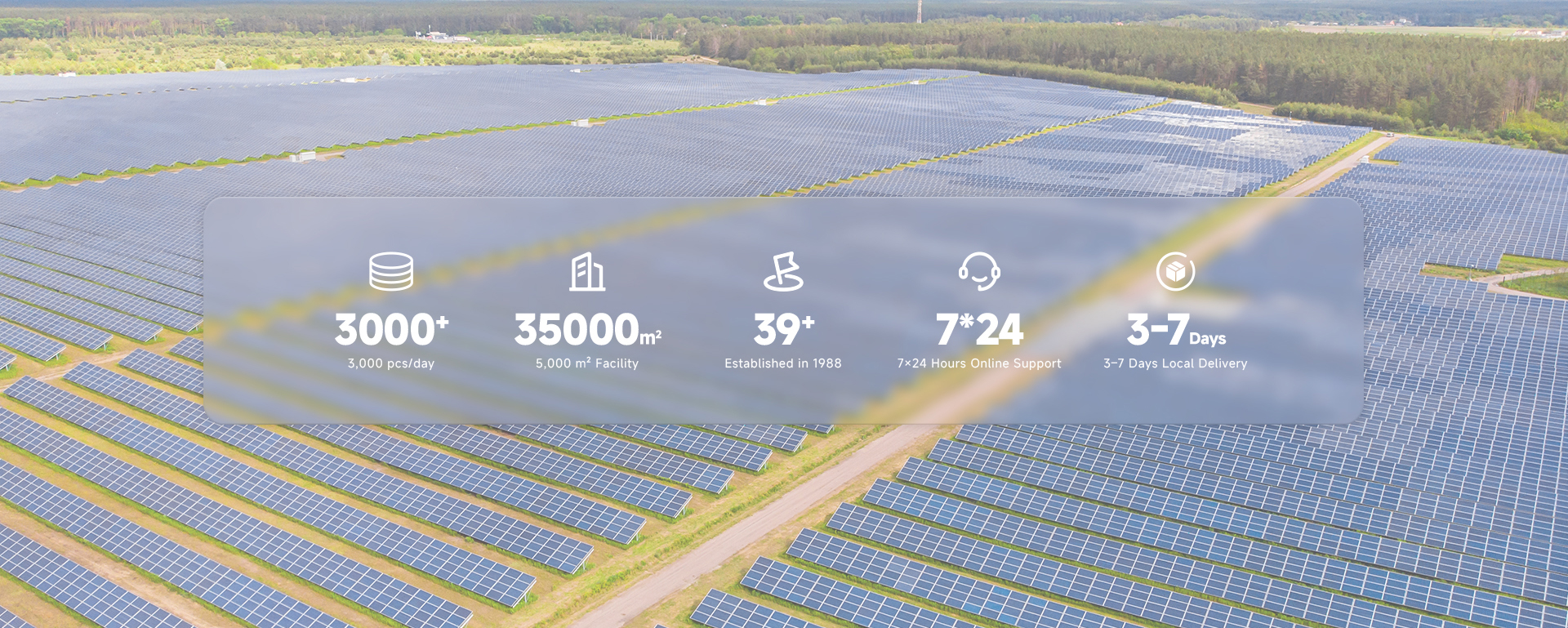
VOLT New Energy: OEM/ODM Quality, Verification & Supply Reliability
From automated module lamination in our cleanroom facilities to rigorous pre-shipment communication and compatibility matching, we provide institutional B2B buyers with uncompromising engineering assurance.

Dual Electroluminescence (EL) Testing
Every flexible panel undergoes high-resolution pre-lamination and post-lamination EL testing to verify zero micro-cracks, gate line continuity, and uniform cell matrix integrity prior to packaging.

Salt-Spray & Thermal Cycling Validation
Certified in state-of-the-art testing chambers across extreme temperature regimes (-40°C to +85°C) and cyclic salt fog exposure, ensuring imperviousness to Mediterranean sea air.

Direct Haifa Port Consolidated Shipping
Complete export freight handling with reinforced roll-proof wooden crating, UN38.3 compliance, Class 9 DG hazardous packing for integrated batteries, and full Israeli Customs customs clearing support.

Full Protocol Interoperability
Guaranteed system-level compatibility: our flexible modules pair seamlessly with leading Deye hybrid inverters and smart LFP storage units, calibrated with factory-matched MPPT tracking parameters.
Frequently Asked Questions by Haifa Contractors & Importers
Key technical, mechanical, and regulatory criteria addressed directly by our senior photovoltaic application engineering team.
How do flexible solar panels withstand Haifa Bay's harsh industrial salt and chemical air?
Can flexible panels be installed without penetrating residential membranes or industrial sheet metal?
How do flexible modules dissipate heat without an air gap underneath?
What is the maximum allowable bending radius during installation?
Are these panels approved by the Standards Institution of Israel (SII) and the IEC?
What lead times and logistical terms apply for delivery to the Port of Haifa?
Can flexible modules be bundled with hybrid inverters and storage in one shipment?
What warranties cover flexible modules compared to standard glass panels?
Request Technical Data & Haifa Project Pricing
Whether you require dead-load calculations for an architectural retrofit on Mount Carmel or containerized shipments for a coastal logistics warehouse in Haifa Bay, our engineering team provides complete layout simulations, string sizing, and prompt CIF Haifa quotations.