Core Industrial Solar Modules & Integrated Storage Units
High-yield N-type TOPCon bifacial modules and industrial-grade LiFePO4 storage engineered to pair seamlessly with hybrid industrial inverters across Jordan's primary manufacturing hub.
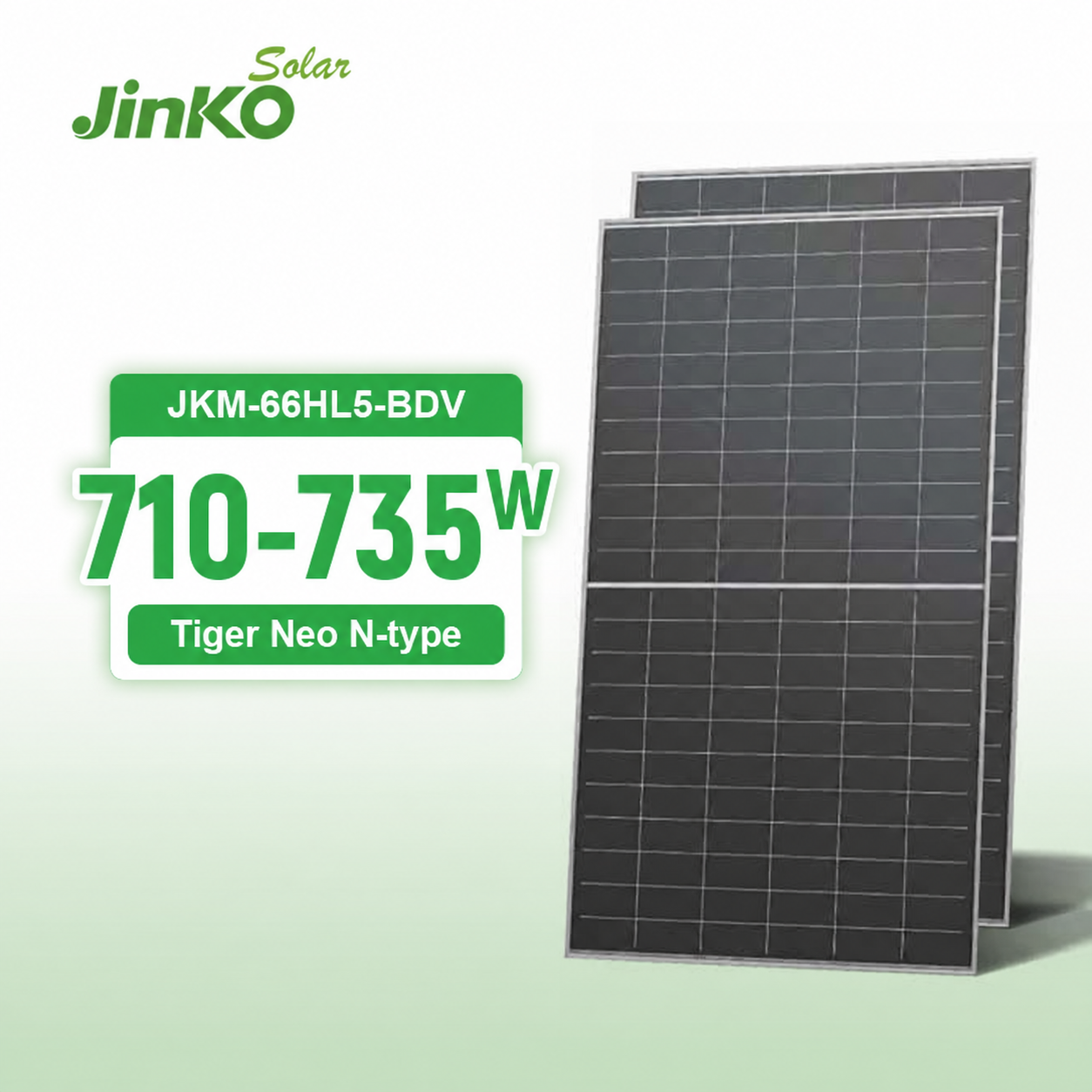
Jinko 700W–730W Bifacial TOPCon Double Glass
Ultra-high wattage TOPCon module engineered for high-albedo installations. Delivers exceptional low-light behavior and minimal degradation under intense desert UV conditions.
View Specifications →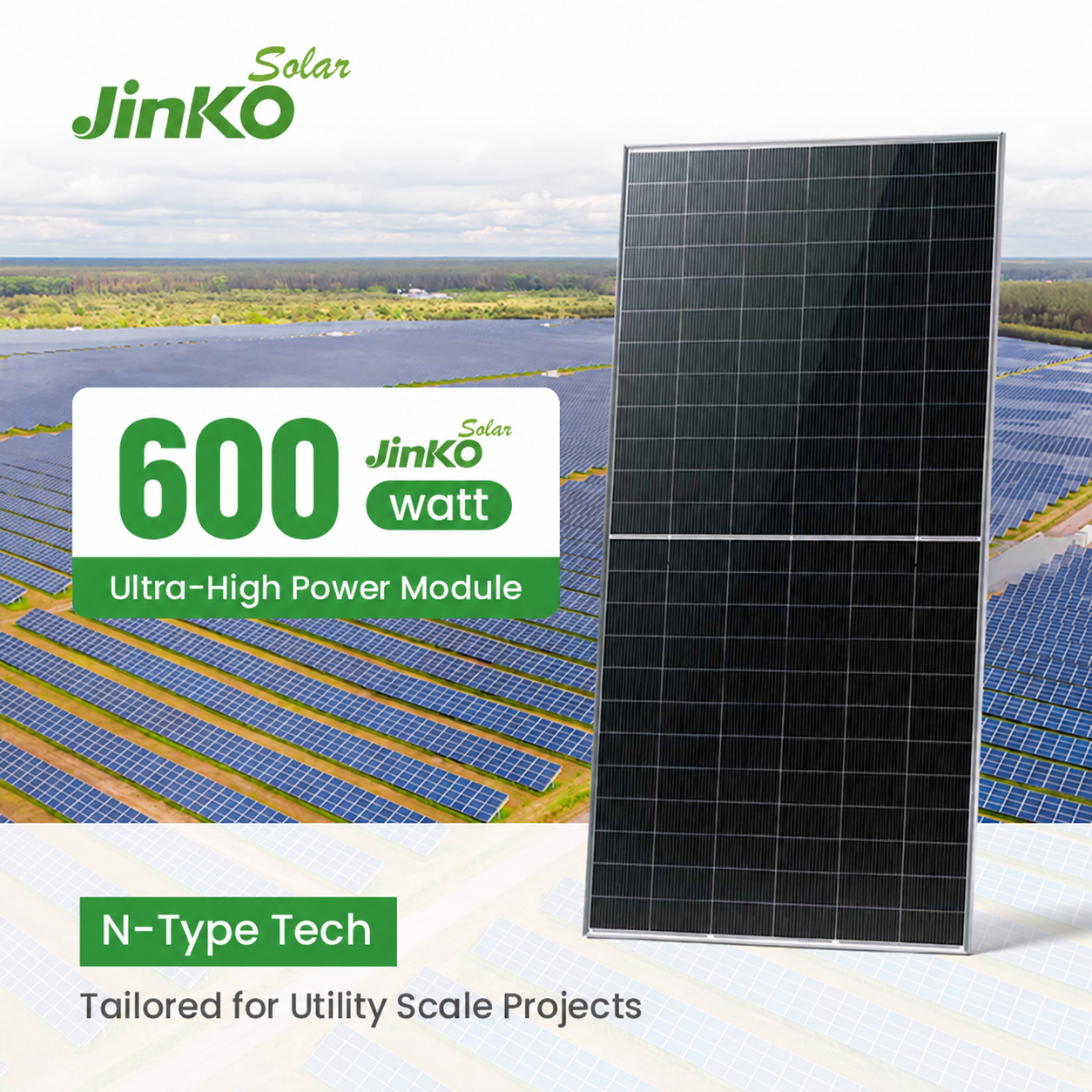
Jinko N-Type Bifacial 580W–600W Dual Glass
Optimized mechanical resistance for industrial shed roofs in Zarqa. Resistant to chemical airborne particulates, ammonia, and high wind loads up to 5400 Pa.
View Specifications →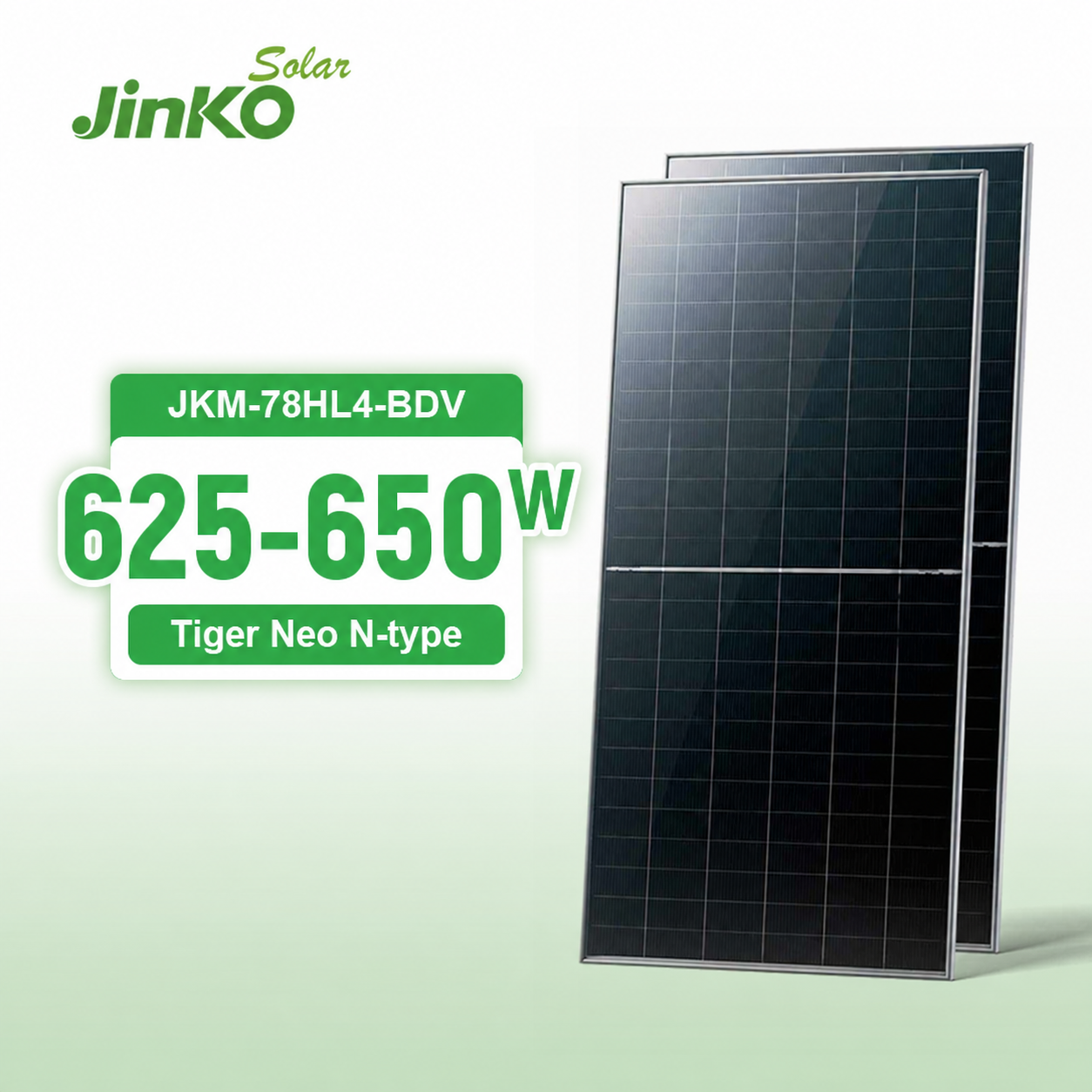
Jinko N-Type Bifacial 630W–650W High-Efficiency
Combines SMBB half-cut cell architecture with Hot 2.0 technology, mitigating localized micro-cracks caused by rapid thermal cycling in Jordanian semi-arid plains.
View Specifications →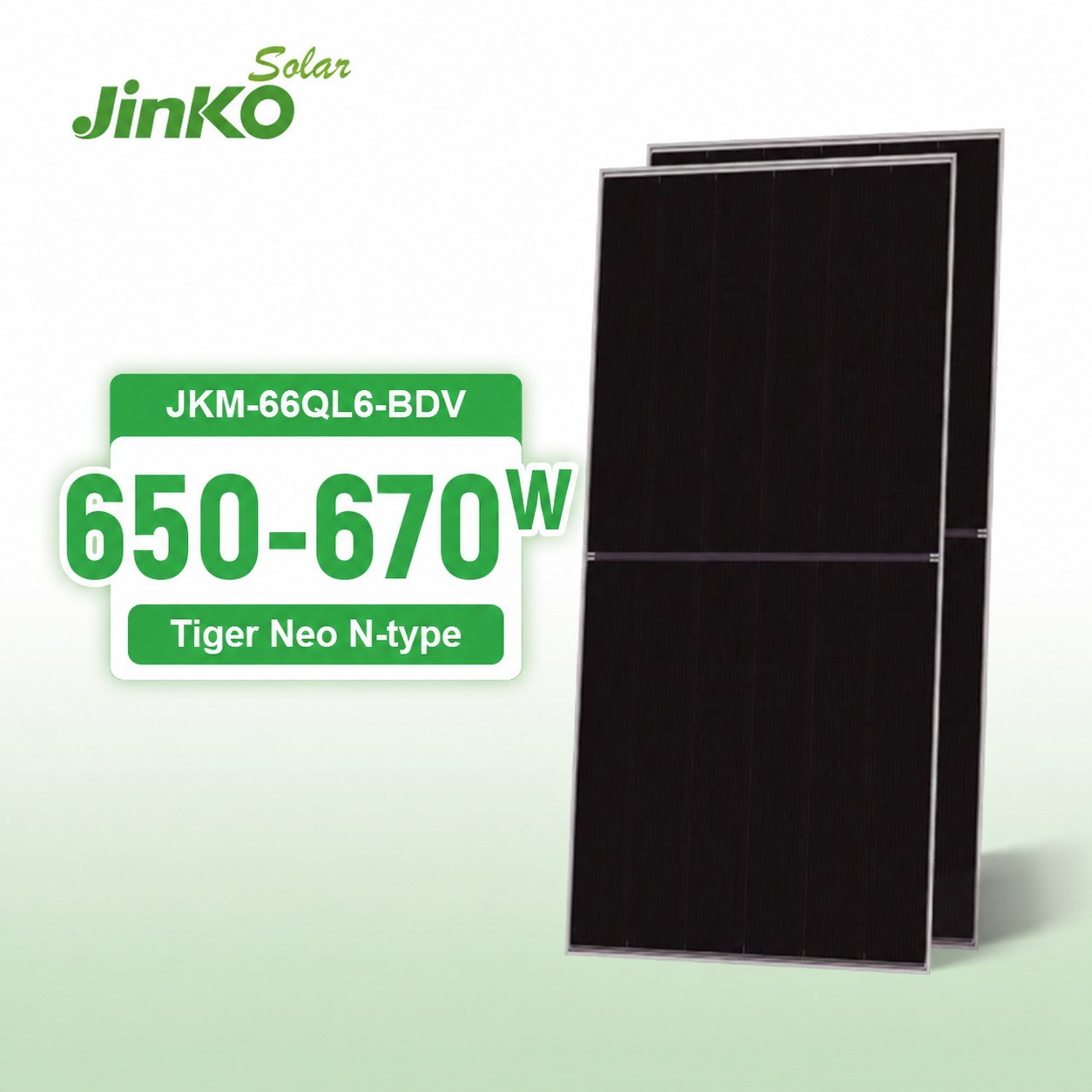
Jinko Panneau Solaire 650W–670W N-Type Bifacial
Dual-glass construction preventing moisture and sand abrasion ingress. Up to 80% bifaciality factor unlocks bonus kWh from sandy soil albedos typical of Eastern Jordan.
View Specifications →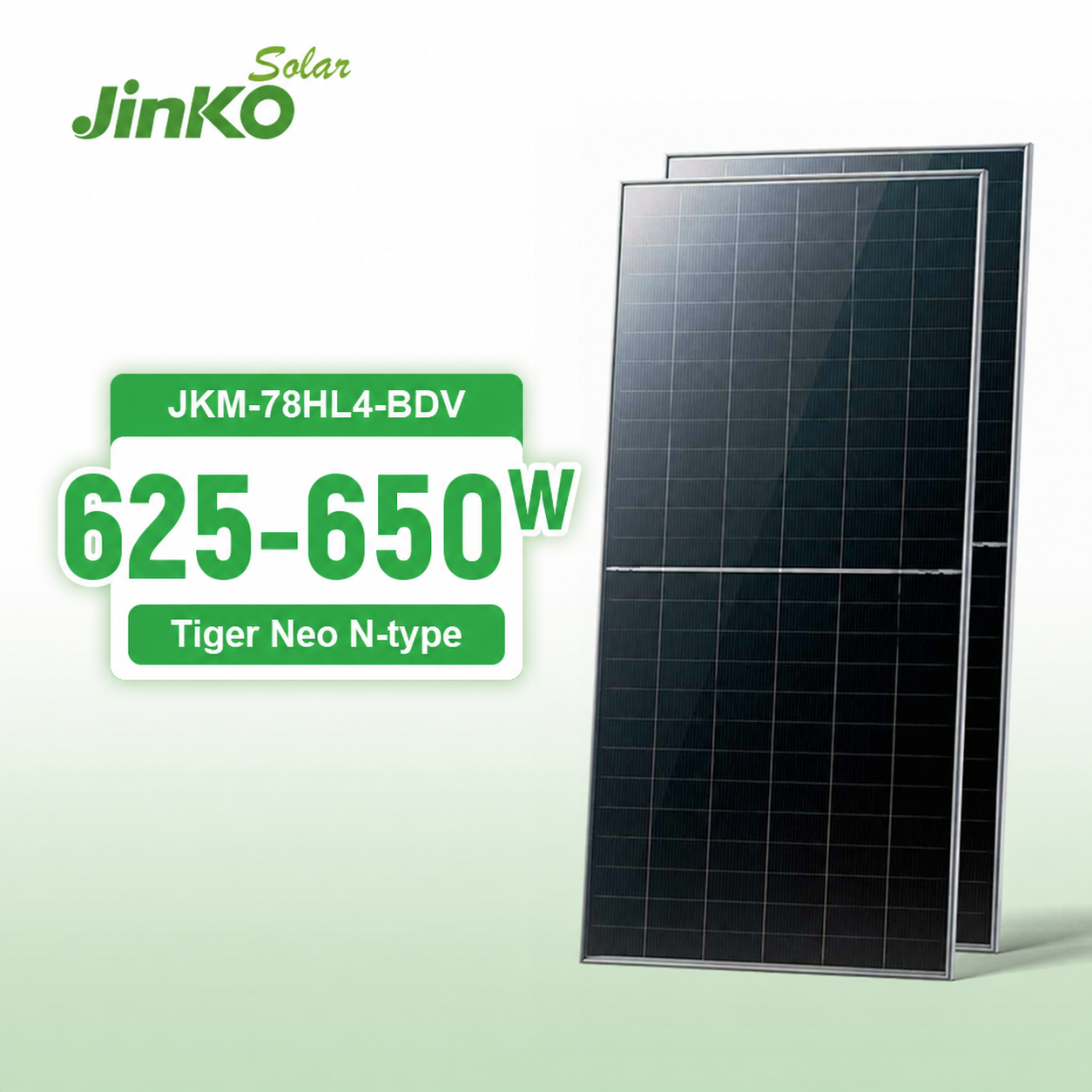
Jinko Double Glass N-Type 625W–645W Module
Engineered for agro-industrial estates and water treatment facilities around the Zarqa River basin. Anti-PID performance certified under 85°C / 85% RH damp heat.
View Specifications →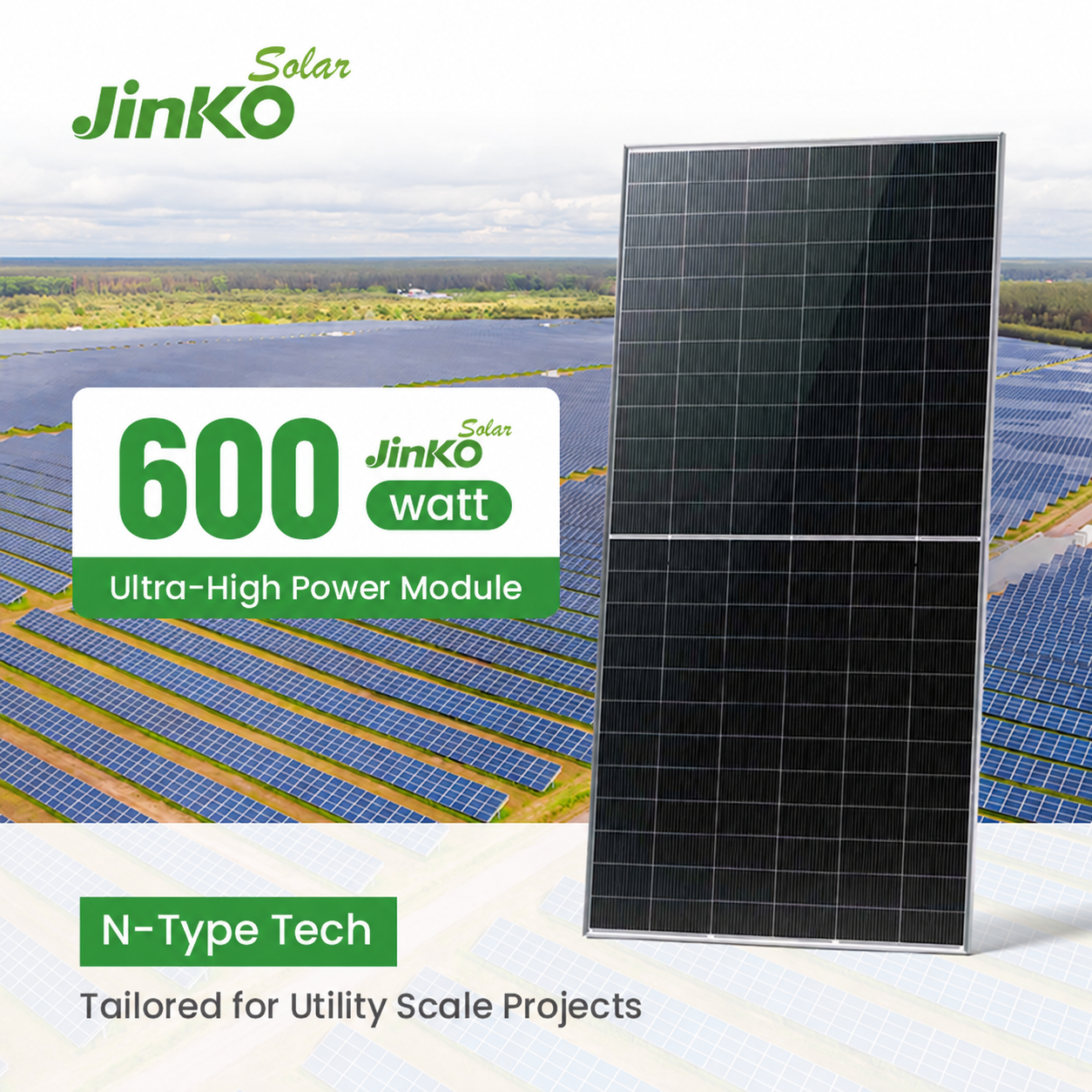
Jinko N-Type Monocrystalline 580W–600W Module
Zero light-induced degradation (LID) ensures consistent lifetime yield. Optimized temperature coefficient (-0.29%/°C) ensures maximum energy output during Zarqa peak summers.
View Specifications →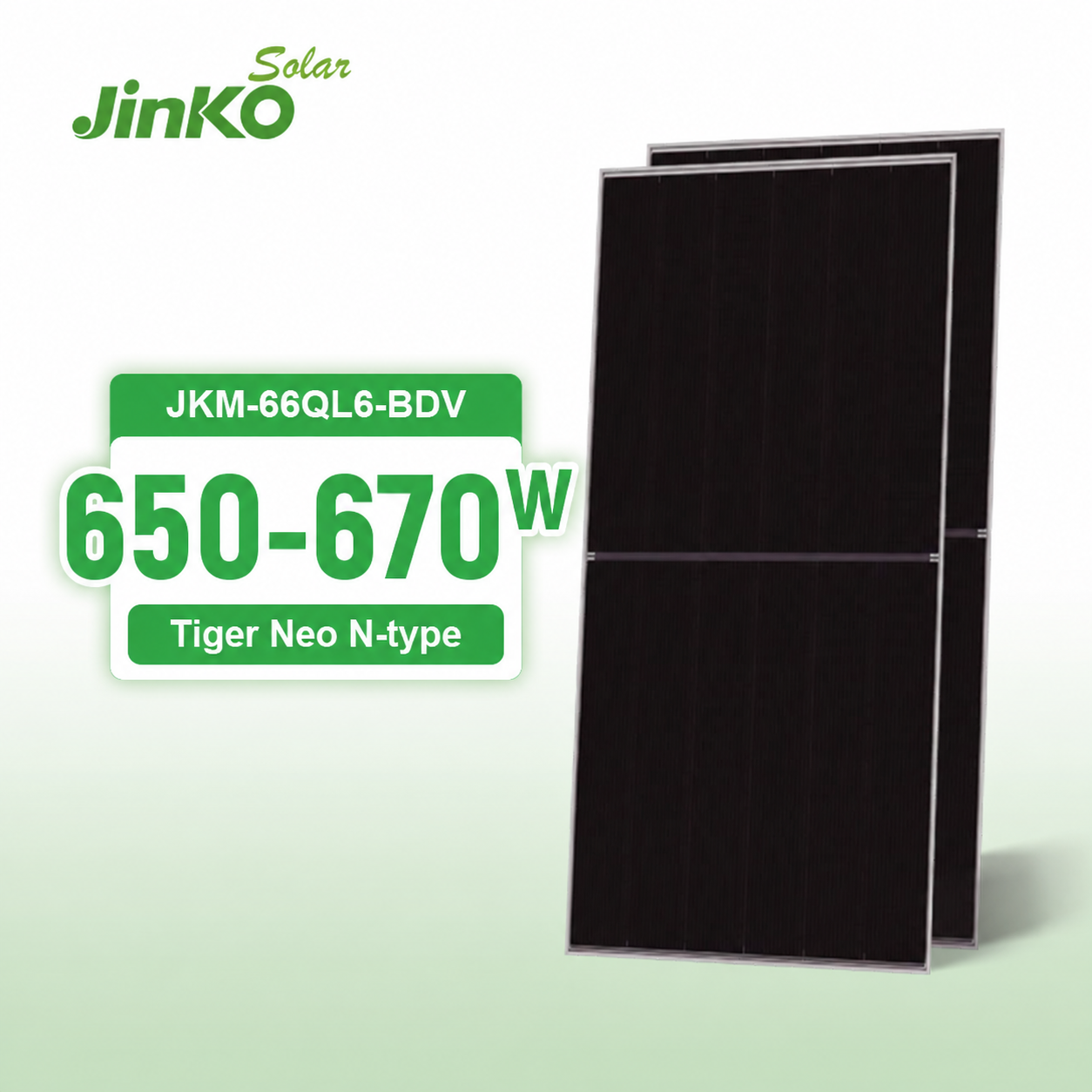
Jinko Dual Glass 650W–670W High-Efficiency
Anti-reflective and anti-soiling coated surface minimize desert dust adhesion, reducing cleaning cycle overheads for steel mills and cement manufacturing facilities.
View Specifications →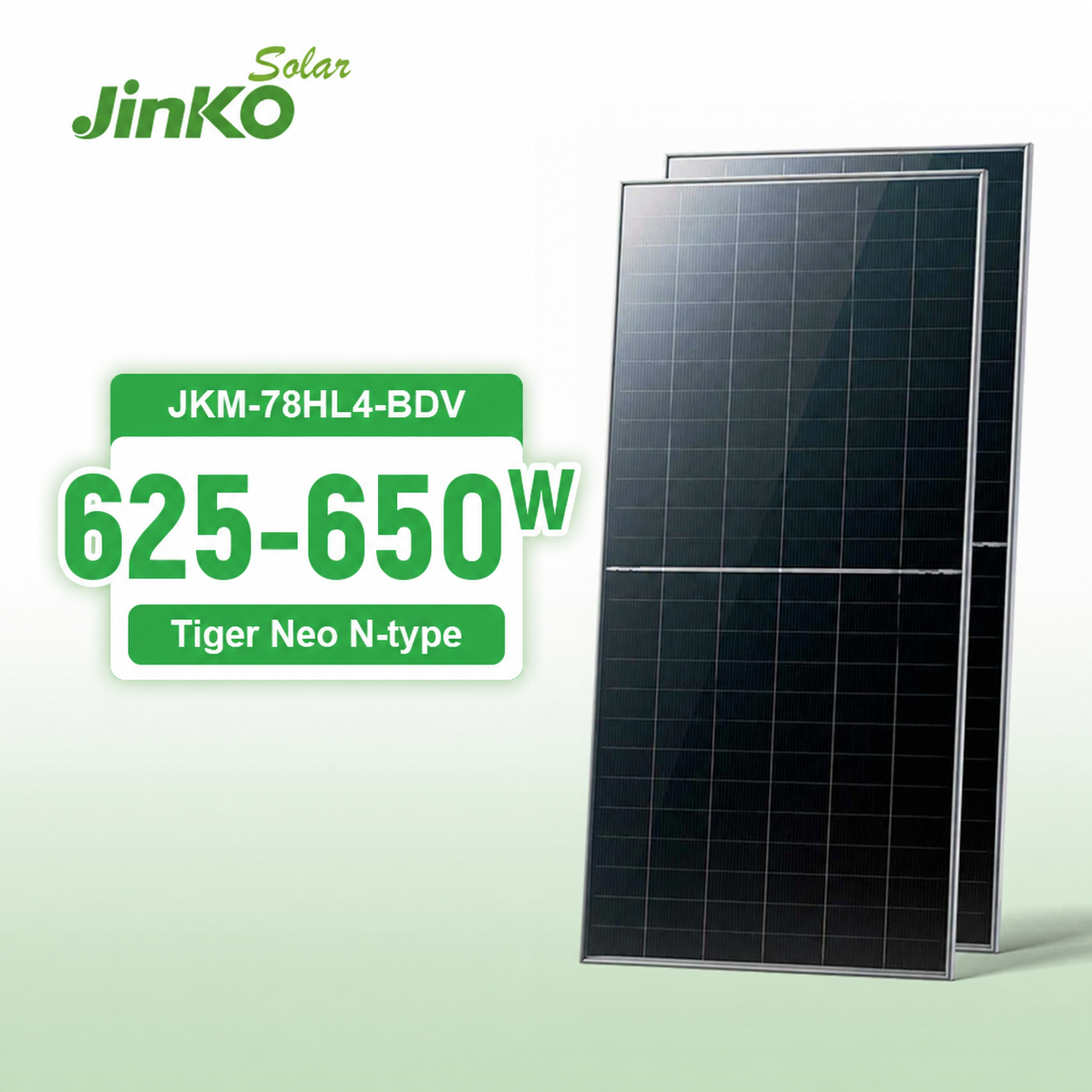
Jinko Monocrystalline 625W–650W PV Solar Module
Perfect pairing with our liquid-cooled or rack-mount LFP battery storage containers. Fully pre-audited for direct integration with Deye C&I hybrid inverter platforms.
View Specifications →Overcoming Grid Bottlenecks & High Tariffs in Zarqa
As the industrial engine of the Hashemite Kingdom of Jordan, Zarqa hosts heavy manufacturing, chemical production, textiles, ceramics, and refining. High peak electric demand and transmission grid constraints necessitate on-site Battery Energy Storage Systems (BESS).
Peak-Shaving & Demand Tariff Suppression
Jordan's Energy and Minerals Regulatory Commission (EMRC) implements steep maximum-demand tariff schedules for medium- and high-voltage industrial subscribers. Facilities in the Zarqa Industrial Estate and along the Free Zone corridor experience substantial capacity charges driven by momentary motor starting currents and continuous furnace loading.
Our containerized LiFePO4 BESS integrates automated dynamic peak shaving. By discharging instantaneously when facility demand exceeds contractual grid thresholds, the system limits kVA charges, generating direct operational expenditure reductions and achieving capital payback within 2.8 to 4.2 years.
Mitigating Transmission Wheeling Caps
Following NEPCO (National Electric Power Company) moratoriums and restrictions on new wheeling capacity and grid-tied net-metering approvals across Amman and Zarqa, factories face strict quotas on solar power export. Clean power without storage often suffers significant economic curtailment.
Our storage architecture implements Zero-Export Dynamic Curtailment Prevention. Excess daytime generation from Jinko N-type arrays charges 0.5C/1C battery banks instead of back-feeding the strained grid. The stored energy is deployed during evening shifts, maximizing on-site self-consumption up to 98%.
Critical Industrial Microgrid & UPS Backup
Zarqa's industrial operations—including textile spinning, pharmaceuticals, and metallurgical casting—cannot tolerate voltage sags, frequency deviations, or unplanned outages. Unscheduled downtime results in damaged batch cycles and machinery jamming.
Pairing VOLT LFP battery architectures with hybrid four-quadrant inverters delivers true <20ms Seamless Blackout Transfer. Operating in tandem with existing backup diesel generators, the BESS provides immediate bridge power, minimizing generator runtime and reducing localized diesel emissions.
Desert Resilience: Battling 45°C+ Heat & Zarqa Silica Soiling
Operating stationary storage systems in Zarqa requires dedicated thermal and mechanical engineering. Zarqa sits at an arid elevation characterized by severe daytime thermal peaks, sudden diurnal drops, high suspended airborne dust, and industrial particulate emissions from oil refining and heavy processing.
Standard commercial batteries designed for temperate climates degrade rapidly in Jordan due to electrolyte decomposition and localized hot-spotting. Hangzhou VOLT New Energy builds regional adaptation into every industrial container shipped to Jordan:
- Liquid-Cooled Thermal Equalization: Precision cold plates maintain LiFePO4 prismatic cell delta-temperatures under ≤2.5°C across 100kW to 2MW enclosures, mitigating accelerated cell aging.
- IP55 / NEMA 3R Positive Pressure Enclosures: Multi-stage sand filters prevent fine Jordanian silica dust from breaching high-voltage switchgear and battery control racks.
- C5-M Anti-Corrosion Treatment: Heavy-duty exterior powder coatings guard against sulfurous air emissions common in the industrial districts of Hashemiya and Zarqa city.

Why Jordanian EPCs & Industrial Plants Partner With Us
As Hangzhou VOLT New Energy Technology Co., Ltd., we combine Chinese high-tech manufacturing capacity with strict export engineering compliance, eliminating compatibility failures and field commissioning delays.
100% Pre-Shipment Protocol Matching
We eliminate communication breakdown risks between BMS and PCS. Every battery cluster is physically tested with Deye or PCS controllers over CAN/RS485 before dispatch, ensuring flawless first-start commissioning in Zarqa.
Certified Class-A Tier-1 Prismatic Cells
We source pristine Grade-A lithium iron phosphate cells with full trace QR codes. Supported by IEC 62619, UL 1973, CE, and UN38.3 test reports for regulatory clearance with Jordan Customs and civil defense bodies.
Consolidated Aqaba Direct Shipping
Our dedicated dangerous goods (DG) logistics management facilitates consolidated mixed container loads: Jinko solar panels, hybrid inverters, rack storage, and DC switchgear shipped straight to the Port of Aqaba with complete transit insurance.
Complete System Engineering Support
We assist your in-house Jordanian engineering teams with sizing calculations, single-line diagrams (SLD), short-circuit current calculations, and remote firmware monitoring setup to guarantee optimum round-trip system efficiency.

Streamlined Importation into Zarqa Free Zone
Importing renewable energy storage equipment into the Hashemite Kingdom of Jordan requires strict compliance with Jordan Standards and Metrology Organization (JSMO) mandates, civil defense fire-suppression protocols, and hazardous materials transportation documentation.
Whether delivering to a factory located in the Free Zones Authority or directly to a facility within the King Abdullah II Industrial City, VOLT New Energy supplies an ironclad documentation package:
- UN38.3 Test Reports and Material Safety Data Sheets (MSDS) verified by international test labs.
- Full Factory Acceptance Test (FAT) logs with matching serial numbers for every LFP module.
- Customs clearance support for Aqaba customs clearance agents and bonded inland transit to Zarqa.
Frequently Asked Questions by Industrial Buyers in Jordan
Practical technical and financial answers compiled for factory managers, EPC contractors, and electrical procurement officers operating in the Jordanian market.
Q1 How does Jordan's tariff structure affect battery storage ROI in Zarqa?
Jordan enforces dynamic time-of-day rates and steep monthly peak demand charges (measured in JOD/kVA/month) for commercial and industrial users. Installing an energy storage system directly flattens the 15-minute load spikes during utility peak billing windows. By shaving peak demand charges and shifting low-cost daytime solar to evening operations, most manufacturing plants achieve an unleveraged ROI within 36 to 48 months.
Q2 What is the advantage of LiFePO4 over traditional GEL batteries for Zarqa industrial plants?
While deep-cycle GEL batteries have lower upfront purchase costs, they only provide 1,200–1,500 cycles at 50% Depth of Discharge and suffer catastrophic cycle loss in ambient temperatures above 35°C. Our LFP (Lithium Iron Phosphate) chemistry safely delivers 6,000+ full cycles at 80% DoD, tolerates wider operating temperatures, weighs 70% less, and maintains over 95% round-trip efficiency, drastically lowering the total cost of ownership (LCOS).
Q3 Are containerized BESS installations safe against extreme fire hazards?
Yes. We implement an engineered defense-in-depth safety design: inherently stable LiFePO4 chemistry that resists thermal runaway up to 270°C, multi-tier BMS cell-level voltage and temperature monitoring, aerosol-based fire suppression systems, deflagration explosion vents, and emergency interlocks compliant with NFPA 855 standards, satisfying both Jordan Civil Defense and regional industrial insurers.
Q4 How do our systems communicate with existing site equipment and SCADA?
Our industrial BESS controllers support native Modbus TCP/RTU, CANbus 2.0B, and IEC 60870-5-104 protocols. This allows effortless interfacing with central SCADA networks, building management systems (BMS), Deye or Sungrow inverters, and on-site diesel generator auto-start controllers (ATS) for coordinated microgrid orchestration.
Q5 What shipping methods and transit times apply from Ningbo/Shanghai to Aqaba?
Maritime transport of containerized batteries (Class 9 Dangerous Goods, UN 3480) typically sails from Ningbo or Shanghai port via direct Red Sea routes or around the Cape into the Port of Aqaba, taking approximately 25 to 35 days. After arrival, customs clearance and bonded container transport to Zarqa Industrial Free Zone takes 3 to 7 business days.
Q6 Can Hangzhou VOLT supply custom pre-wired cabinets for space-limited plants?
Yes. For urban factories or retrofits where outdoor container space is constrained, we assemble customized IP54-rated indoor racks, battery cabinets, and modular high-voltage strings tailored to your switchgear room footprint, complete with pre-configured DC combiner breakers and cable management.
Design Your Custom Industrial Energy Storage System
Consult with our senior renewable storage engineers. Provide your factory load profile, peak kVA demand, and current Jordanian electricity tariff sheet, and we will return an engineered microgrid simulation, equipment bill of materials, and guaranteed CIF Aqaba quotation.