High-Yield Industrial & Commercial PV Modules
Pre-sorted, flash-tested, and factory-certified N-Type bifacial photovoltaic modules featuring ultra-low temperature coefficients, high bifaciality ratings, and multi-busbar SMBB half-cut architectures.
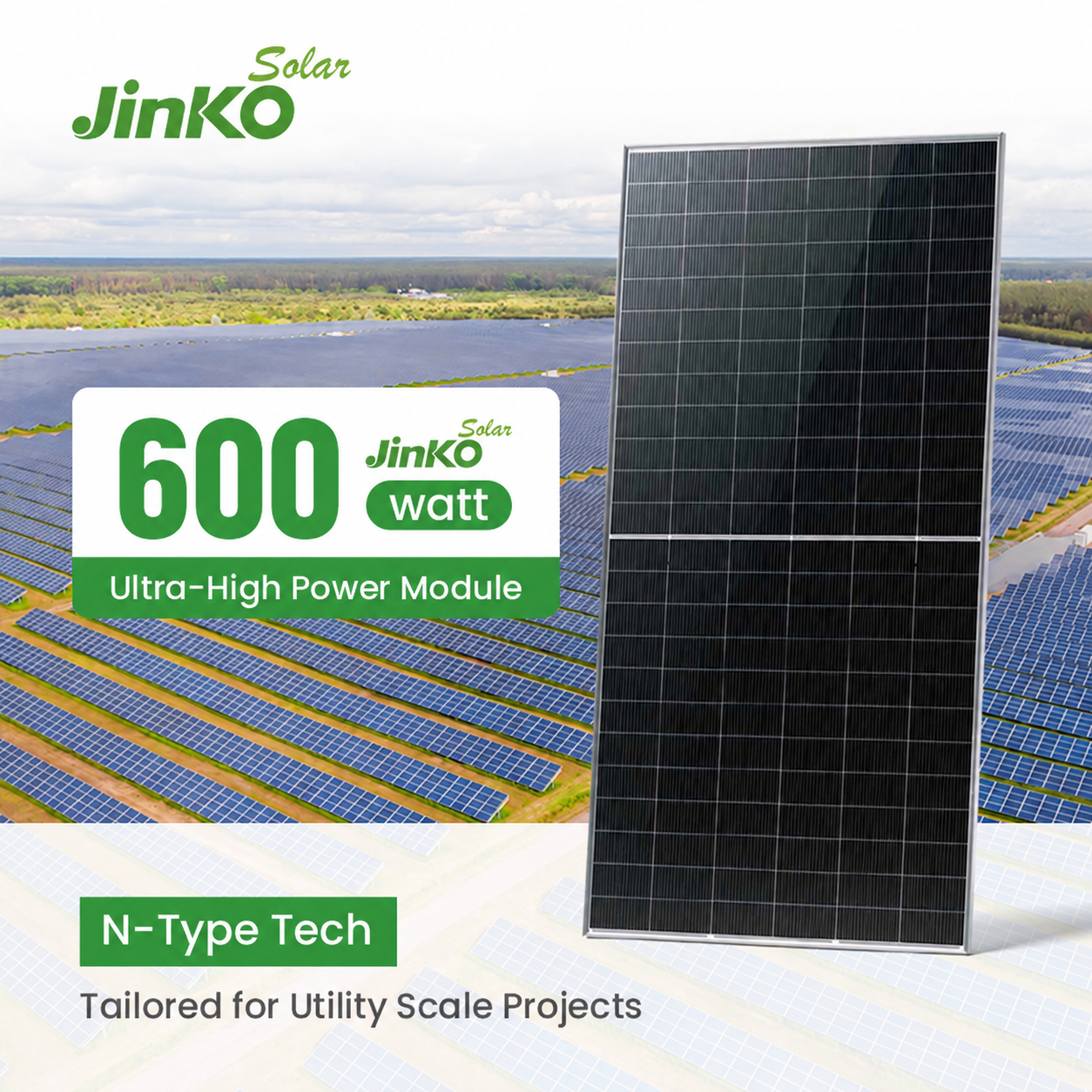
Jinko High Efficiency Bifacial 600W 585W 575W 595W Double Glass N Type Solar Panel in Stock
Optimized 182mm wafer configuration with double 2.0mm anti-reflective tempered glass for coastal resilience and anti-PID assurance.
Get Catalog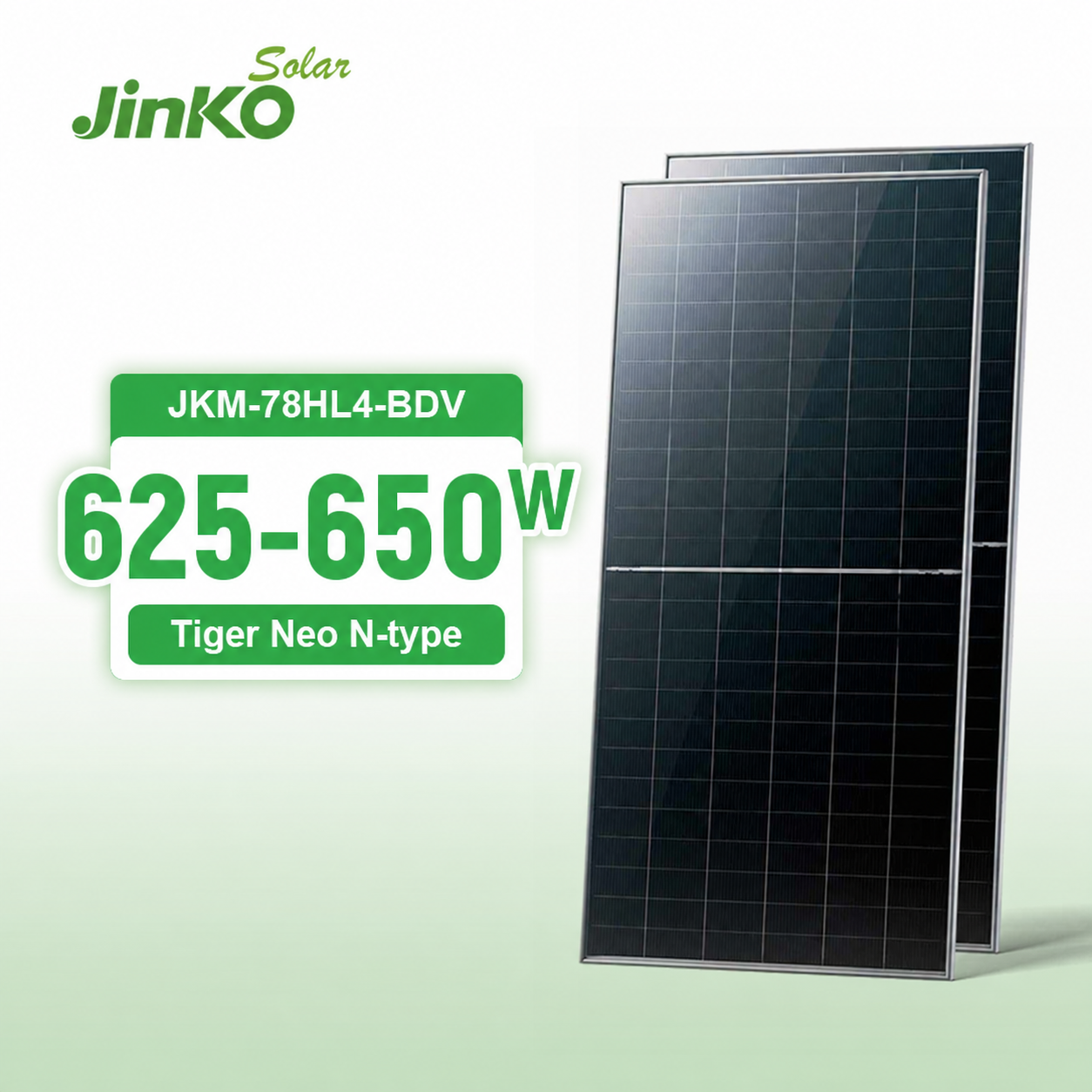
Jinko N Type Pv Module 650W 625W 645W Bifacial Photovoltaic Module Panneau Solaire for Commercial
Engineered for commercial logistics centers and industrial rooftops throughout Salvador and the Camaçari industrial complex.
Get Catalog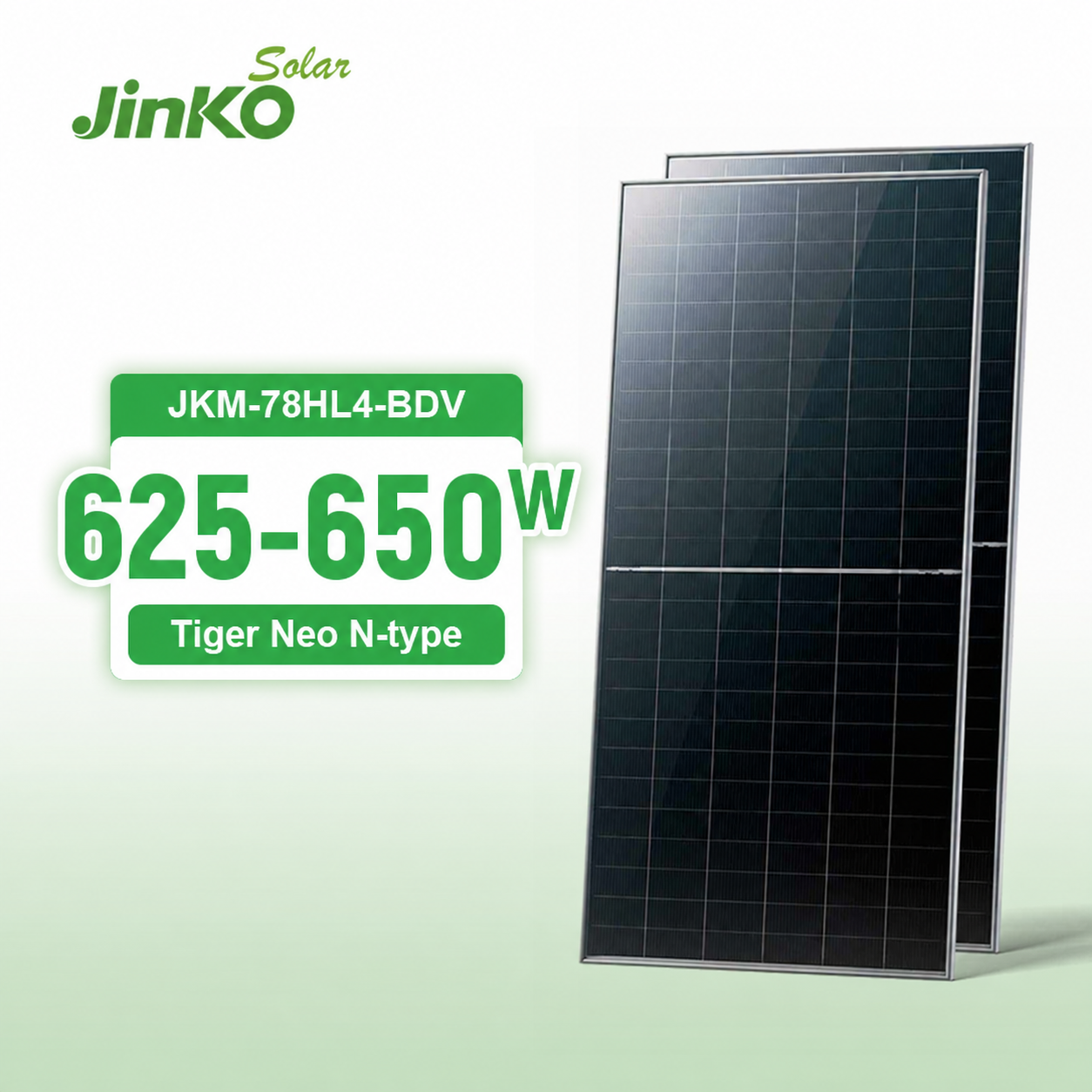
Jinko N Type Bifacial Solar Modules 650W 630W 640W Dual Glass Photovoltaic Panel for Industrial
Ultra-low degradation curve (≤1.0% in Year 1; ≤0.40% annual linear) certified for maritime industrial environments.
Get Catalog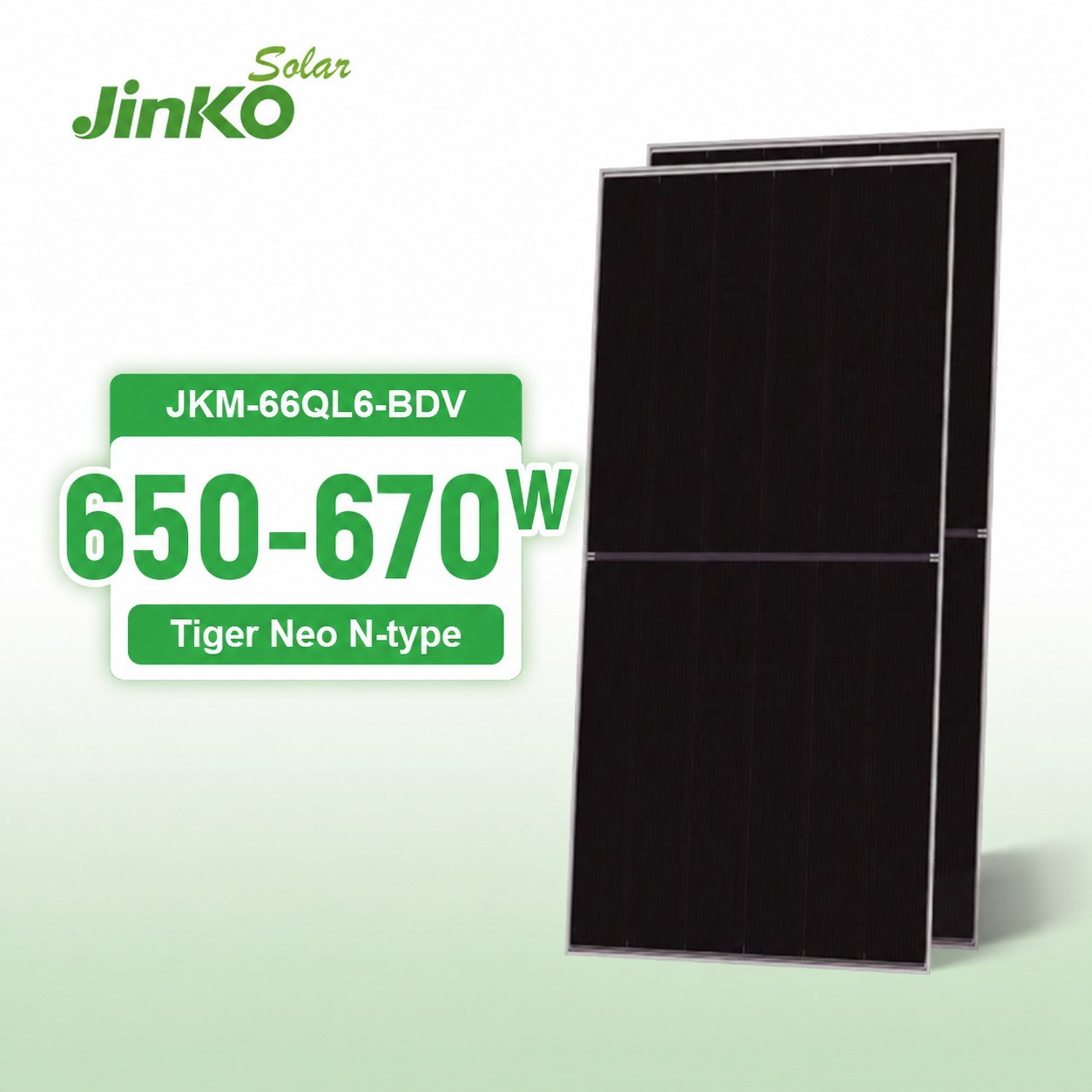
Jinko Panneau Solaire 660w 650W 660W 670W N Type Bifacial Dual Glass Photovoltaic Panel for Industrial
Designed for high-density MW projects requiring minimum Balance of System (BOS) tracker costs and maximum racking utilization.
Get Catalog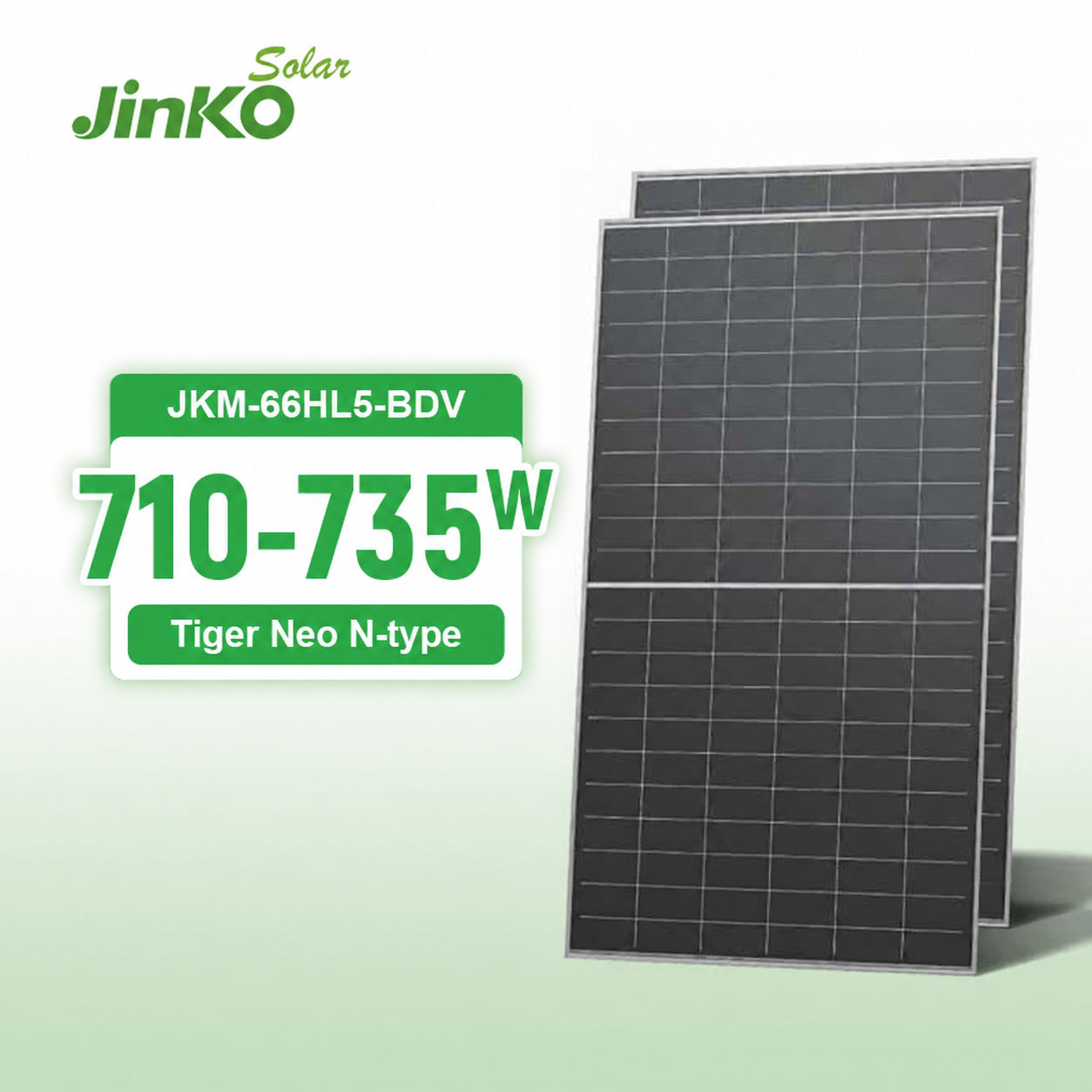
Jinko N Type Bifacial Pv Solar Panels 720W 710W 715W Dual Glass Industrial Photovoltaic Panneau Solaire
Maximized power-density module engineered for large centralized plants connecting to Bahia's 230kV/500kV national transmission grid.
Get Catalog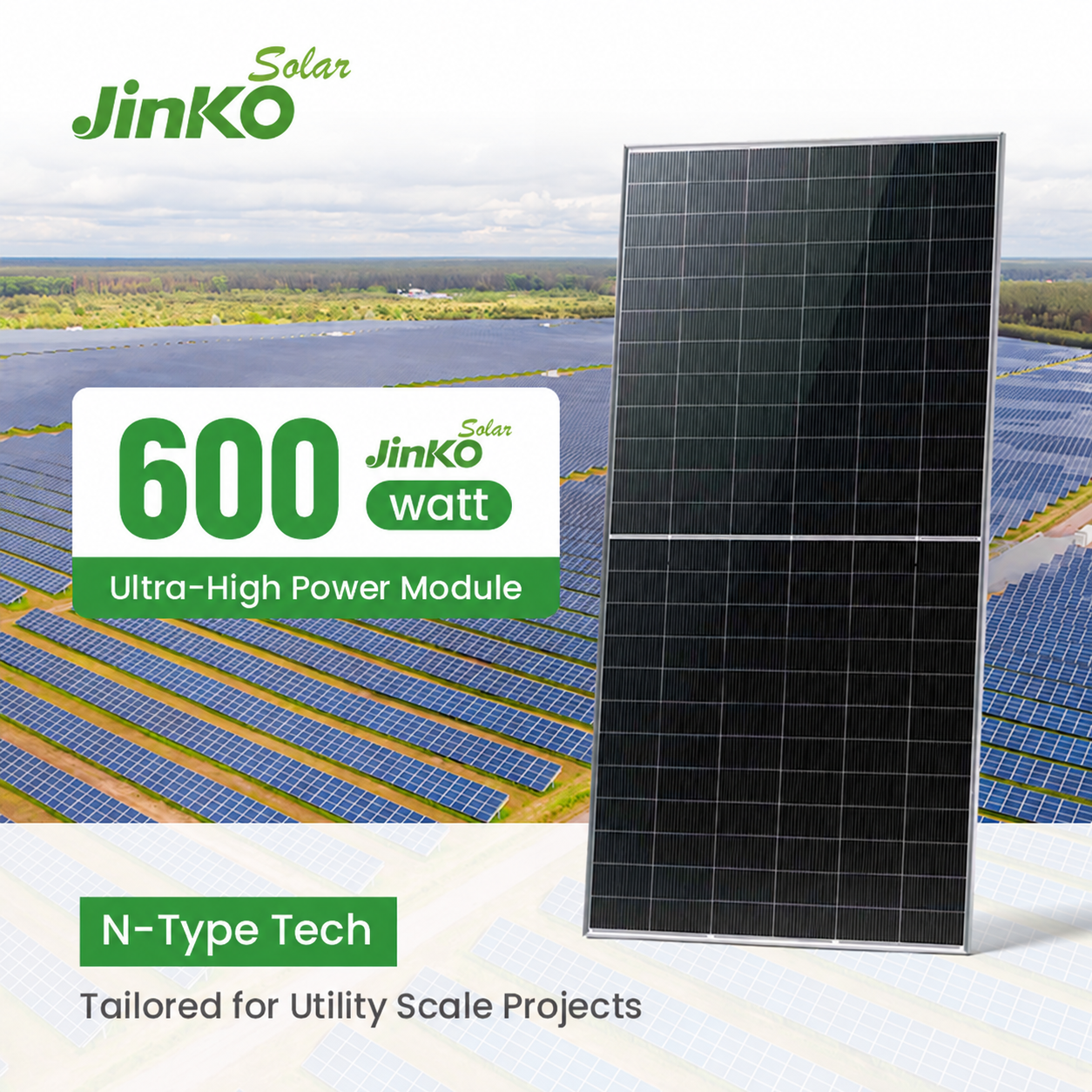
Jinko Solar Panels 580W 590W 600W 600 W N Type Double Glass High Efficiency Solar Panel for Commercial
Precision mechanical loading rating of 5400 Pa snow / 2400 Pa wind resistance for coastal Salvador Atlantic squalls.
Get Catalog
Jinko N Type Bifacial Photovoltaic Panels 600W 585W 595W TOPCon Solar Module for Commercial
Strictly tested cell strings minimizing micro-crack propagation risks under severe diurnal temperature oscillations.
Get Catalog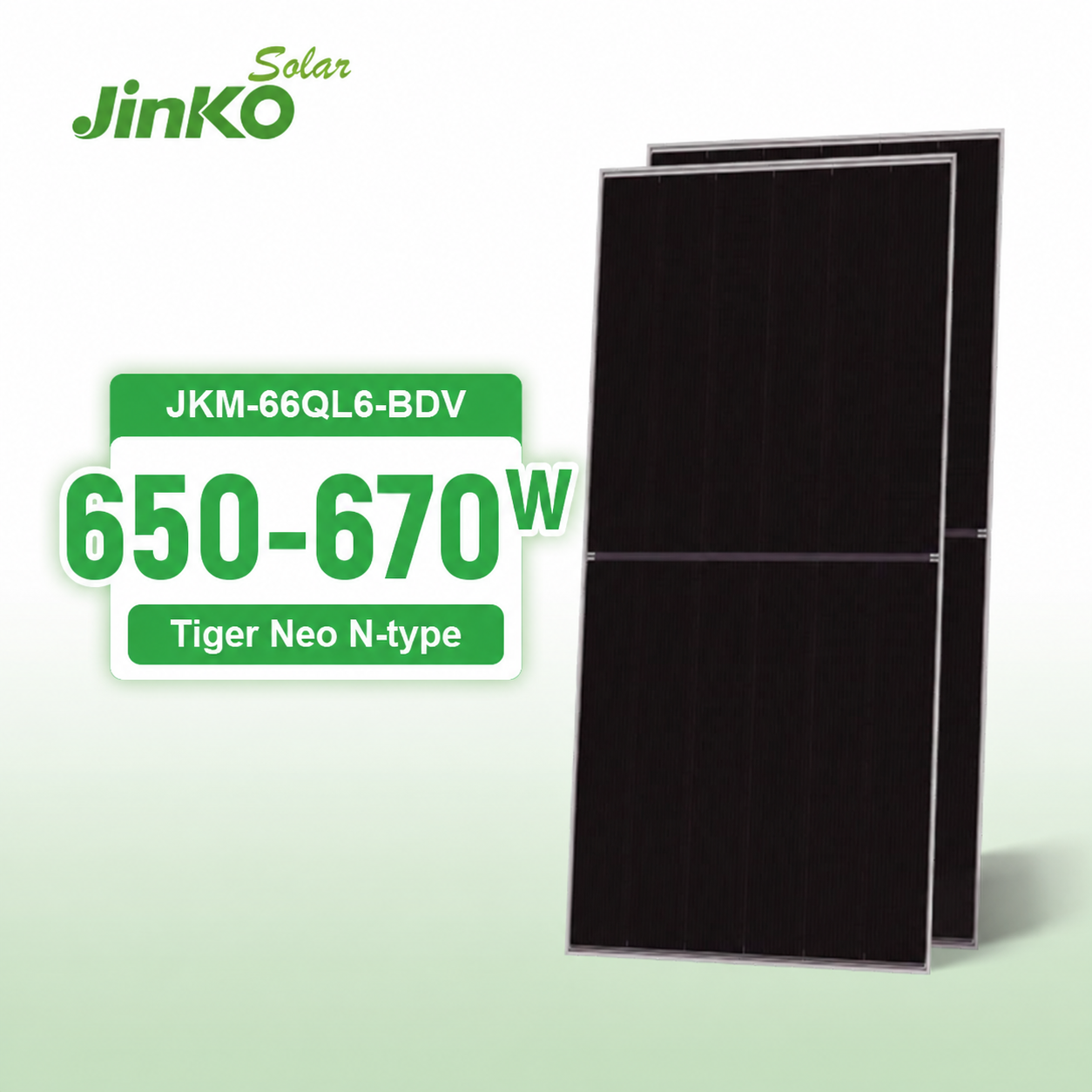
Jinko N Type Bifacial Solar Panel 650W 660W 670W TOPCon Monocrystalline High Efficiency PV Module for Home Roof
Superior weak-light performance producing power during early dawn, sunset, and diffused cloud cover over Bahia shores.
Get CatalogTOPCon Physics vs. Traditional PERC in Tropical Maritime Climates
A rigorous examination of minority carrier lifetimes, thermal degradation coefficients, and passivation mechanisms governing solar power generation across the State of Bahia.
Tunnel Oxide Passivation Physics
Traditional P-Type PERC cells suffer from boron-oxygen (B-O) complex defects, which trigger substantial Light Induced Degradation (LID) and Light-and-elevated Temperature Induced Degradation (LeTID). Our N-Type TOPCon architecture utilizes phosphorus-doped silicon wafers paired with an ultra-thin 1.5nm tunnel oxide layer and heavily doped polycrystalline silicon. This eliminates B-O recombination centers entirely, maintaining sub-1.0% first-year degradation and preventing parasitic carrier loss under intense Salvador irradiance.
Thermal Coefficient & Real-World Yield
In Salvador and the broader Reconcavo Baiano region, solar cell temperatures frequently reach 55°C to 65°C during peak midday exposure. While conventional P-type modules display a temperature coefficient of -0.35%/°C to -0.39%/°C, our N-Type TOPCon panels operate at an exceptional -0.29%/°C. For an operating delta of +35°C above standard test conditions (STC 25°C), this performance differential yields an immediate 2.8% to 3.5% kilowatt-hour gain throughout the system life cycle.
Dual-Glass Maritime Salt-Mist Defense
Located on the Baía de Todos os Santos, solar equipment in Salvador faces relentless airborne salinity, relative humidity exceeding 80%, and warm maritime trade winds. Our modules incorporate a 2.0mm+2.0mm dual-glass structure with POE (Polyolefin Elastomer) encapsulation. Unlike standard EVA backsheet configurations which degrade via acetic acid vapor formation, our hermetic POE seal completely blocks moisture ingress, achieving zero Potential Induced Degradation (PID) under IEC 61701 Severity 6 salt-mist testing.
| Performance Characteristic | Legacy P-Type PERC | Advanced N-Type TOPCon (Our Modules) | Heterojunction (HJT) Alternative | Operational Impact in Salvador, BA |
|---|---|---|---|---|
| Wafer Doping & Defect Type | P-Type Boron (B-O complexes) | N-Type Phosphorus (Zero B-O) | N-Type Phosphorus | Eliminates light-induced power drop within the first 72 hours of operation |
| Pmax Temperature Coefficient | -0.35% / °C to -0.38% / °C | -0.29% / °C | -0.26% / °C | Delivers +3.2% net yield during humid 34°C summer afternoons in Salvador |
| Bifaciality Factor (%) | 65% - 70% | 80% ± 5% | 85% - 90% | Captures significant reflected albedo from light-colored concrete, sand, and gravel |
| First-Year Power Degradation | ≤ 2.0% | ≤ 1.0% | ≤ 1.0% | Ensures higher asset valuation and accelerated return on investment (ROI) |
| Annual Linear Degradation | 0.55% / Year | 0.40% / Year | 0.35% / Year | Guarantees 87.4% nominal power output after 30 years of utility operation |
| Encapsulation Reliability | Standard EVA + Backsheet | Dual Glass + POE Polyolefin | Dual Glass + POE | Maximum resistance against coastal corrosion, water ingress, and delamination |
Optimized Application Scenarios Across Salvador & Bahia
From coastal metropolitan rooftops to the expansive solar belt of the Sertão Baiano, our N-type solutions address the unique grid, environmental, and thermal requirements of the region.

C&I Rooftops in Salvador & Camaçari
Commercial shopping centers, food processing facilities, and automotive plants throughout Camaçari and Simões Filho leverage N-Type double-glass modules for maximum power density on limited roof space, paired with non-corrosive aluminum racking.
High Power Density
Agro-Photovoltaics & Semi-Arid Farms
In Juazeiro, Bom Jesus da Lapa, and Barreiras, agriculture operators combine high-bifacial N-Type arrays with drip irrigation pumping. The 80% bifaciality absorbs intense albedo reflection from sandy, caliche-rich soils.
Albedo Yield Gain
Island & Coastal Hybrid Microgrids
Across tourism sanctuaries like Morro de São Paulo and Ilha de Itaparica, our modules connect directly with Deye hybrid inverters and LFP lithium batteries to replace expensive diesel generator operating hours with clean 24/7 power.
Zero Fuel Resilience
Centralized Utility Generation (GC)
Multi-megawatt centralized solar fields deploying 710W-720W dual-glass strings mounted on single-axis trackers, delivering the lowest Levelized Cost of Electricity (LCOE) into the CHESF/SIN transmission lines.
Lowest Project LCOESalvador & Brazilian PV Market Trends (2025–2030)
How regulatory shifts under Federal Law 14.300 (Marco Legal da GD), utility dispatch requirements, and grid stability standards are transforming solar procurement across Bahia.
Marco Legal da GD (Law 14.300/2022) Dynamics
With the gradual phase-in of distribution wire tariffs (Fio B), commercial EPCs in Salvador must squeeze 15% to 20% more kilowatt-hours from identical structural footprints. Transitioning from legacy P-type panels (which degrade faster and suffer higher heat loss) to N-type TOPCon is now the standard strategy to protect internal rate of return (IRR) and preserve capital payback periods under 3.5 years.
Neoenergia Coelba Grid Compliance
The local electrical utility, Neoenergia Coelba, imposes strict grid interconnection protocols (PRODIST Module 8) regarding harmonic distortion, reactive power compensation, and voltage ride-through capabilities. Our complete system bundles pair TOPCon modules with Deye hybrid and grid-tied inverters featuring factory-programmed Brazilian grid compliance profiles to avoid costly inspection rejections.
INMETRO Ordinance No. 140/2022 & Port Logistics
Every photovoltaic module imported into Salvador must bear the official INMETRO energy efficiency label and comply with Portaria nº 140/2022. By leveraging direct container vessel routes from Ningbo-Zhoushan to the Port of Salvador (Tecon Salvador), our clients bypass congested southern ports, slashing customs clearing overhead and intra-state freight transit times across Northeast Brazil.
Why Tier-1 Solar Buyers Choose VOLT New Energy
Hangzhou VOLT New Energy Technology Co., Ltd. eliminates international procurement risk through verified protocol interoperability, rigorous factory EL imaging, and direct DG logistics handling.

Triple Electroluminescence (EL) Testing
Every module undergoes pre-lamination, post-lamination, and pre-boxing high-resolution EL crack inspections. We provide flash test IV curves linked to serial numbers before pallets are secured for export shipping.

Class 9 DG & Consolidated Logistics
Consolidate Jinko N-Type panels, Deye inverters, and LFP lithium storage in single 40ft HQ containers. We deliver fully certified UN38.3 test reports, MSDS, and maritime dangerous goods paperwork directly to your clearing broker.
Full Protocol Interoperability
Never deal with "BMS Communication Lost" fault codes on site. We configure CAN and RS485 communication protocols, baud rates, and inverter battery profiles in our Hangzhou integration labs prior to container loading.
24h Engineering Response SLA
Our multilingual system engineers provide string-sizing verifications, AutoCAD electrical single-line diagrams, and remote commissioning assistance via live diagnostic tools within 24 operational hours.
Frequently Asked Questions by Salvador Solar Buyers
Crucial commercial, technical, and regulatory answers for EPC contractors, regional distributors, and project developers in Bahia.
Are your N-Type solar panels certified under INMETRO for Brazil?
Yes. All Jinko N-Type TOPCon modules supplied by VOLT New Energy possess active INMETRO registration numbers issued under Ordinance No. 140/2022. We provide the official energy efficiency certificate (Etiqueta Nacional de Conservação de Energia - ENCE) corresponding to each wattage class to guarantee smooth customs clearance at the Port of Salvador and fast-track approval from Neoenergia Coelba.
How do N-Type panels tolerate coastal salinity in Salvador?
Our bifacial N-type modules use dual 2.0mm heat-strengthened glass with high-grade POE encapsulation rather than porous polymer backsheets. They carry certified compliance with IEC 61701 (Salt Mist Corrosion Testing, Severity level 6) and IEC 62716 (Ammonia Corrosion). This design prevents atmospheric sodium chloride ions from etching internal metallization ribbons or inducing premature PID.
Can we mix N-Type panels with existing P-Type strings?
We do not recommend stringing N-type and P-type panels together in series due to distinct maximum power point voltages (Vmpp) and currents (Impp), which will trigger substantial current-mismatch losses. However, if your inverter features multiple independent Maximum Power Point Trackers (MPPT), such as modern Deye multi-string inverters, you can safely connect new N-Type arrays to a separate dedicated MPPT channel.
What are the sea freight lead times and shipping terms to Salvador?
Direct containerized shipments from our central consolidation hub via Ningbo or Shanghai typically take 35 to 42 days transit time to Terminal de Contêineres de Salvador (Tecon Salvador). We handle FOB China ports, CIF Salvador, or DDP terms with your designated customs forwarder, supplying all BL, Packing List, Commercial Invoice, and Certificate of Origin documents.
How does the 30-year linear performance warranty work?
Every module is backed by a 12-year manufacturer product warranty on materials/workmanship and a 30-year linear power warranty guaranteeing no less than 87.4% of original nominal output at Year 30. VOLT New Energy maintains digital records of all module flash tests, barcodes, and container packing lists to handle any potential warranty verification directly with the factory.
Can you provide matched Deye inverters and LFP batteries together?
Yes. As a global energy storage integrator, VOLT New Energy supplies turnkey packages combining Jinko TOPCon modules with Deye single-phase (3kW-8kW) and three-phase (8kW-50kW) hybrid inverters, alongside 51.2V rack-mount or wall-hung LiFePO4 batteries. We run end-to-end communication tests so your installation crew encounters zero firmware mismatches in Bahia.
Request Factory-Direct Pricing & Engineering Datasheets
Plan your next utility, commercial, or distributed generation project in Salvador with certified Tier-1 TOPCon technology. Connect with our engineering desk for system sizing, container consolidation, and official proforma quotes.