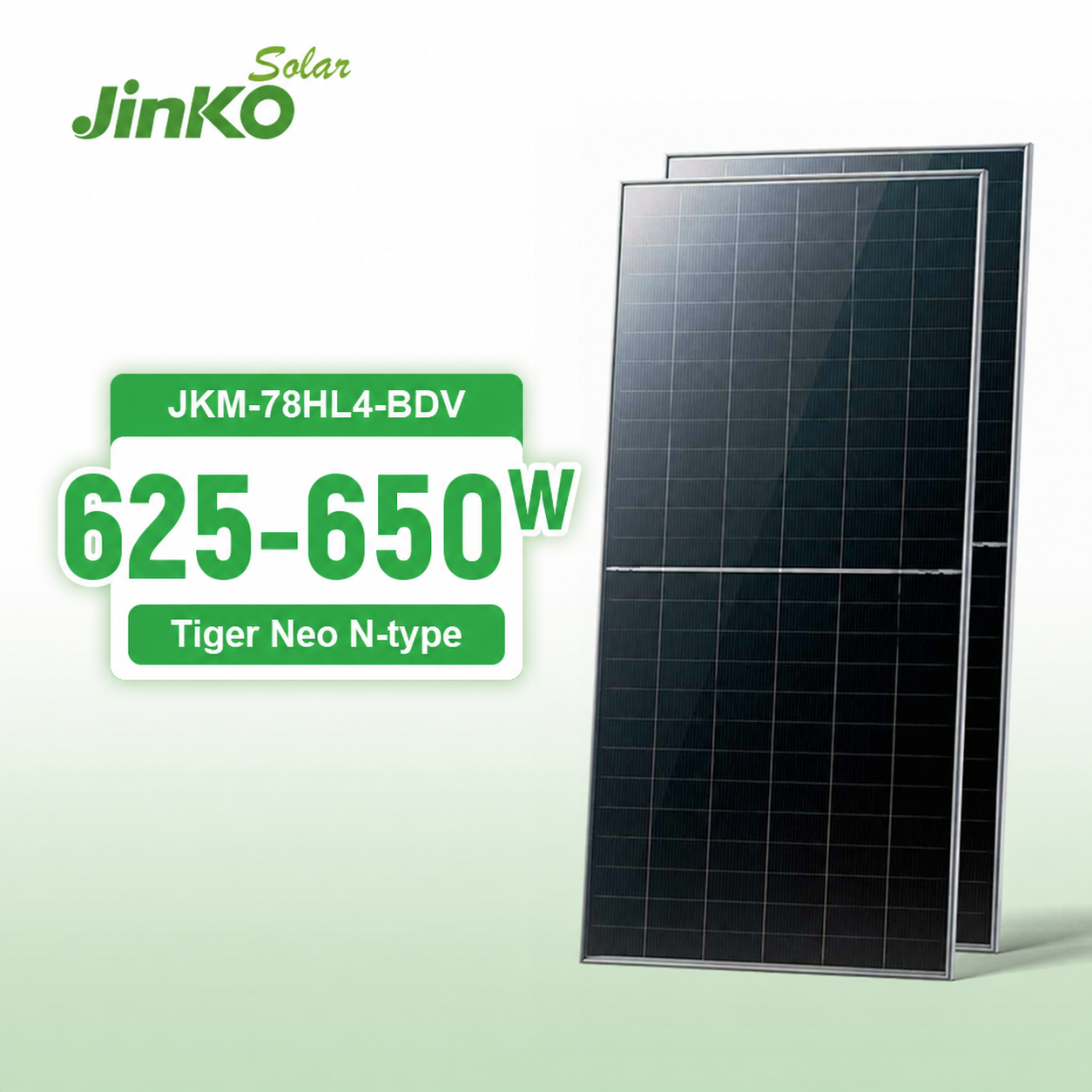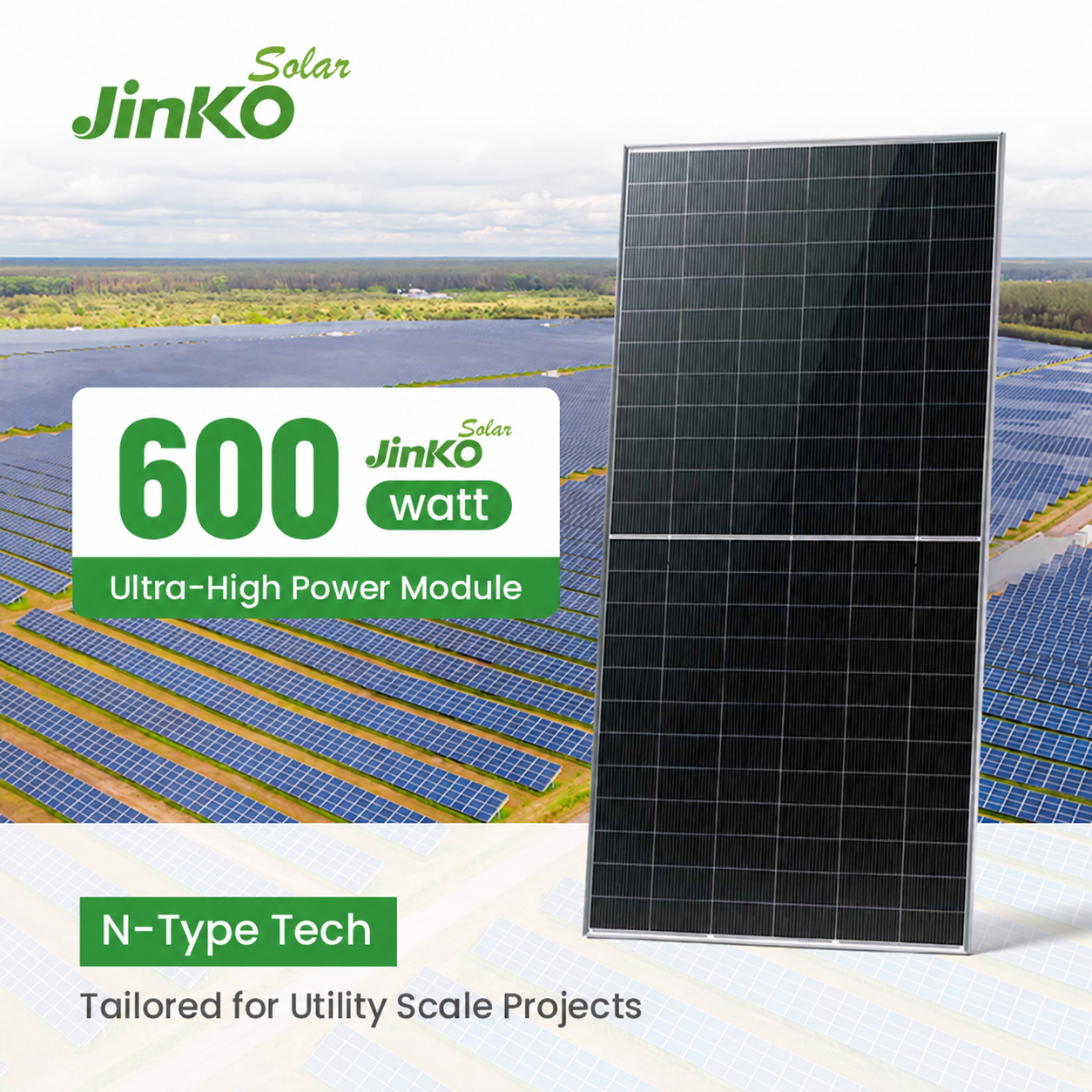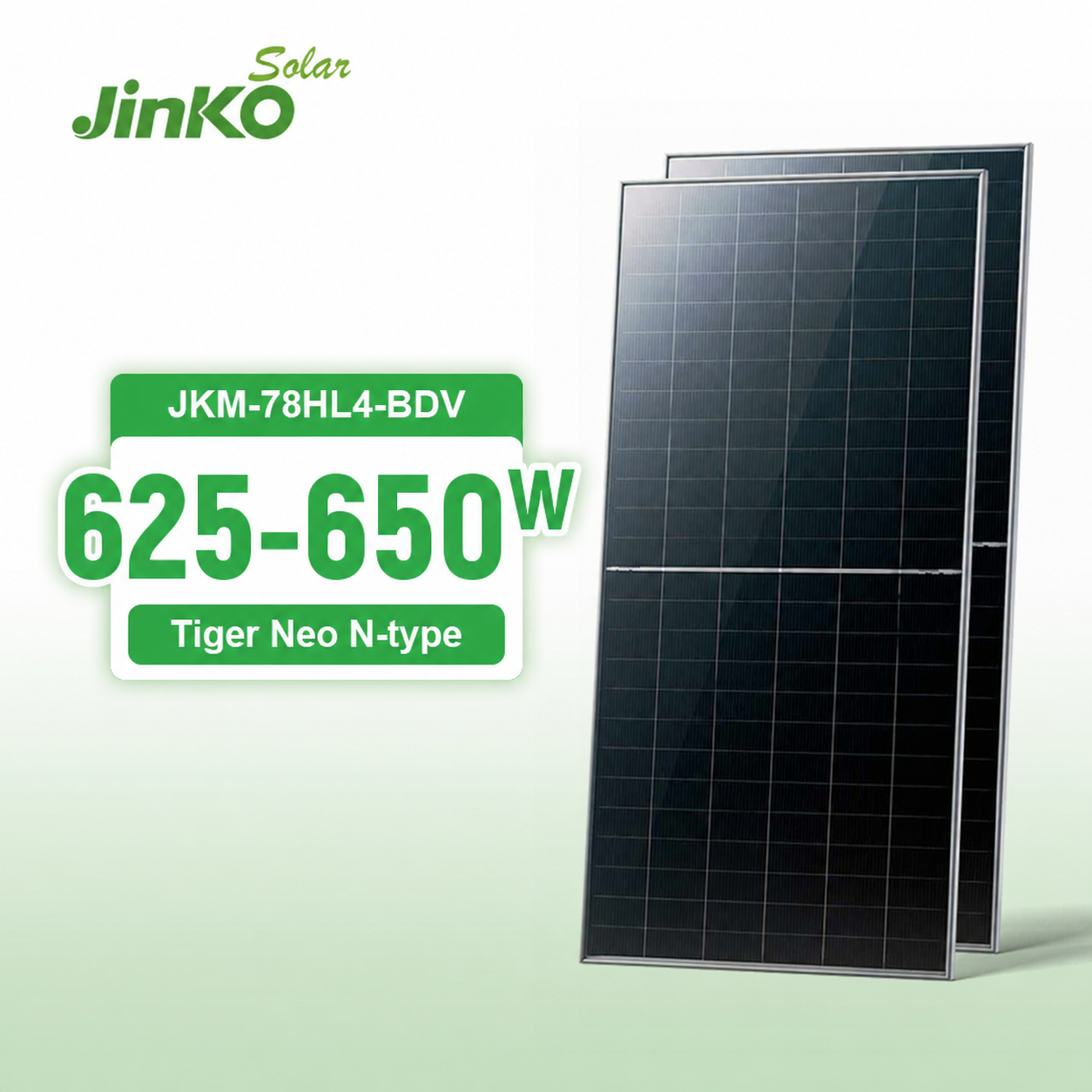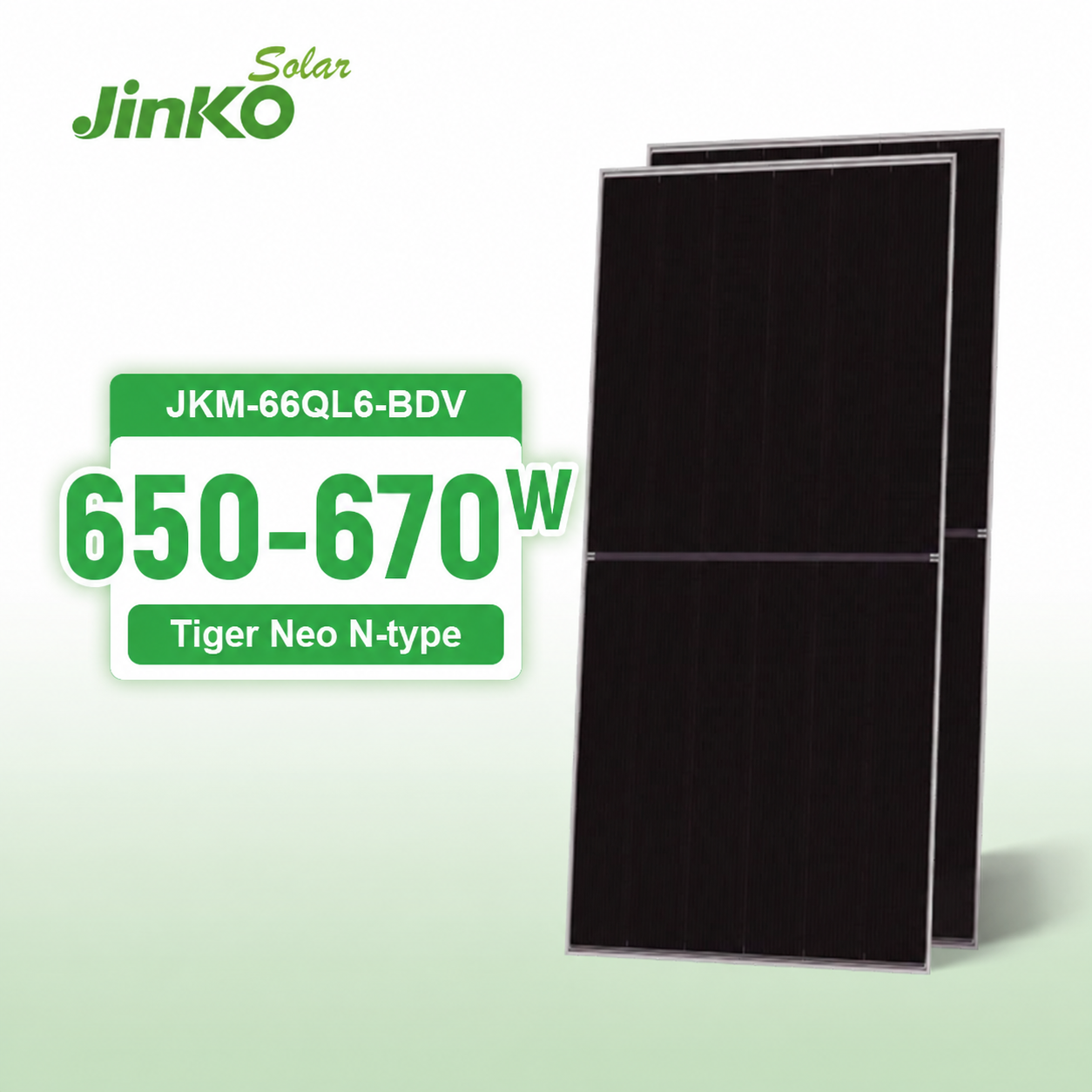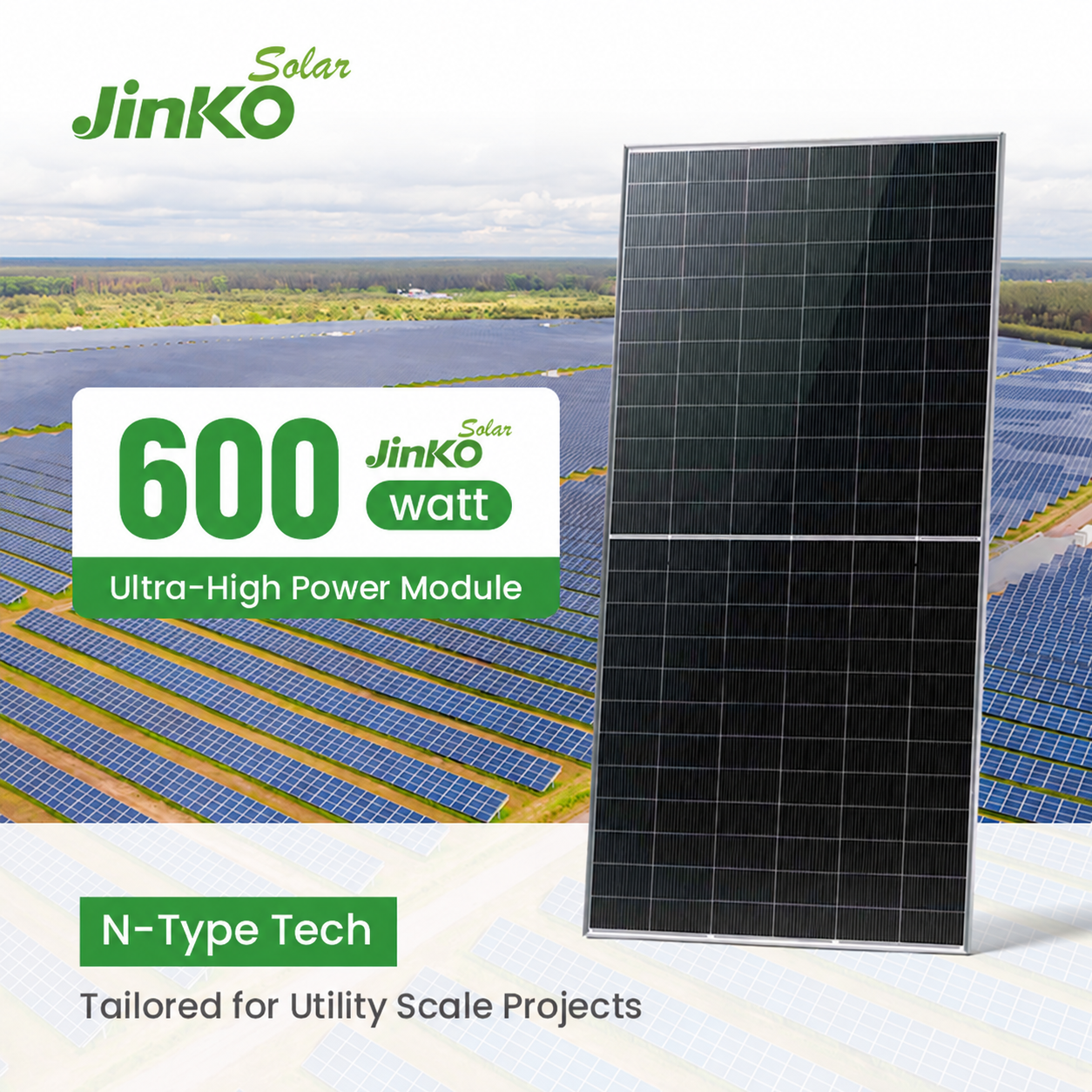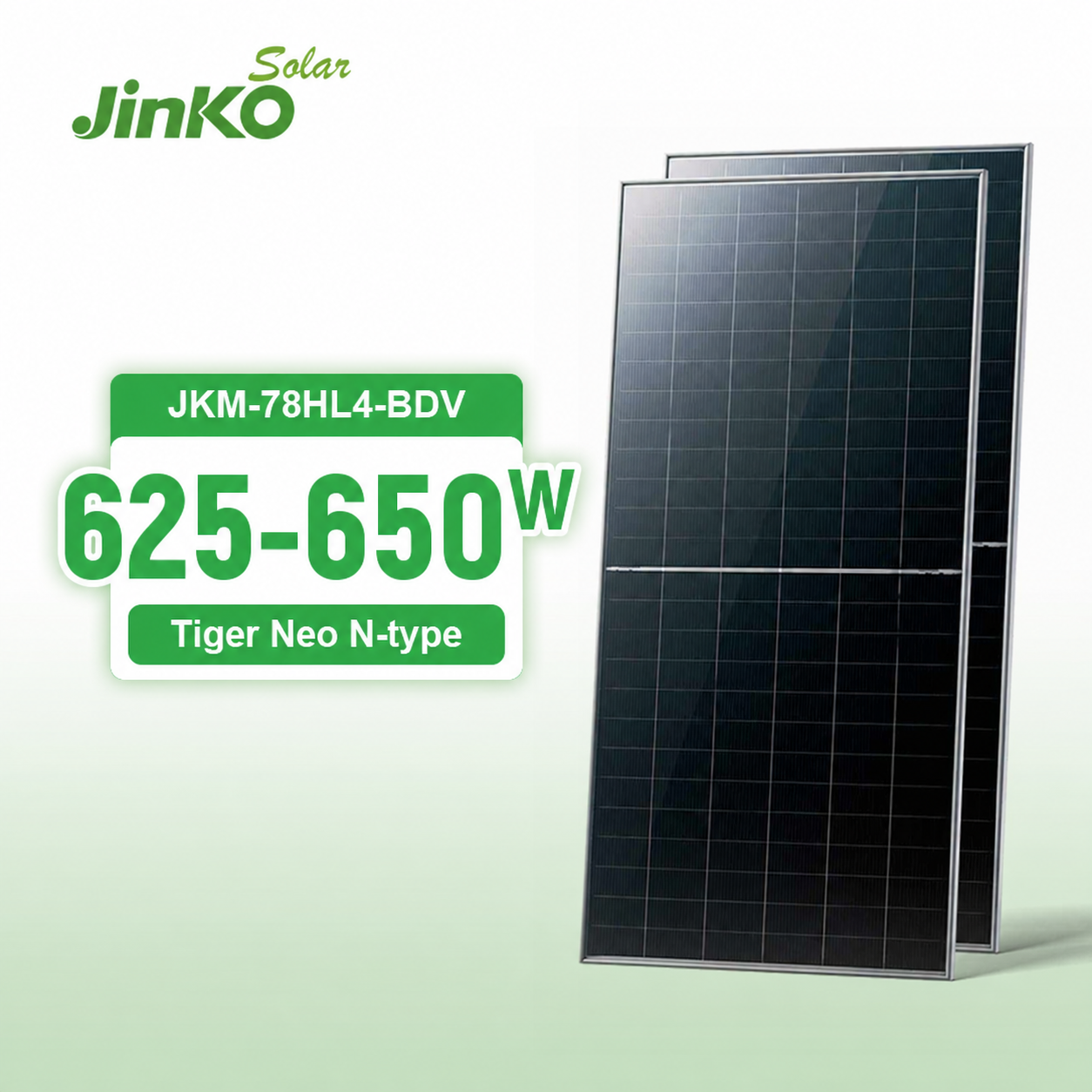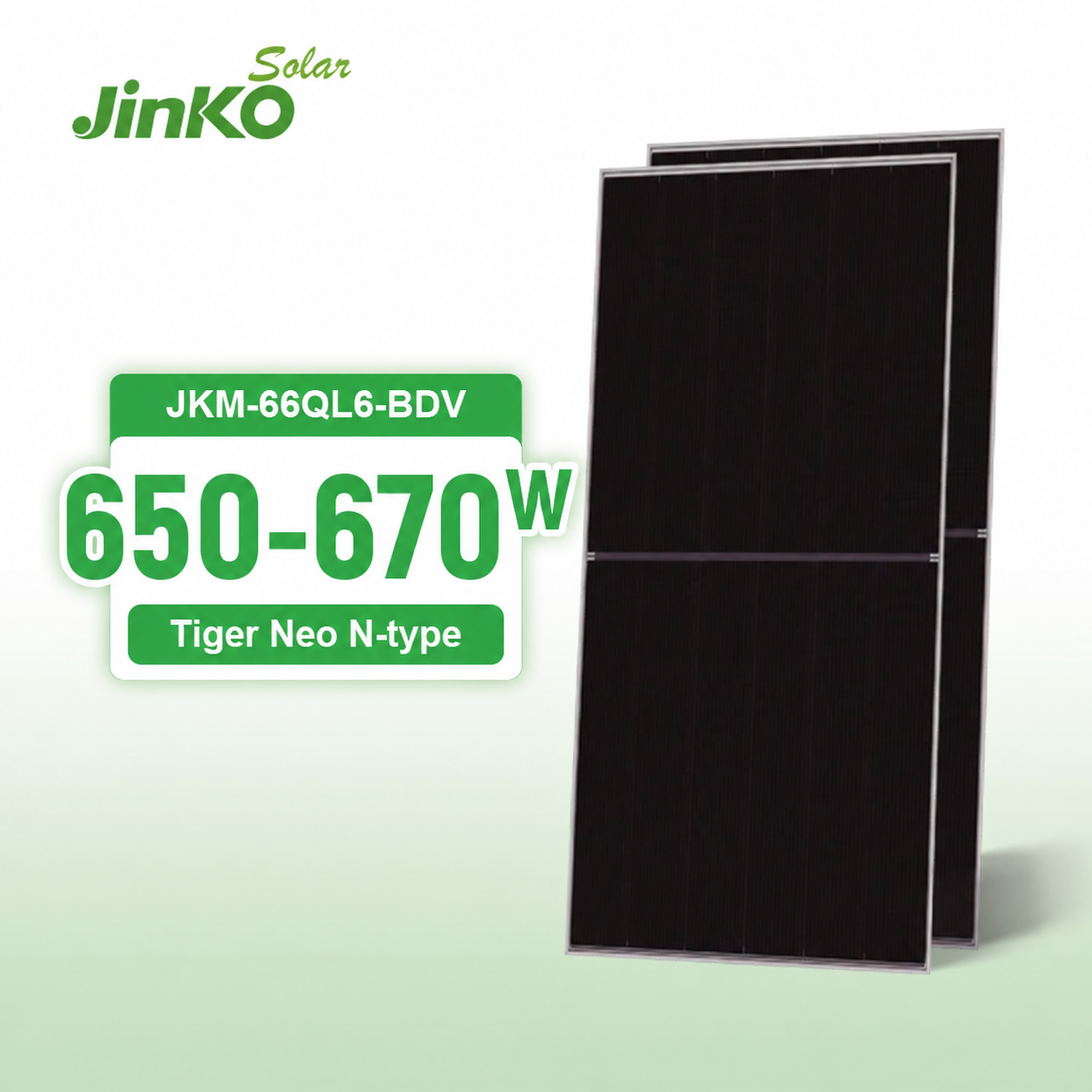
Jinko TOPCon Bifacial Paneles Solares 650 w 650W 660W 670W Monocrystalline High Efficiency PV Panel for Solar Farm
- Nominal Power: 650W – 670W
- Cell Architecture: N-Type TOPCon 132-Cell
- Module Efficiency: Up to 22.86%
- Bifaciality Factor: 80% ± 5%
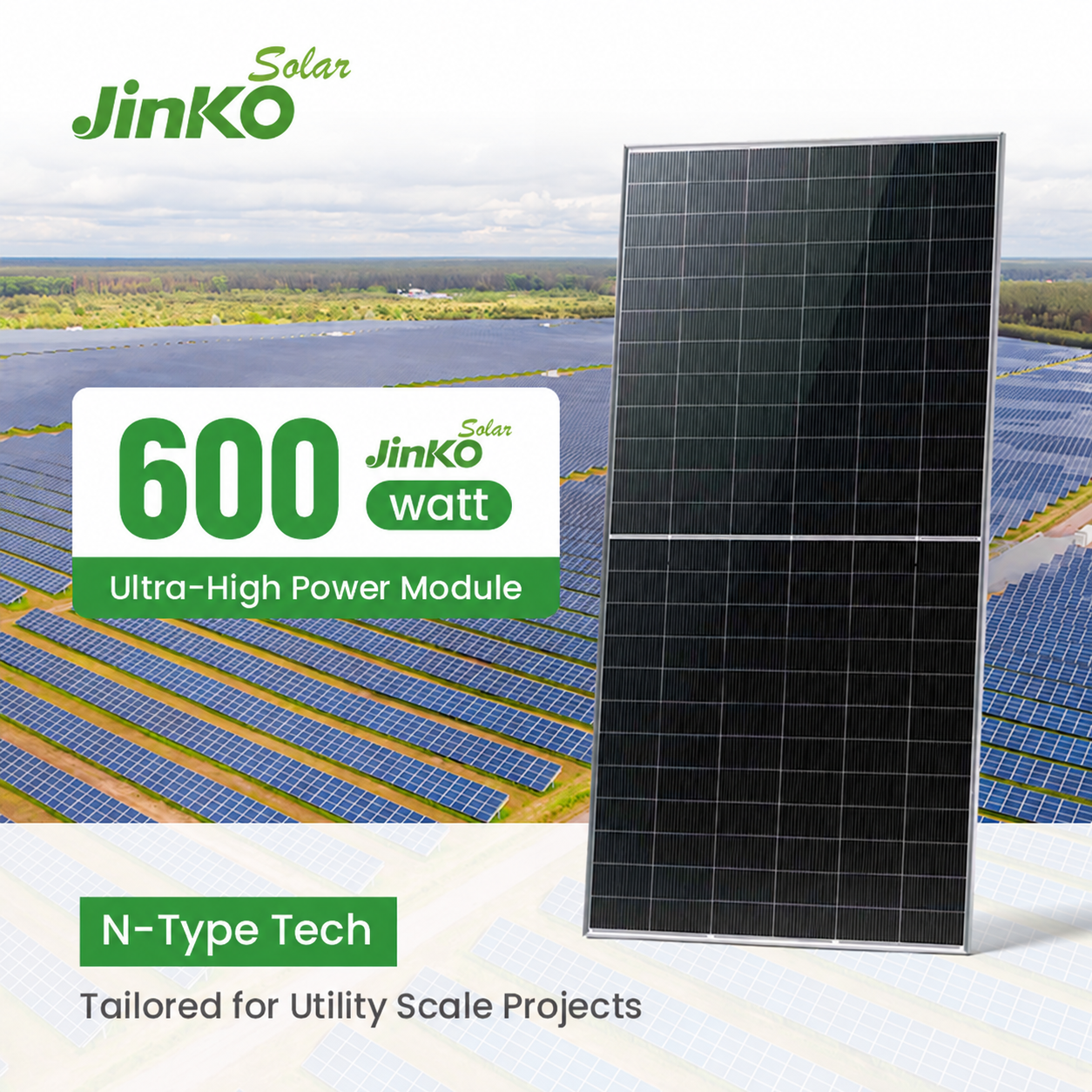
Selected high-yield solar modules specifically engineered for harsh off-grid operating conditions, high bifacial rear-side albedo gains, and seamless pairing with multi-mode hybrid and off-grid inverters.
B2B importers do not merely purchase modules or inverters; they require guaranteed communication, flawless logistics compliance, and zero field configuration failure. We bridge Tier-1 component manufacturing with turn-key system integration.
We eliminate the dreaded BMS Communication Fault. Every LFP battery pack and Deye inverter pairing undergoes hardware handshake tests via CANbus and RS485 (Pylontech, Deye, and Modbus RTU protocols) before leaving China, ensuring zero commissioning delays on remote project sites.
Unlike simple traders, our engineering team executes cell-level internal resistance matching, capacity sampling, high-voltage insulation tests, and strict flash-test electroluminescence (EL) audits for solar modules to stop micro-cracks before crating.
International customs clearance of LiFePO4 batteries fails frequently due to non-compliant paper trails. We issue factory-certified UN38.3 test reports, certified MSDS, and seaworthy DG packaging, facilitating mixed-container consolidation of panels, batteries, and inverters.
Our Hangzhou-based technical department delivers customized system topologies, single-line wiring diagrams (SLD), surge capability load profiling, and string calculation tables tailored to client temperature ranges and ambient irradiation profiles.
A rigorous examination of electrical topology, efficiency trade-offs, and electrochemical stability for mission-critical off-grid installations.
Off-grid photovoltaic infrastructure has evolved from rudimentary, low-efficiency standalone setups into highly sophisticated, multi-source decentralized microgrids. Modern industrial and residential off-grid demands no longer tolerate power interruptions, erratic voltage fluctuations, or premature battery degradation. Designing a resilient OEM/ODM off-grid installation demands holistic synchronization across generation (photovoltaic arrays), conversion (inversion and maximum power point tracking), electrochemical energy storage, and auxiliary fossil generation (diesel genset auto-start integration).
In remote off-grid environments where available roof or mounting area is constrained and installation labor is expensive, Levelized Cost of Energy (LCOE) is dictated by module yield per square meter and high-temperature performance. As highlighted in our product selections above, N-Type TOPCon (Tunnel Oxide Passivated Contact) has decisively replaced legacy P-type PERC technology. TOPCon delivers zero Light Induced Degradation (LID), lower temperature coefficient (-0.29%/°C compared to -0.35%/°C in PERC), and higher bifaciality factors averaging 80% to 85%.
Under intense equatorial ambient temperatures (exceeding 40°C), an N-type cell operates significantly cooler and suffers far less thermal voltage drop. Furthermore, in bifacial ground-mount configurations (such as agricultural pumps in Chile or mining camp microgrids in Africa), back-surface reflection (albedo gain) from light gravel or concrete surfaces provides an additional 10% to 25% energy yield without adding balance-of-system (BOS) string wiring.
One of the most consequential decisions facing an OEM/ODM solar engineer is the selection between low-voltage (48V/51.2V) and high-voltage (150V–600V) battery architectures:
| Design Dimension | 48V / 51.2V Low Voltage (LV) Architecture | 150V – 600V High Voltage (HV) Architecture |
|---|---|---|
| Primary Target Application | Residential villas, remote telecom BTS, 5kW–15kW systems | Commercial & Industrial (C&I), mini-grids, 20kW–100kW+ |
| Current Density & Cabling | High currents (e.g., 200A for 10kW load); heavy copper cable cross-sections required | Low currents (e.g., 25A for 10kW load); thin cabling, minimal line losses |
| Round-Trip Conversion Efficiency | ~88% – 91% (extra DC-DC conversion steps required within the inverter) | ~94% – 96% (battery voltage closely tracks internal DC bus voltage) |
| Installation Complexity & Safety | Inherently safe touch voltages (<60V DC); straightforward electrician approval | Strict arc-fault, DC isolation, and certified high-voltage technicians required |
| Scalability & Modularity | Extremely modular; parallel connection of 15+ battery modules with simple DIP addressing | Series-stacked clusters; requires precise voltage matching and centralized master BMS |
While deep-cycle GEL batteries continue to occupy a cost-sensitive niche in backup-only or sub-zero stationary environments where daily cycling is minimal, Lithium Iron Phosphate (LiFePO4) has become the undisputed standard for OEM/ODM off-grid systems. LiFePO4 chemistry provides over 6,000 continuous cycles at 80% Depth of Discharge (DoD) under 0.5C charge/discharge rates, compared to 1,200 to 1,500 cycles at 50% DoD for premium GEL formulations.
Crucially, LiFePO4 maintains a flat discharge voltage curve, allowing off-grid inverters to operate within their optimal efficiency window throughout the discharge cycle. Integrated smart Battery Management Systems (BMS) continuously monitor individual cell voltages, temperature gradients, and State of Charge (SoC), actively modulating charging current via CANbus communication to prevent overcharge and cell drift.
Global energy transition dynamics, raw material supply chains, and evolving grid standards are transforming how off-grid systems are procured and deployed.
B2B buyers are pivoting rapidly away from sourcing piecemeal components from fragmented suppliers. System integrators demand factory-tested, plug-and-play cabinets housing the inverter, MPPT charge controllers, AC/DC distribution, and modular battery drawers within a single IP54/IP65 enclosure.
This trend slashes on-site field installation time by over 70%, standardizes warranty ownership, and ensures zero compatibility issues during field startup.
Off-grid systems are no longer isolated static hardware. Modern OEM solutions embed edge-computing Energy Management Systems (EMS) featuring predictive solar yield forecasting, automated generator dry-contact scheduling based on fuel price matrices, and dynamic load-shedding to safeguard mission-critical circuits.
Cloud-tethered IoT platforms enable distributors to conduct remote firmware updates and automated parameter adjustments without costly technician truck rolls.
Customs authorities worldwide are escalating compliance barriers regarding lithium storage import documentation, Battery Passports, and supply chain traceability. Procurement directors increasingly favor integrated manufacturers who maintain verified UN38.3, CE, TÜV, and IEC 62619 documentation alongside documented Class 9 sea-freight packing protocols.
Consolidated one-stop shipments that bundle Tier-1 modules, certified inverters, and battery banks into full 40HQ containers are proving essential for margin defense.
A systematic framework for distributors and contractors to guarantee system longevity, performance parity, and margin protection.
Quantify continuous running loads versus instantaneous inductive surges (e.g., compressor start currents, irrigation pumps). Determine non-negotiable Days of Autonomy (DoA) based on localized NASA or PVGIS solar radiation data, ensuring arrays are sized for the worst-case winter solstice.
Lock down the hardware communication protocol. Ensure the BMS firmware (CAN or RS485) natively communicates with the selected off-grid or hybrid inverter's control registers. Verify that PV string Voc voltages at the record-low local ambient temperature never exceed the inverter's maximum MPPT voltage threshold.
Require pre-shipment bench testing, EL crack scanning of modules, and complete container load consolidation. Ensure Class 9 dangerous goods ocean-freight manifests, compliant labeling, and custom wiring kits are included to facilitate turnkey customs clearance and rapid site deployment.
In-depth engineering answers addressing the operational, logistical, and design questions encountered during commercial off-grid procurement.
Inductive loads—such as water pumps, refrigeration units, air conditioners, and machine shop tools—exhibit inrush currents 3 to 7 times their nominal running power during startup. When sizing an off-grid inverter (e.g., Deye hybrid series), calculate continuous running wattage and ensure the inverter's peak surge rating (typically 2x nominal power for 10 seconds) comfortably accommodates the simultaneous inrush of all automated motors.
Bifacial panels like Jinko N-Type TOPCon generate additional current from the rear side depending on mounting height, tilt angle, and ground surface reflectivity (e.g., albedo of ~20% on grass, ~30% on concrete, ~80% on white gravel/snow). While this increases kWh yield by 10%–25%, the system designer must ensure the inverter's Maximum Usable Input Current (Isc and Imp) per MPPT is not exceeded under peak midday irradiances.
In lead-acid or GEL battery setups, inverters rely on simplistic "voltage-based" charging stages (Bulk, Absorption, Float). Because LiFePO4 batteries have an exceptionally flat discharge voltage curve, voltage alone cannot accurately represent State of Charge (SoC). Closed-loop CANbus communication enables the battery BMS to dictate dynamic charging current limits, maximum voltage limits, and thermal throttling in real time, preventing cell overvoltage and extending operational life.
LFP energy storage modules are classified under Dangerous Goods Class 9 (UN3480 for standalone batteries or UN3481 when packed with equipment). Legitimate clearance requires: (1) UN38.3 Test Summary Report covering vibration, thermal shock, and external short circuit, (2) 16-section certified Material Safety Data Sheet (MSDS), (3) Packaging Certificate verifying UN-approved cardboard/wooden crating, and (4) Non-restricted cargo declaration or IMDG documentation for sea transport.
Yes. Modern industrial hybrid inverters (including Deye 5kW–12kW models) support parallel synchronization. Up to 16 units can be combined via dedicated parallel communication cables, enabling configurations that output high-capacity single-phase power or a perfectly balanced 400V/480V 3-phase industrial microgrid, complete with shared battery bank monitoring and unified generator auto-start signaling.
Standard LiFePO4 cells cannot be charged below 0°C without causing irreversible lithium plating on the graphite anode, creating internal short circuits and fire hazards. For off-grid installations in cold climates (such as Central and Northern Europe or high-altitude South American mines), our OEM systems integrate internal PTC heating film technology within the battery casing, utilizing surplus solar power to warm cells up to 5°C before allowing the BMS to accept charging current.
Share your daily kWh load profile, target market voltage requirements, and project location. Our Hangzhou engineering team delivers verified string sizing, component BOM, and dangerous goods logistics solutions within 24 hours.