Engineered BIPV & Double-Glass Modules for Doha Developments
Specified for curtain walls, ventilated spandrel cladding, residential carports, and utility roofs across West Bay, Lusail, and Msheireb.

Jinko N-Type Bifacial 585W–590W PV Module for Home
- Cell Architecture: N-Type TOPCon 16BB
- Front Power Range: 575W – 590W
- Glazing Specs: Dual Tempered Glass
- Doha Use Case: Villa Roofs & Canopies
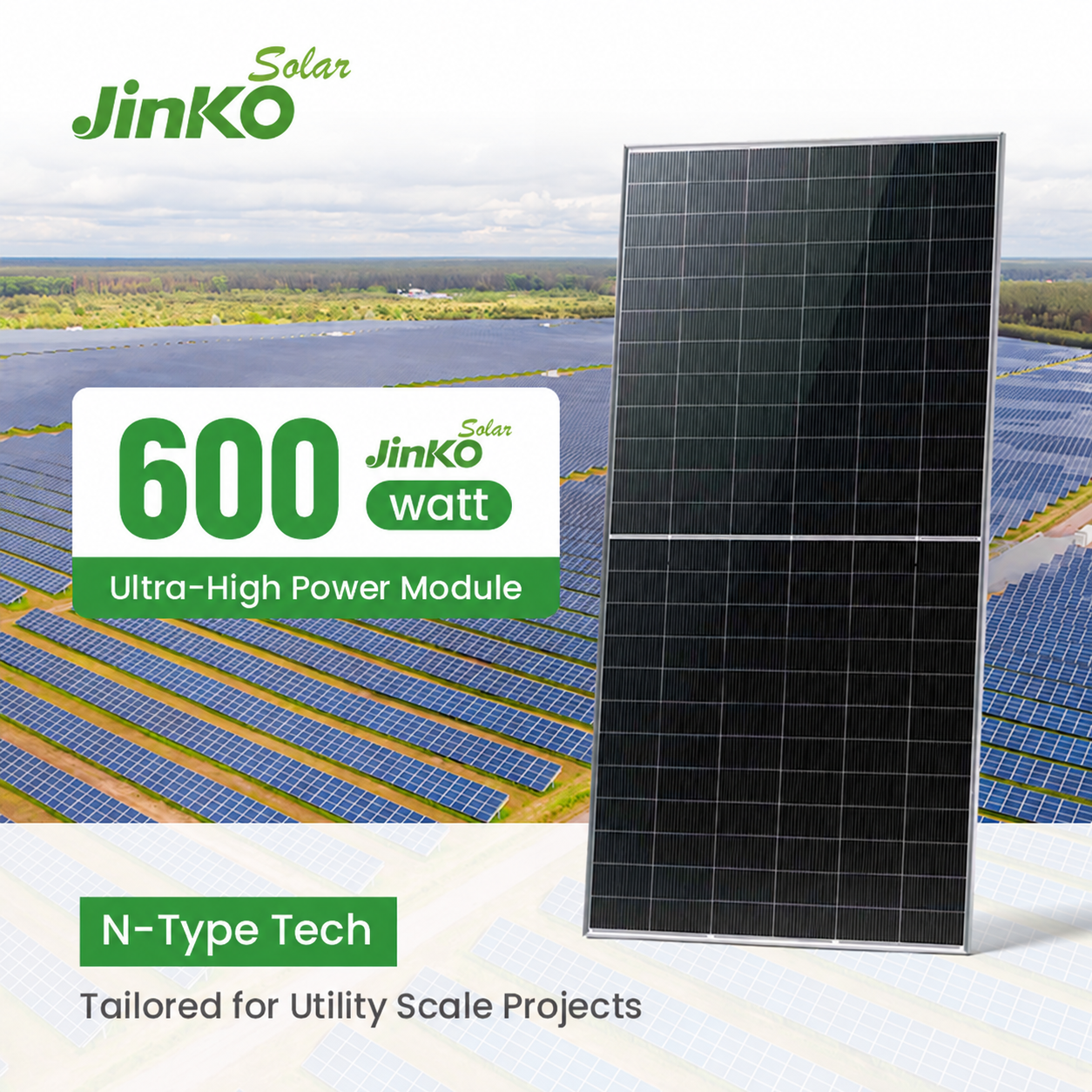
Jinko 580W–600W N-Type Double Glass Commercial Panel
- Module Type: Dual-Glass Heavy Duty
- Power Output: 580W – 600W
- Sand Abrasion: IEC 60068-2-68 Certified
- Doha Use Case: Commercial Curtain Cladding
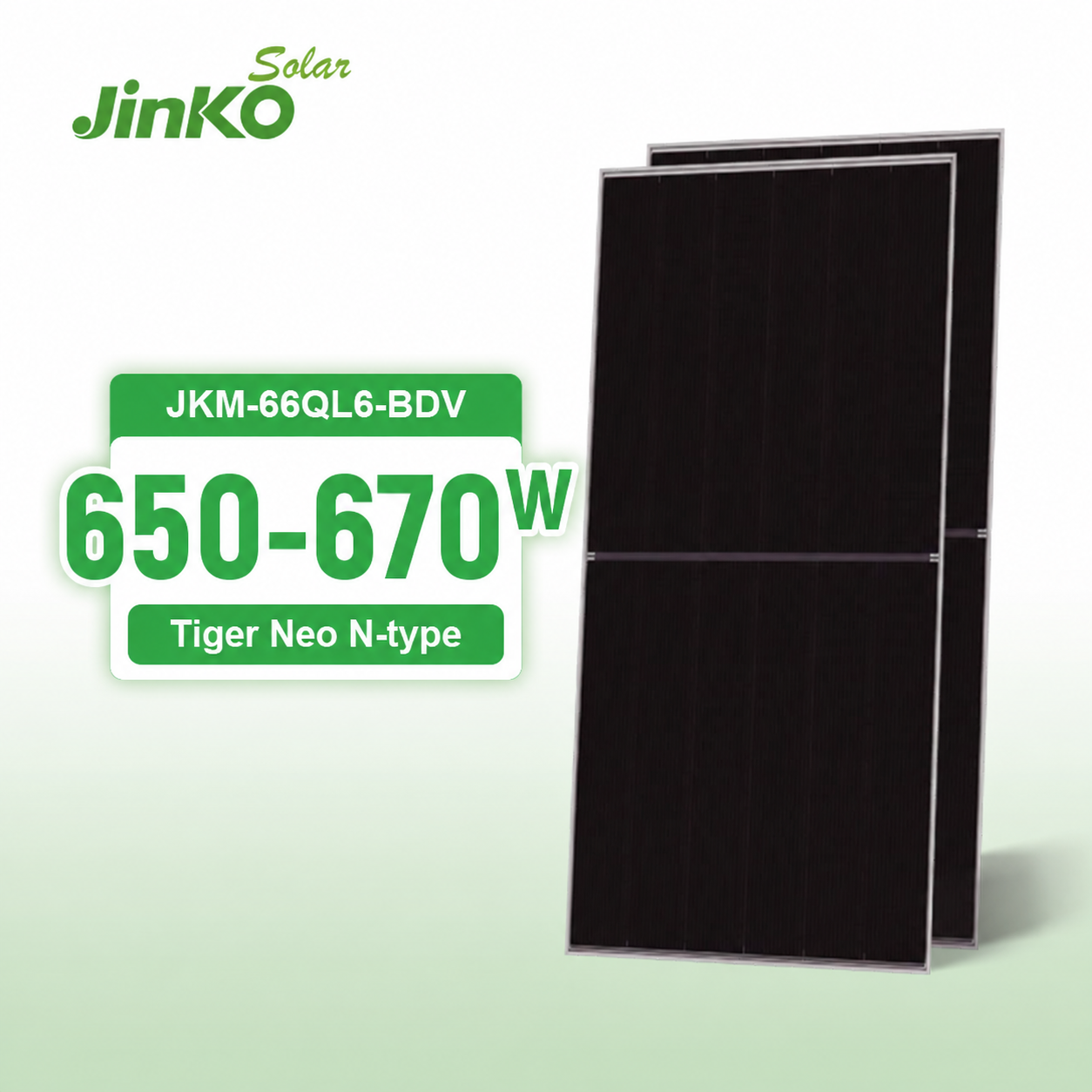
Jinko N-Type Bifacial 650W–670W Double Glass Module
- Module Tech: TOPCon Half-Cell Bifacial
- Max Wattage: 670W Rating
- Mechanical Load: 5400 Pa Snow / 2400 Pa Wind
- Doha Use Case: Pergolas, Skylights & Mansions
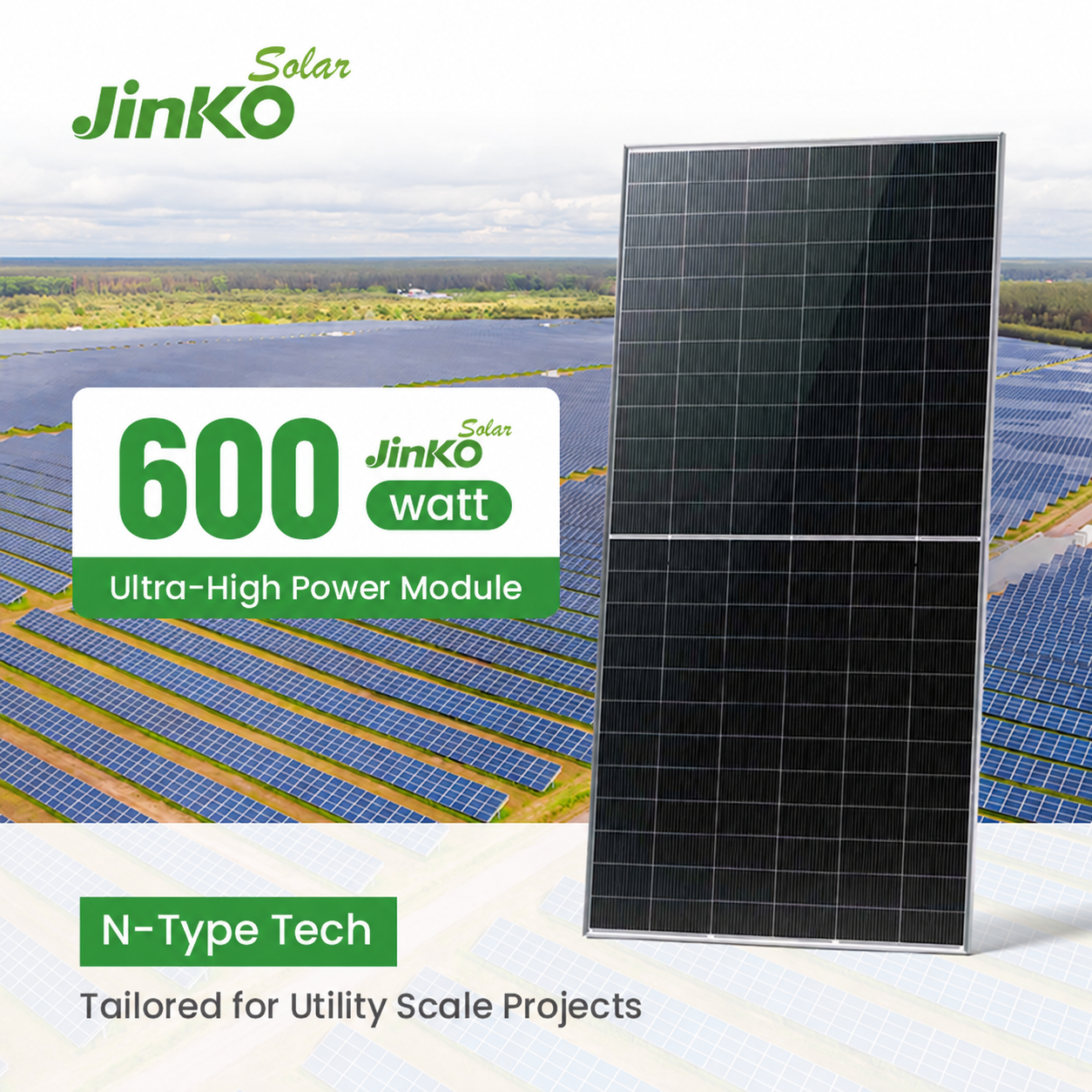
Jinko N-Type Bifacial 580W–600W High Efficiency Module
- Bifaciality Ratio: 80% ± 5%
- Encapsulation: Anti-UV POE Film
- Degradation: 1st Yr <1.0%, Annual <0.4%
- Doha Use Case: Commercial Carport Canopies
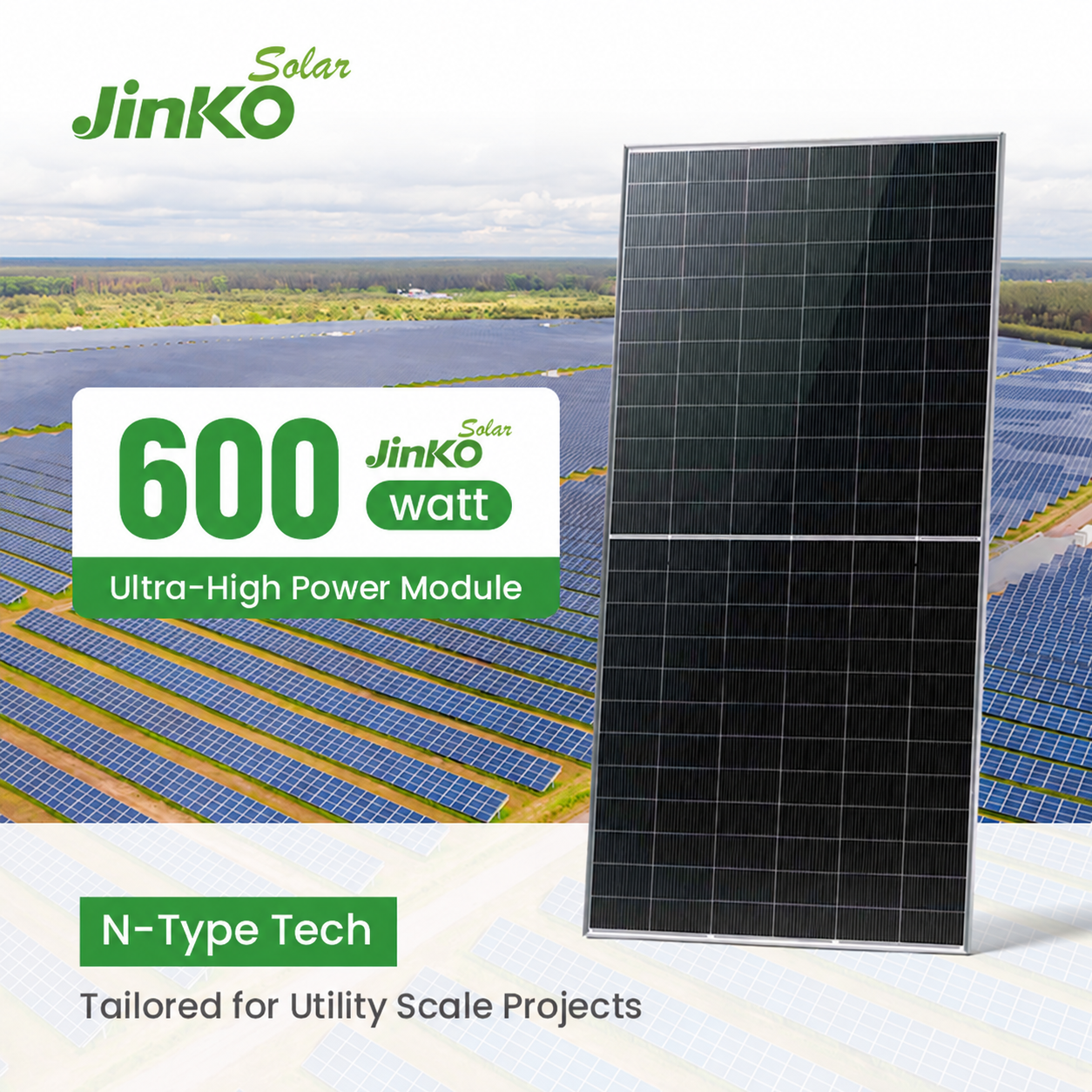
Jinko N-Type TOPCon 580W–600W Double Glass Module
- Thermal Performance: Pmax Coeff -0.29%/°C
- Glass Layers: 2.0mm + 2.0mm Heat Strengthened
- Fire Safety: Class A Building Standard
- Doha Use Case: Ventilated BIPV Rain Screens
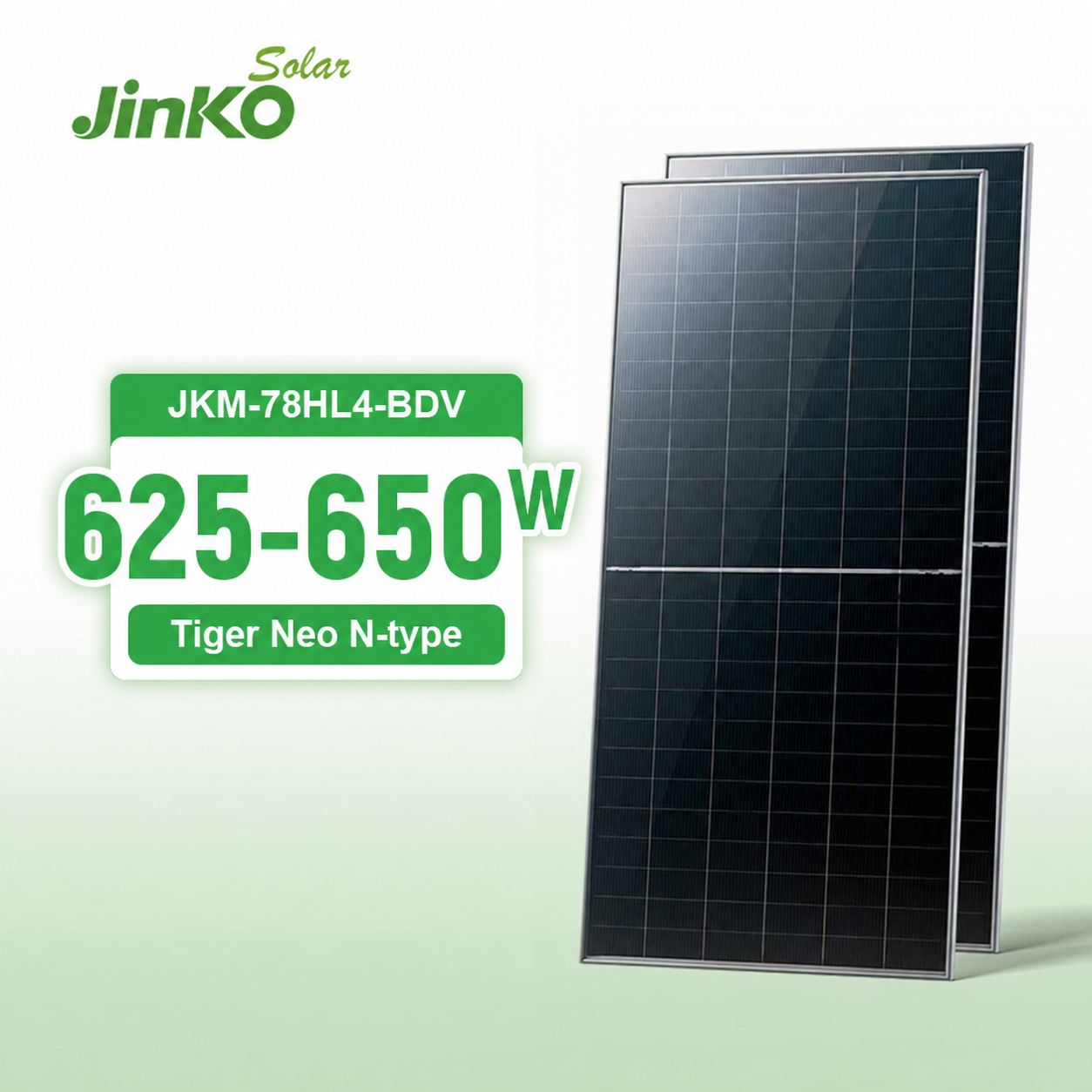
Jinko N-Type Bifacial 625W–635W Solar Panel Inventory
- Availability: Direct Export / Fast Dispatch
- Nominal Power: 630W Rated
- Junction Box: IP68 Sealed Bypass Diodes
- Doha Use Case: Logistic Parks & Industrial BIPV
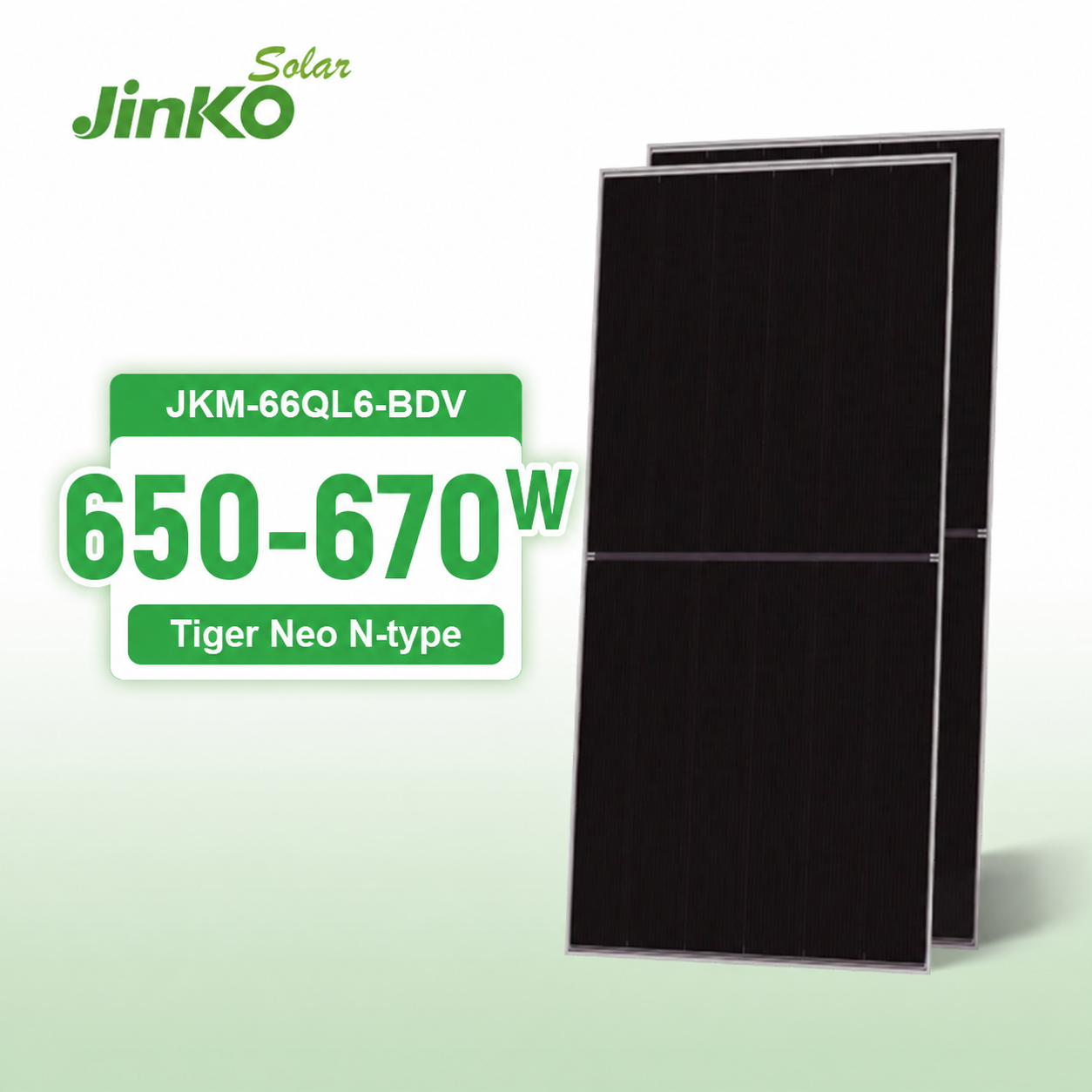
Jinko Wholesale 650W–670W N-Type Bifacial Double Glass
- BIPV Compatibility: Structural Aluminum Clamping
- Power Classes: 650W / 660W / 670W
- Salt-Mist Test: IEC 61701 High Marine Level
- Doha Use Case: Coastal High-Rises & Free Zones
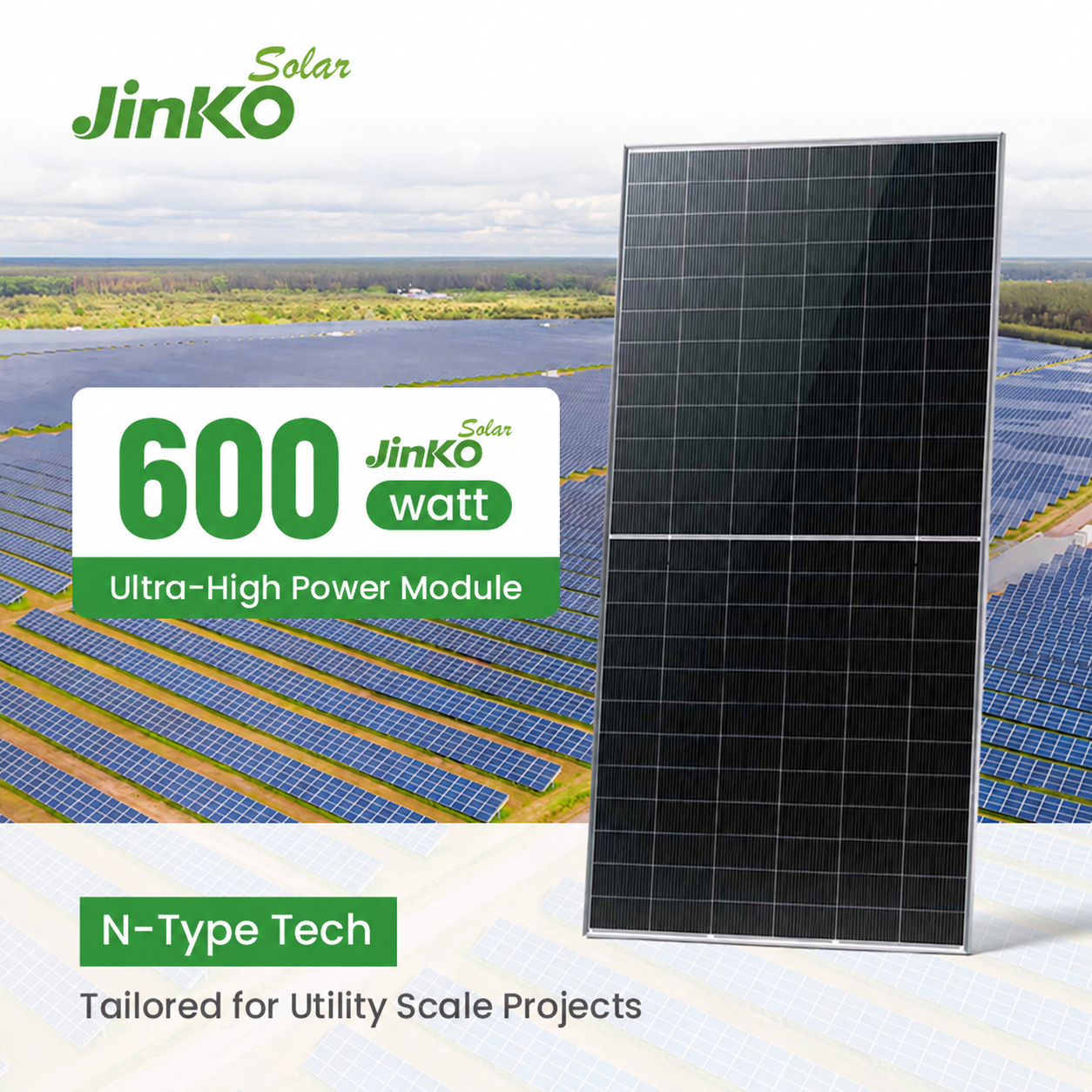
Jinko 580W–600W Dual Glass Monocrystalline PV Module
- Glass Composition: 2.0mm Front + 2.0mm Rear ARC
- Efficiency: Up to 22.45%
- Certifications: TÜV, CE, IEC 61215/61730
- Doha Use Case: Rooftop Solar + Integrated Spandrel
Engineering White Paper: Deploying BIPV & Double-Glass PV in Doha's Climate
Building Integrated Photovoltaics (BIPV) in Doha, Qatar, presents a distinct set of thermodynamic and architectural challenges. The Arabian Gulf peninsula experiences sustained summer ambient temperatures exceeding 48°C, concentrated airborne particulates (PM10 and PM2.5 from regional dust storms), high marine humidity near Doha Bay, and high levels of ultraviolet irradiance. Under these rigorous environmental constraints, standard photovoltaic modules experience accelerated thermal derating, Potential Induced Degradation (PID), moisture delamination, and severe glass sandblasting.
As a dedicated engineering supplier and Tier-1 distributor partnering with industry innovators like Jinko and Deye, Hangzhou VOLT New Energy Technology Co., Ltd. supplies high-performance N-Type TOPCon dual-glass solar components specifically engineered to overcome these Middle Eastern challenges. By integrating architectural-grade POE (Polyolefin Elastomer) encapsulation instead of conventional EVA, our BIPV modules prevent moisture vapor transmission and acetic acid formation, effectively eliminating corrosion across internal interconnect ribbons in humid coastal zones like Lusail Marina and West Bay.
| Performance Metrics | Standard P-Type PERC Single Glass | VOLT N-Type TOPCon Double Glass BIPV | Operational Impact in Doha |
|---|---|---|---|
| Pmax Temp. Coefficient | -0.35% / °C | -0.29% / °C | Generates ~5.8% more kWh during 45°C+ summer midday peaks |
| Bifaciality Factor | 65% – 70% | 80% – 85% | Captures substantial albedo reflected from white gravel & light tiles |
| Encapsulation Chemistry | Standard EVA (Risk of Yellowing) | Cross-linked POE Elastomer | Resists intense UV aging and micro-crack delamination |
| Surface Glass Durability | 3.2mm Single Annealed Glass | 2.0mm + 2.0mm Dual Heat-Strengthened | Withstands sandblasting (IEC 60068-2-68) and high wind turbulence |
| Fire Hazard Classification | Class C (Standard Backsheet) | Class A Fire Safety Rated | Satisfies strict Qatar Civil Defence (QCDD) building facade safety |
Furthermore, albedo optimization plays a pivotal role in architectural BIPV engineering throughout Qatar. Modern architectural developments across The Pearl, Msheireb Downtown, and Qatar Foundation utilize high-albedo paving surfaces, travertine pavements, and white membrane roofs. Our N-Type bifacial double-glass assemblies harness this reflected diffuse radiation from the rear face, generating up to 25% incremental yield without increasing the building's physical footprint.
Localized Application Scenarios Across Doha & Greater Qatar
How developers, facade contractors, and MEP consultants integrate our BIPV components into Qatar's built environment.
Ventilated Curtain Walls & Facades
Replaces traditional composite stone or vision spandrel glass in commercial towers across West Bay and Lusail. Integrates with standard curtain-wall mullions to harvest solar radiation while reducing solar heat gain coefficient (SHGC).
Solar Carports & EV Shading Hubs
Essential for municipal transit hubs, commercial shopping destinations, and hospital facilities. Waterproof double-glass canopies provide vehicle shade in 50°C heat while charging corporate EV fleets or supplying peak building loads.
Atriums, Pergolas & Skylights
Installed over luxury villas, retail atriums, and botanical canopies. Custom transparency designs allow controlled, diffused daylighting while filtering harsh infrared rays and generating green kWh for decentralized energy storage systems.
Industrial BIPV & Cold Storage Logistics
Deployed in Ras Bufontas and Manateq Free Zones. Structural roof-integrated panels replace corrugated metal sheeting, creating an insulated building envelope with direct DC feeding into Deye high-voltage hybrid inverters.
Doha Clean Energy Policies & Architectural BIPV Trends
Key economic drivers accelerating Building-Applied and Building-Integrated Solar across Qatar through 2030.
Kahramaa "Shamsna" & Grid-Tied PV Mandates
Qatar General Electricity & Water Corporation (Kahramaa) is expanding distributed generation initiatives. Under updated net-metering schemes, commercial developments in Doha can feed surplus generation into the public grid, drastically shortening BIPV capital payback periods.
GSAS (Global Sustainability Assessment System) Credits
Real estate assets in Lusail and Msheireb require 4-Star or 5-Star GSAS ratings. BIPV architectural components provide crucial scoring across Energy Reduction, Renewable Energy Provision, and Sustainable Envelope Materials, making PV facade integration a preferred design choice.
Coupled Energy Storage with Hybrid Inverters
Modern Doha projects combine solar facades with battery storage (LiFePO4) and Deye hybrid inverters. This system architecture ensures uninterrupted power for critical building management systems (BMS) and smooths out peak utility tariffs during peak air conditioning hours.
Enterprise Strengths & Turnkey Supply Assurance
Importers, EPCs, and facade fabricators face costly setbacks with mismatched inverters, broken warranties, and sea-freight delays. We eliminate these operational risks.
Pre-Matched Inverter Compatibility
We verify DC input voltage windows, MPPT tracker parameters, and BMS communication protocols (CAN/RS485) between solar strings, Deye inverters, and LFP batteries before shipping.
Factory-Direct Pre-Shipment QC
Every batch undergoes Electroluminescence (EL) crack detection, flash testing, insulation resistance checks, and visual grading. Full inspection reports and video documentation are provided prior to container loading.
Consolidated Marine Freight to Hamad Port
Save shipping expenses by consolidating Tier-1 Jinko solar modules, hybrid inverters, racking systems, cables, and certified LFP energy storage batteries into unified 20GP/40HQ containers with complete Class 9 DG documentation.
Dedicated Engineering & Sizing Support
Our bilingual technical team supports Middle Eastern EPCs with string calculations, single-line wiring diagrams, shading loss analysis, and manufacturer warranty coordination for 25- to 30-year operational lifetimes.
Frequently Asked Questions by Doha Buyers & Contractors
Direct technical answers addressing permitting, high-heat derating, sand abrasion, and architectural integration.
Q: How do N-Type TOPCon panels prevent power collapse during 50°C summer days?
All solar panels suffer efficiency drops as ambient heat rises above 25°C. However, standard P-type modules derate at -0.35%/°C or higher, while our N-Type TOPCon modules boast an ultra-low temperature coefficient of -0.29%/°C. Coupled with dual-glass rear heat dissipation and ventilated facade cavities, our modules retain significantly higher operational output under Doha's peak summer sun.
Q: Are your double-glass solar panels certified for extreme Middle Eastern sandstorms?
Yes. The modules we supply carry IEC 60068-2-68 sand and dust abrasion certification. The dual-surface heat-strengthened glass resists abrasive quartz sand impact without scratching or antireflective coating erosion. This maintains solar glass transmittance over decades of GCC shamal wind conditions.
Q: What documentation is required for Kahramaa grid-tie approval in Qatar?
Kahramaa requires factory conformity certificates including IEC 61215 (design and module qualification), IEC 61730 (safety qualification), IEC 61701 (salt-mist corrosion resistance for coastal projects), and factory ISO 9001/14001 compliance. We supply full technical dossiers, flash test reports, and inverter safety grid-code compliance files before shipment.
Q: How do BIPV double-glass modules withstand high coastal wind loads around Doha Bay?
Our 2.0mm + 2.0mm double-glass solar assemblies are tested to withstand mechanical front loads of up to 5400 Pa and rear wind uplift pressures up to 2400 Pa. For high-rise curtain wall applications, structural clamping systems and heavy-duty anodized aluminum framing ensure full architectural compliance with Qatar Construction Specifications (QCS).
Q: What is the recommended cleaning and maintenance schedule for BIPV facades in Doha?
Due to high particulate soiling, automated sprinkler systems, dry-brush cleaning robots, or bi-weekly manual cleaning with demineralized water is standard practice. Vertical BIPV curtain walls naturally accumulate up to 60% less particulate soiling compared to flat horizontal roof arrays, substantially cutting required maintenance cycles.
Q: Can VOLT New Energy supply complete microgrid kits including hybrid inverters and batteries?
Absolutely. We specialize in system-level integration. In addition to high-efficiency Jinko solar modules, we export Deye single-phase and three-phase hybrid inverters matched with our proprietary ANTOFO and Tier-1 LiFePO4 energy storage batteries, complete with breakers, cables, and pre-programmed communication settings for immediate field commissioning.