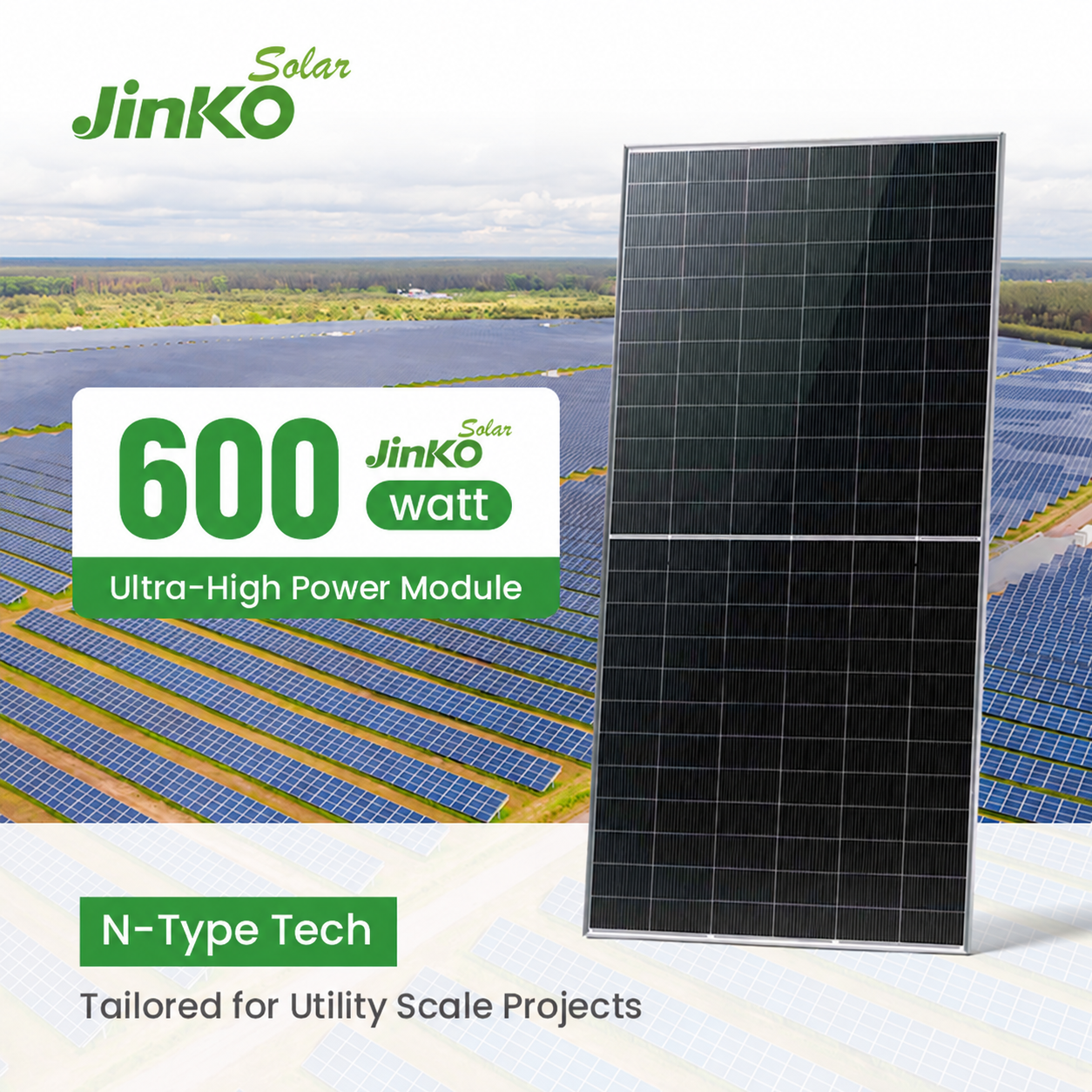
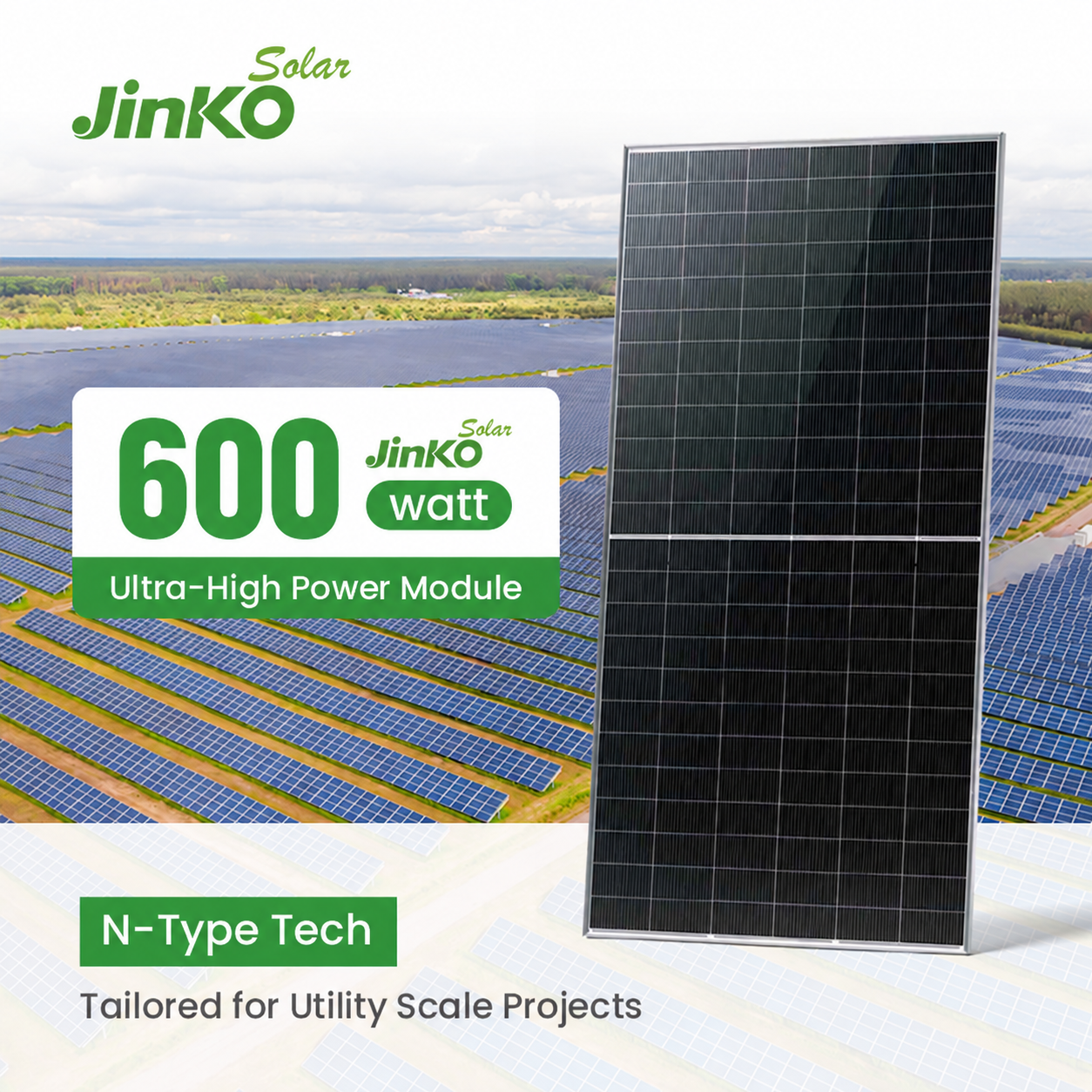
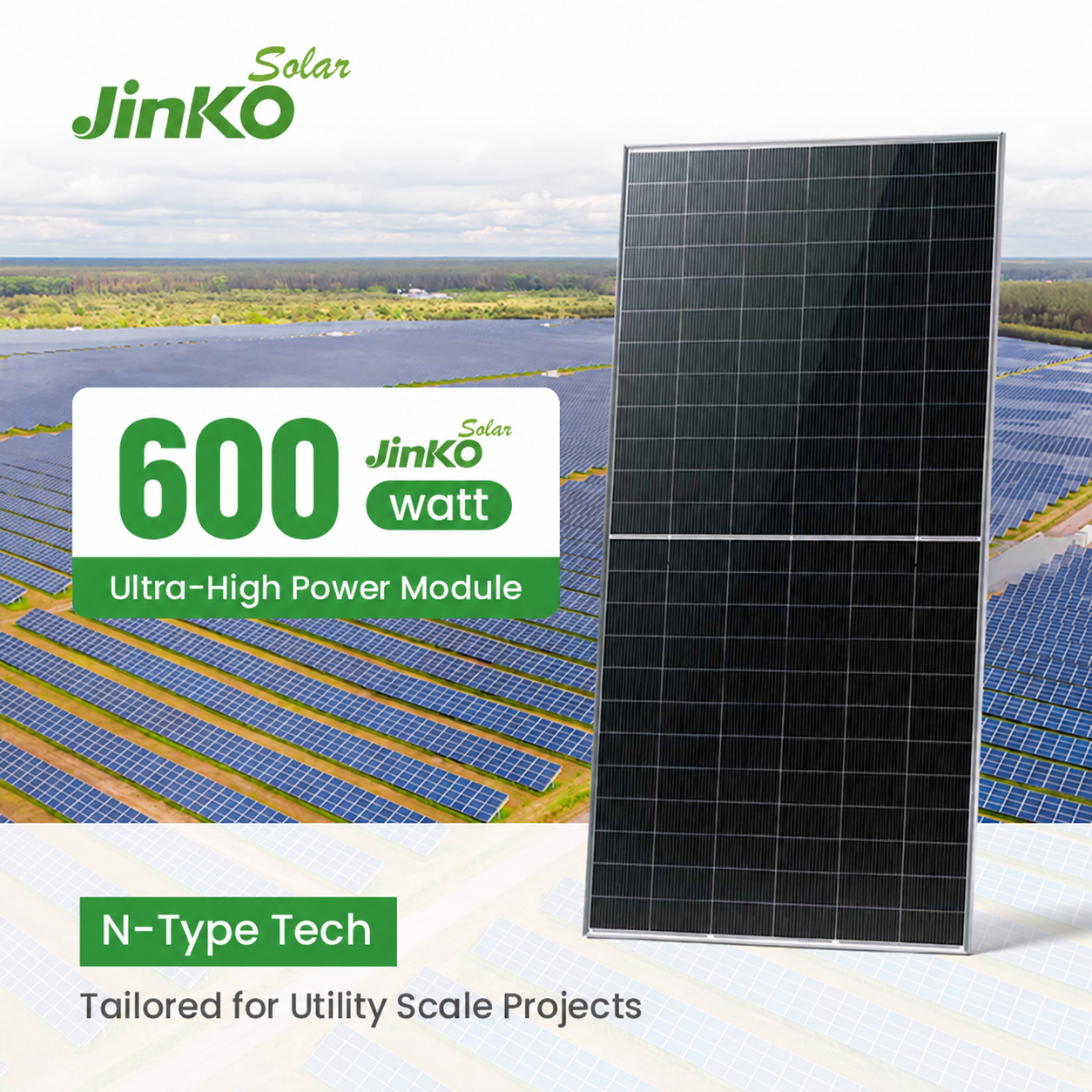
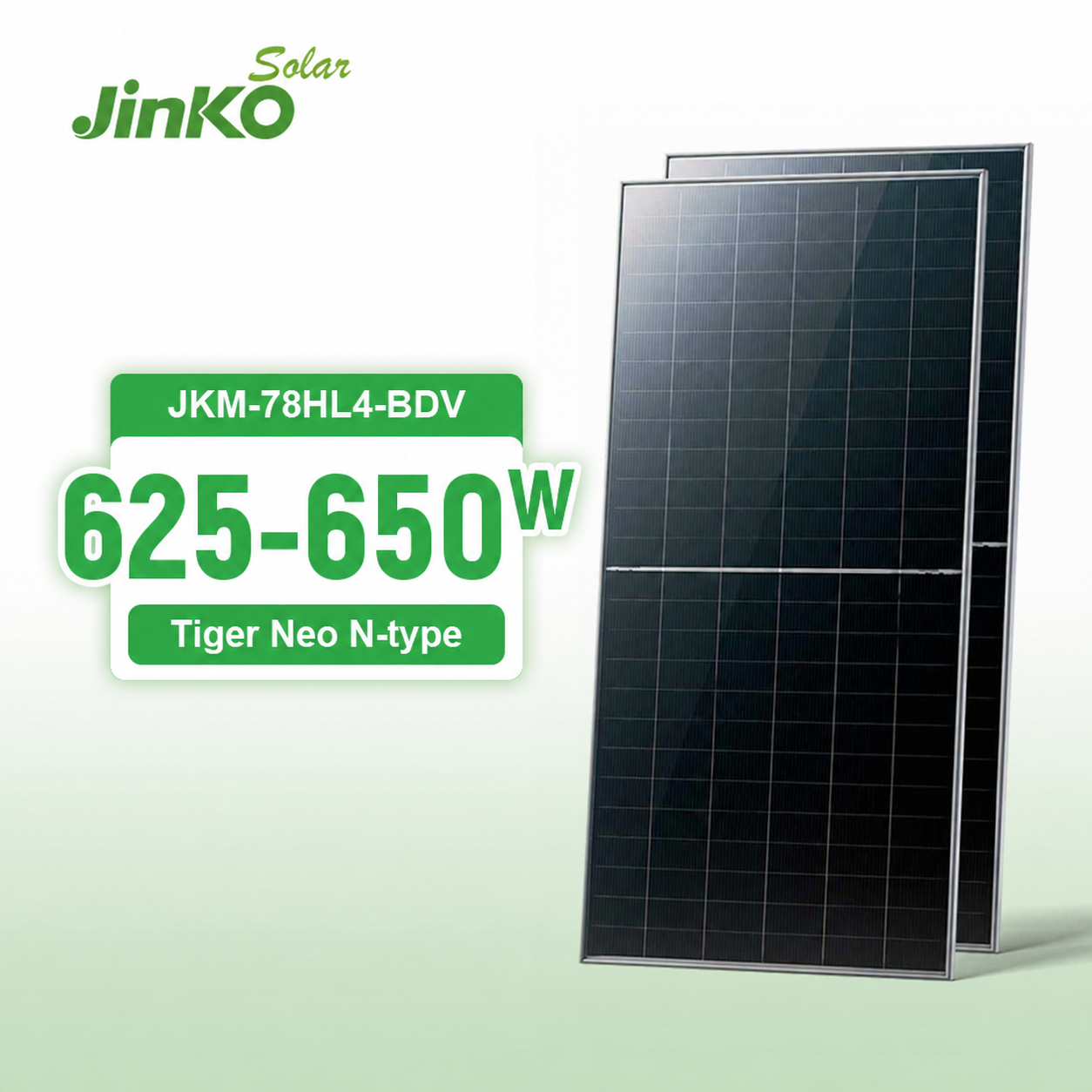
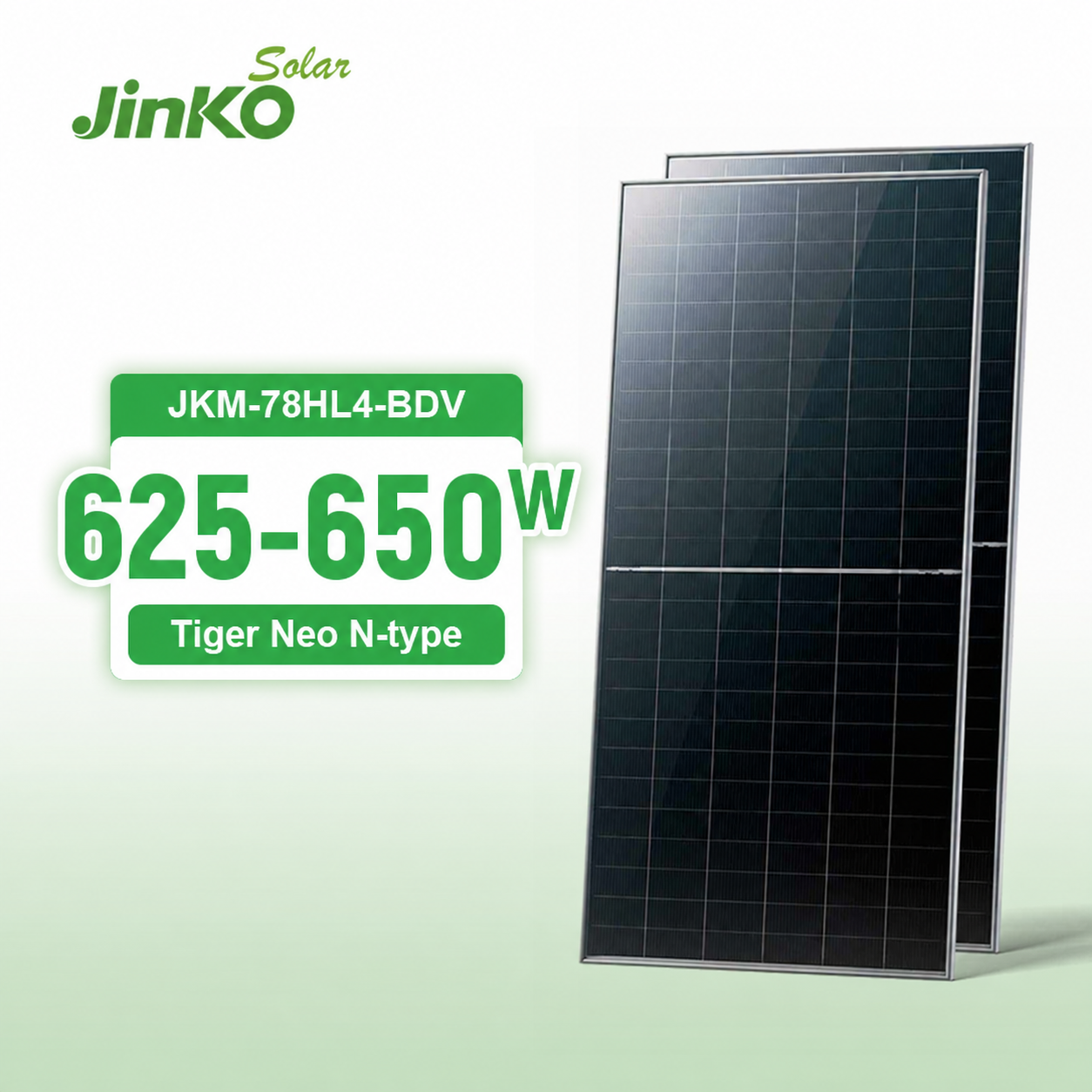
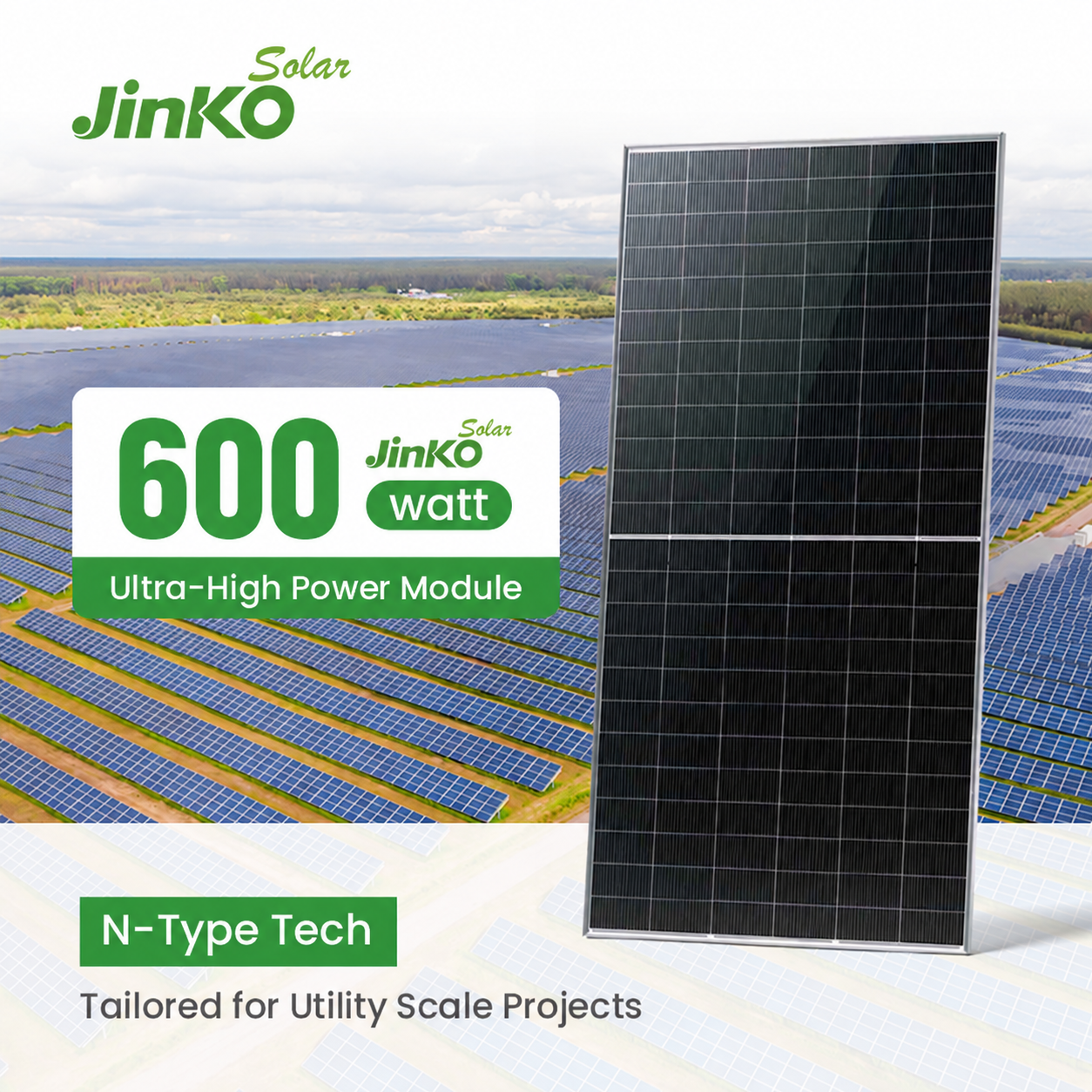
Jinko N-Type Bifacial Solar Panels 600W 580W 595W TOPCon Module
- Efficiency: Up to 22.72%
- Cell Technology: N-Type TOPCon Double Glass
- Degradation: ≤ 1% 1st year; ≤ 0.4% annual
Delivering high-density, thermally stabilized Lithium Iron Phosphate (LiFePO4) energy storage systems, Tier-1 TOPCon bifacial modules, and smart hybrid Deye inverter integrations tailored for the unique climate and energy dynamics of Medina, Kingdom of Saudi Arabia.
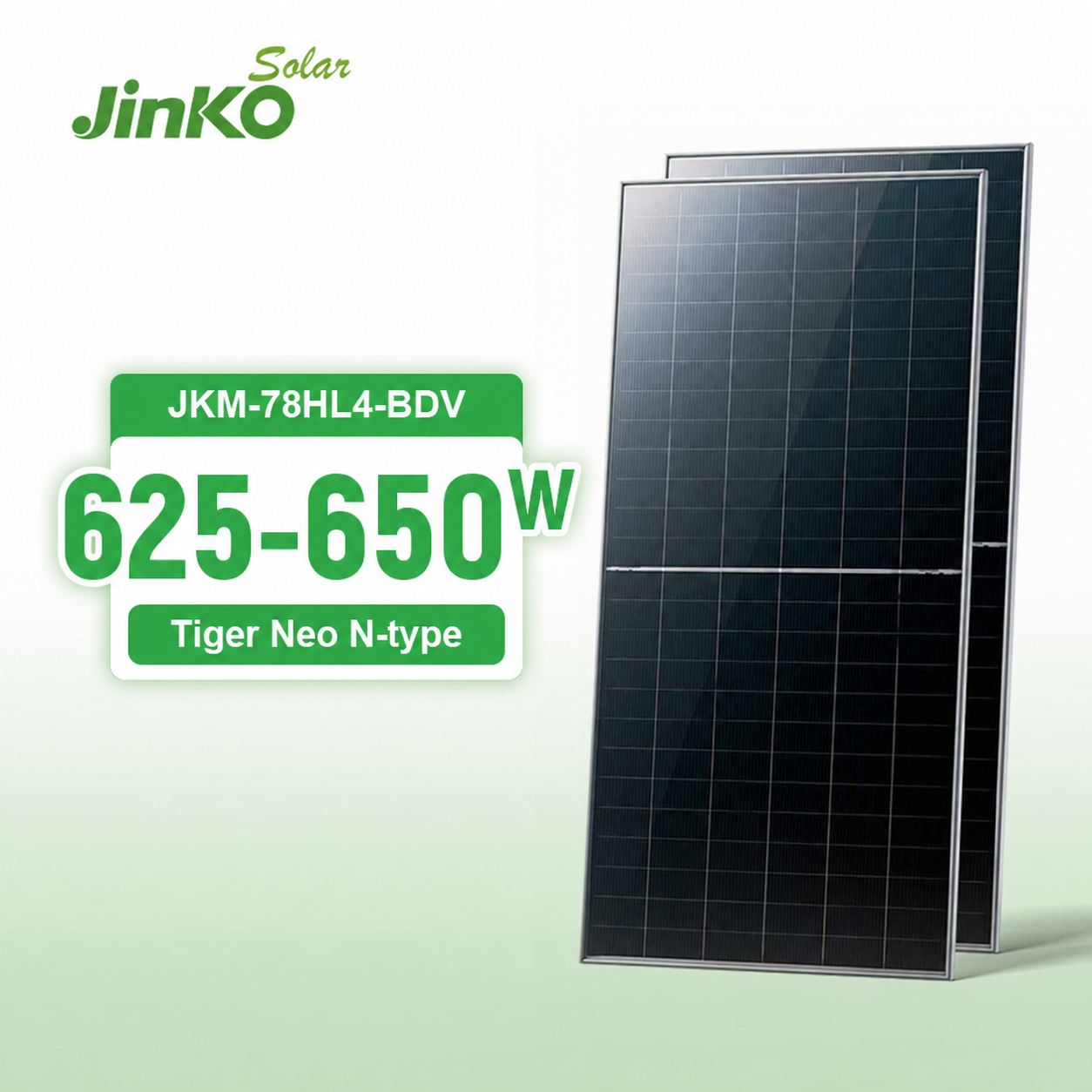
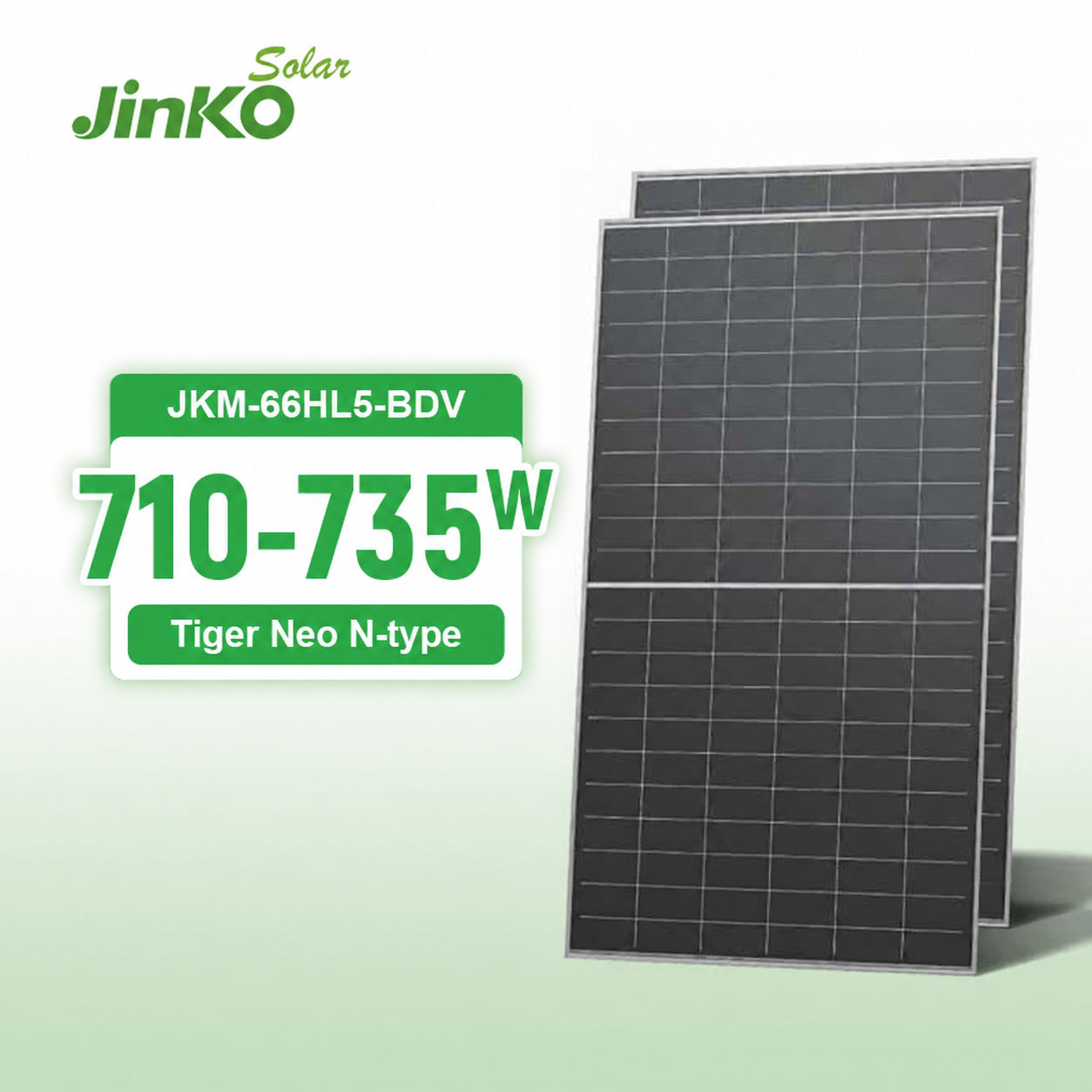
Every industrial, commercial, and residential battery deployment requires dependable power generation. Explore our precision-matched Tier-1 bifacial panels pre-qualified for extreme solar irradiation and high-temperature performance in the Medina region.
As the Kingdom of Saudi Arabia advances rapidly under the Saudi Vision 2030 clean energy transition and the National Renewable Energy Program (NREP), the Medina Province presents both transformative clean energy opportunities and severe thermal operating hurdles. Situated within an arid geographical zone characterized by substantial direct normal irradiance (DNI) exceeding 2,200 kWh/m²/year, Medina experiences intense ambient temperatures that frequently surpass 48°C to 50°C during the peak summer months. In this hyper-arid environment, standard lead-acid batteries and non-stabilized ternary lithium chemistry (NMC) suffer rapid chemical degradation, thermal runaway hazards, and shortened operational life cycles.
Hangzhou VOLT New Energy engineers and supplies specialized Lithium Iron Phosphate (LiFePO4) Battery Packs engineered specifically to solve the thermal degradation curve of the Hejaz region. LiFePO4 cathode chemistry provides an exceptionally stable olivine crystal structure with robust P-O covalent bonds. This atomic configuration ensures structural stability up to 270°C without exothermic oxygen release, rendering it virtually immune to the thermal runaway incidents that compromise conventional chemistries under severe desert ambient heat.
By pairing high-thermal-tolerance Grade-A prismatic LiFePO4 cells with smart BMS controls, Deye hybrid three-phase inverters, and Jinko N-Type TOPCon bifacial modules, our integrated systems achieve operational longevity exceeding 15 years of daily cycling. Furthermore, our Battery Management Systems integrate active cell balancing, precise multi-point temperature telemetry, and software algorithms adjusted for the elevated charging cutoff thresholds necessitated by Saudi Arabia's continuous ambient conditions.
Medina accommodates millions of pilgrims annually during Hajj and Umrah. During peak religious seasons, urban electricity loads spike dramatically from massive central air conditioning demand. Our high-voltage and low-voltage rack-mounted LiFePO4 systems deliver critical peak-shaving capabilities, allowing commercial hotels and service complexes to reduce punitive maximum-demand grid charges while guaranteeing instantaneous, zero-switch uninterrupted power supply (UPS) during grid voltage dips.
The agricultural plains surrounding Medina (such as Al-Ula, Yanbu hinterlands, and regional wadis) represent the world's most prominent producers of premium Ajwa and date cultivars. Our off-grid LiFePO4 containers and solar pumping hybrid solutions replace expensive, high-maintenance diesel generator sets. These battery systems withstand desert sand ingress (IP65/IP54 cabinetry) and supply stable 380V/400V 3-phase power for continuous deep-well water lifting and cold-storage preservation units.
Connecting the desert corridors between Medina, Jeddah, and the Red Sea Project requires continuous power across remote communication towers and highway lighting nodes. Our deep-cycle 48V/51.2V telecom rack-mounted LiFePO4 batteries replace conventional gel and lead-acid batteries, delivering an 80% usable depth-of-discharge (DoD) without sulfation and operating dependably in unconditioned outdoor shelters.
The renewable energy ecosystem in Saudi Arabia is undergoing unprecedented structural acceleration. For B2B engineering contractors, project developers, and electrical component distributors in Medina, key macroeconomic and regulatory developments highlight the imperative for reliable LiFePO4 battery solutions:
Mitigating cross-border procurement risks through engineering rigor, end-to-end hardware testing, and complete export documentation handling.

Eliminate BMS-inverter handshaking faults. We pre-program and verify hardware communication protocols between our LiFePO4 packs and Deye, Growatt, or Victron inverters before dispatch, guaranteeing plug-and-play field commissioning.

Every LiFePO4 cell undergoes strict sorting for internal resistance, capacity consistency, and laser-welding structural integrity. Complete factory inspection videos and parameter data sheets accompany each production run.

Lithium iron phosphate batteries are classified as Class 9 hazardous materials. We manage comprehensive export safety certifications including UN38.3 test summaries, MSDS documentation, and certified UN-standard heavy-duty crating.

Our dedicated electrical engineers assist Medina EPC contractors with complete PV array calculations, battery C-rate sizing, cable dimensioning, DC protection planning, and system single-line diagrams (SLD) matched to exact local load demands.
Direct technical answers addressing customs, installation, performance, and communication protocols.
Our battery packs utilize Grade-A prismatic LiFePO4 cells with high chemical purity and heavy-gauge busbars that minimize internal ohmic resistance (I²R heating). The multi-sensor smart BMS continuously tracks module-level temperatures across individual cells, automatically throttling charge or discharge rates if internal core temperatures approach safety thresholds. For outdoor containers and agricultural installations in Medina, we provide specialized enclosures featuring double-wall thermal insulation and high-efficiency Peltier or HVAC cooling architectures.
Yes. Shipments entering the Kingdom of Saudi Arabia via Jeddah Islamic Port or King Abdulaziz Port in Dammam require strict adherence to SABER platform registration and SASO technical regulations. Our products carry IEC 62619 (safety requirements for industrial lithium secondary cells), CE conformity, UN38.3 transport reports, and relevant SASO-compliant laboratory test declarations to ensure smooth customs clearance.
Yes. We specialize in mixed-cargo container consolidation at our Hangzhou and Ningbo logistics hubs. We safely stow Jinko N-Type PV modules, Deye low-voltage/high-voltage hybrid inverters, and dangerous goods (DG) certified LiFePO4 battery modules in the same 40ft HQ container. This consolidation substantially reduces freight overhead and import processing costs for Saudi contractors.
Low-voltage (LV) 51.2V systems are standard for residential rooftop storage (5kWh to 30kWh) and telecom setups, offering modular scalability in parallel. High-voltage (HV) stacked systems (operating between 160V and 800V DC) are engineered for larger commercial complexes, schools, and hospitals in Medina. HV configurations increase round-trip system efficiency (RTE) by minimizing inverter DC-to-AC conversion losses and reducing required copper cable diameters.
Our BMS firmware is natively written with pre-selected protocol libraries supporting Deye (CAN protocol standard address 00). When connecting the RJ45 cable between the battery's CAN port and the Deye inverter's BMS port, select battery mode "00" on the Deye touch display. The inverter instantly recognizes battery State of Charge (SoC), individual cell voltages, and dynamic charge/discharge current limits, eliminating manual voltage parameter setup.
Whether you require full container-load shipments of 51.2V 100Ah/200Ah battery packs, stacked commercial ESS systems, or complete solar-plus-storage turnkey solutions with matched Jinko TOPCon modules, our engineering team is ready to assist your project.