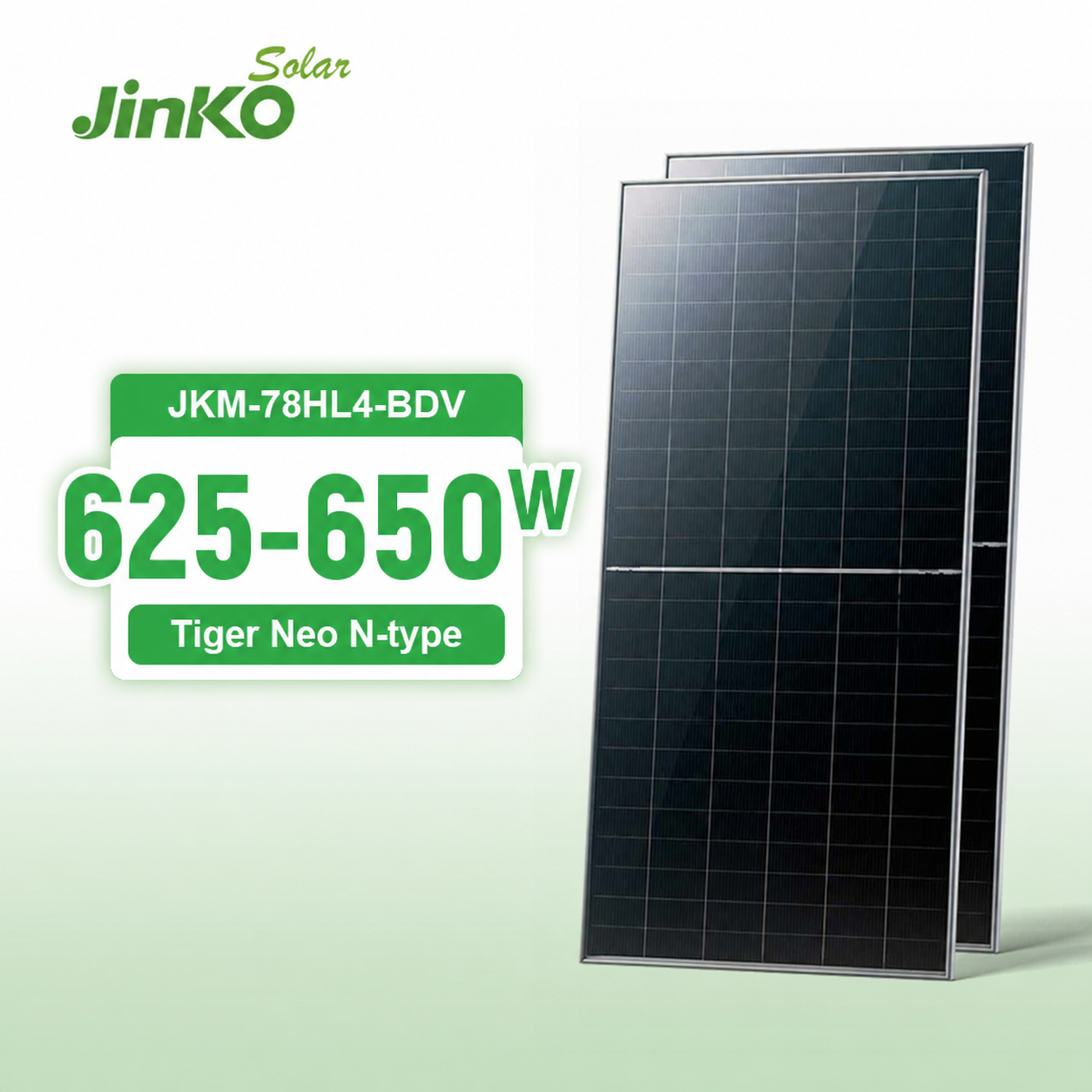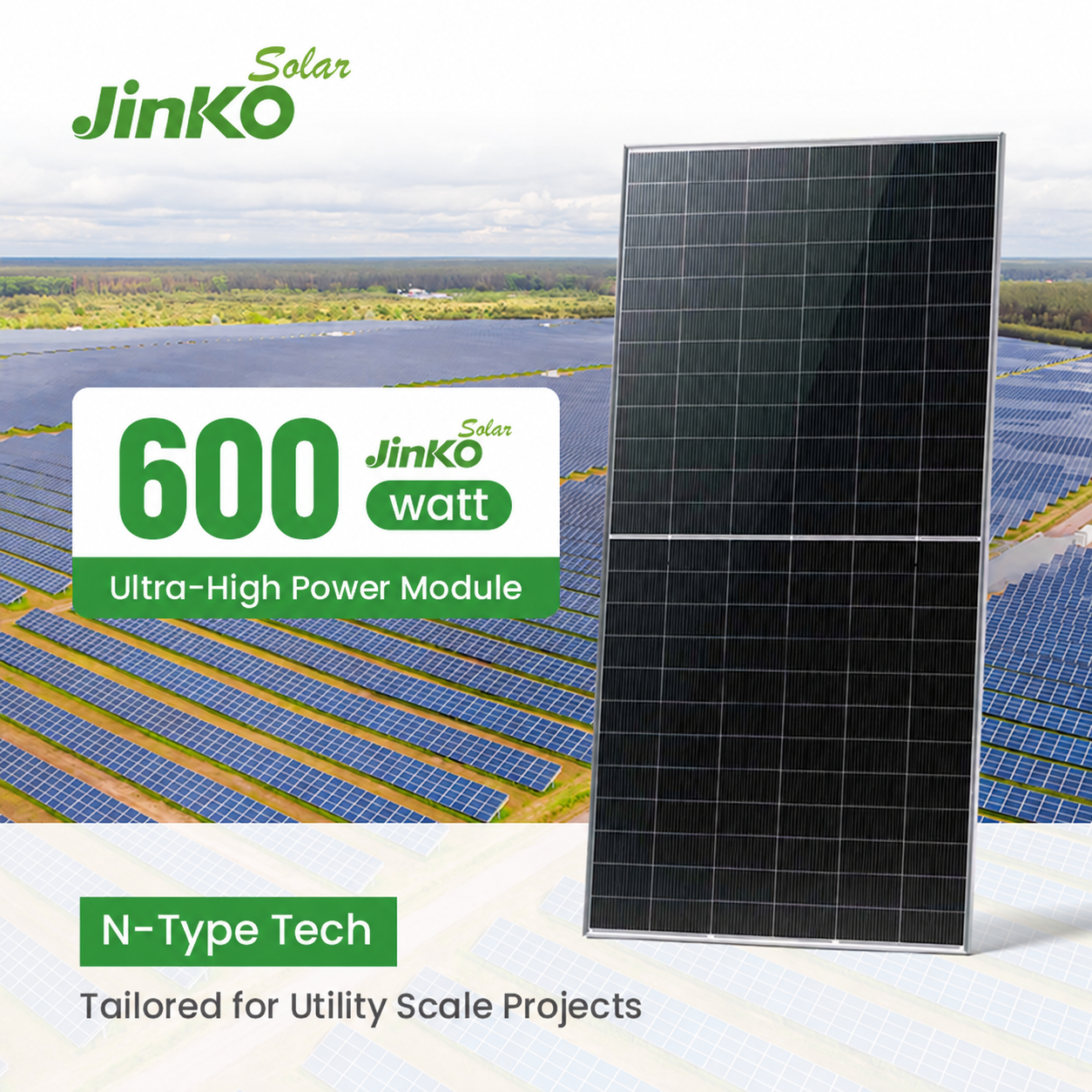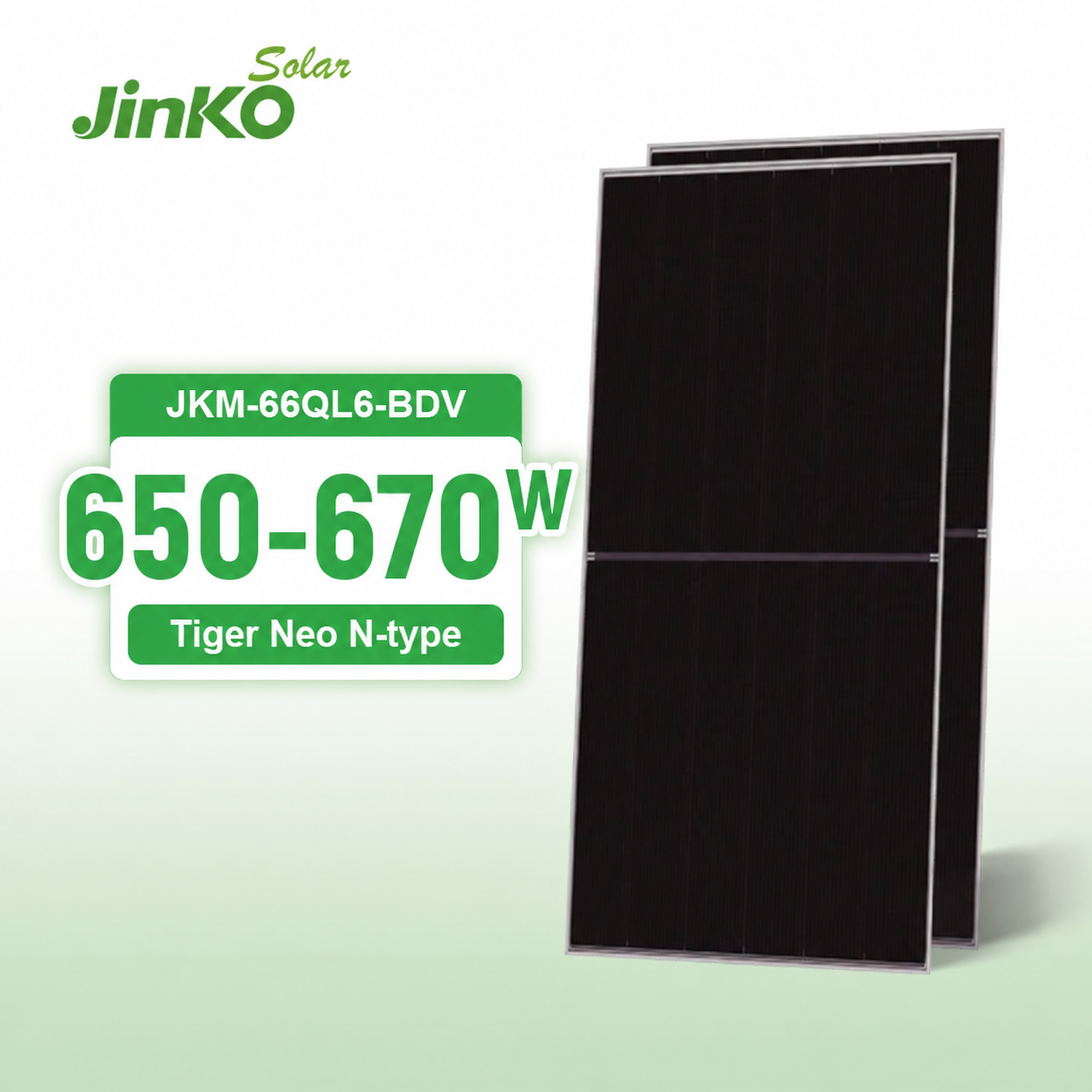
Jinko TOPCon Bifacial Paneles Solares 650W - 670W
N-Type monocrystalline module designed for maximum bifacial gain. Excellent performance in high-albedo solar setups with lower temperature coefficients.
View SpecificationsEngineered for seamless interoperability with microinverters and hybrid units across commercial rooftops, residential arrays, and agro-photovoltaic installations in Puebla.
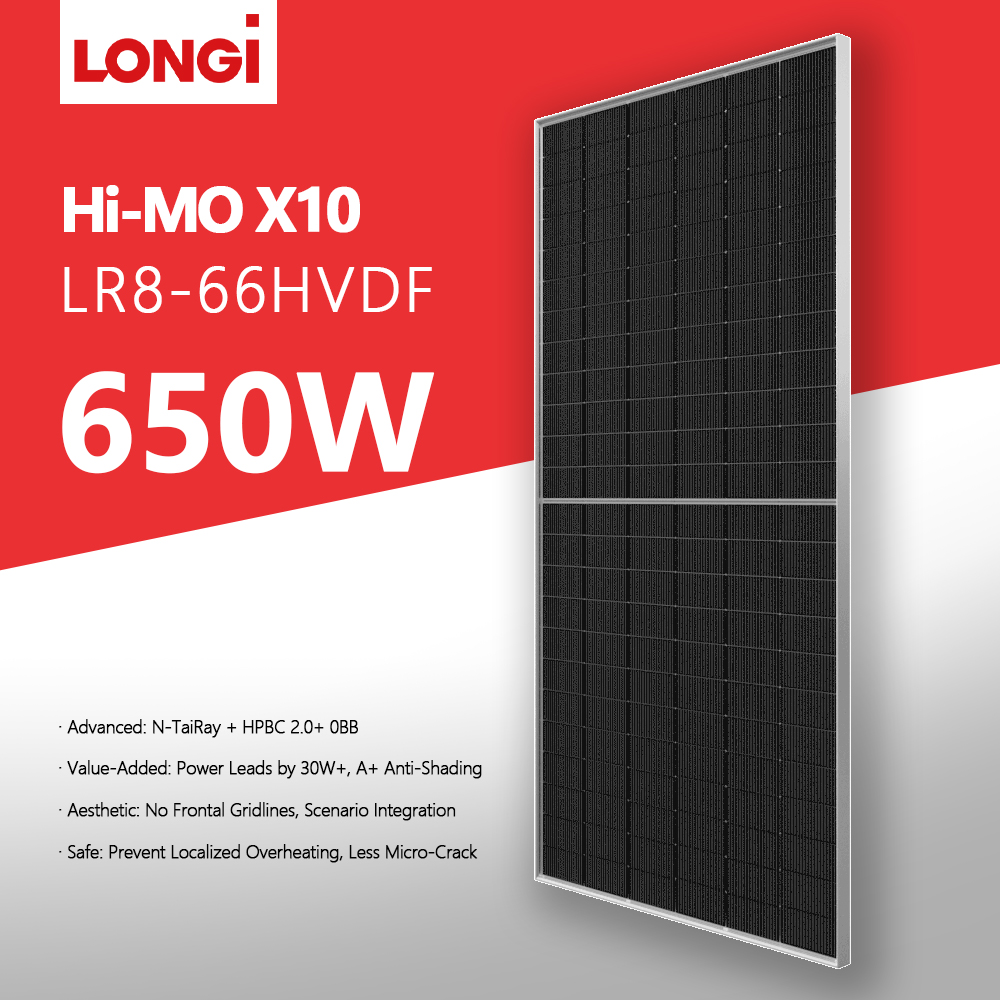
N-Type monocrystalline module designed for maximum bifacial gain. Excellent performance in high-albedo solar setups with lower temperature coefficients.
View Specifications
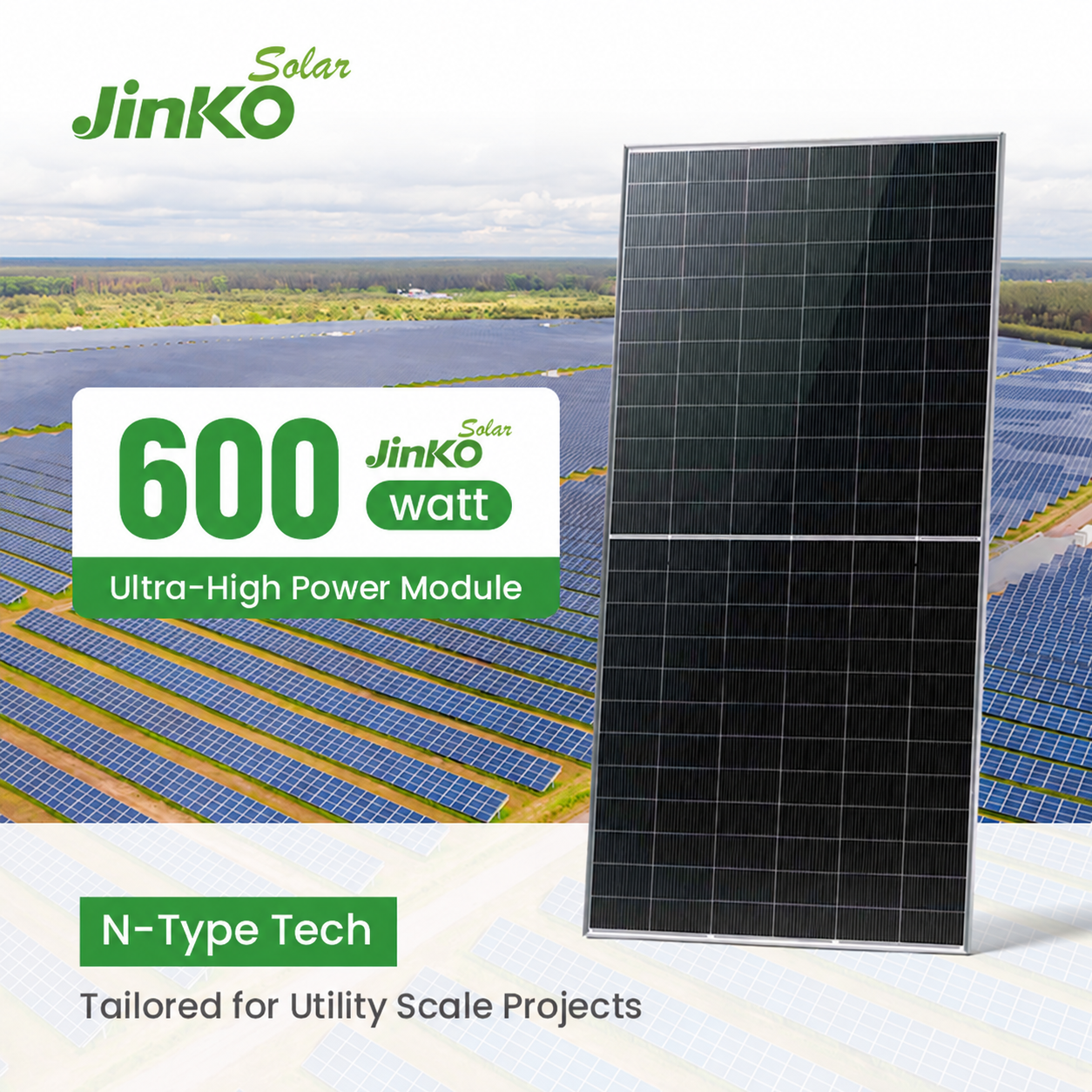
Optimized for retail centers and commercial facilities. Delivers elevated generation density per square meter with balanced low-light responsiveness.
View Specifications
Dual-glass mechanical reliability with superior microinverter pairing capability. Resists environmental PID and LID deterioration over decades of run time.
View Specifications
Constructed with dual-tempered glass for severe climate durability. Mitigates localized roof hotspot degradation when connected to multi-channel microinverters.
View Specifications
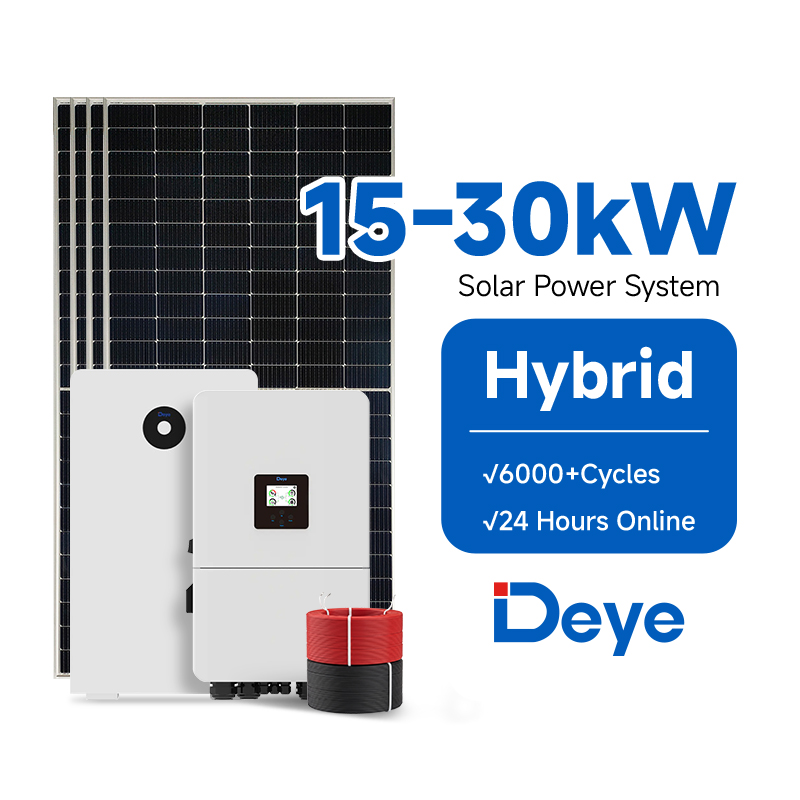
Supports low-voltage battery banks, AC coupling with microinverters, generator input, and multi-mode power dispatching during grid intermittency.
View Specifications
Engineered for corporate rooftop applications. Pairs efficiently with industrial-rated four-in-one microinverters for pinpoint module-level tracking.
View Specifications
Designed for resilience in heavy industrial environments like Puebla's manufacturing belts. Features reinforced anti-corrosion structural frames.
View Specifications
Combines high irradiation conversion efficiency with optimized albedo response for open terrain installations across Central Mexico valleys.
View SpecificationsOperating photovoltaic systems at 2,200 meters above sea level requires strict adherence to derating factors, grid intertie norms (CFE), and rapid shutdown compliance.
The industrial corridor between Puebla and San José Chiapa is home to critical automotive assembly facilities. These plants demand uninterrupted operations. Conventional string inverters carry the liability of single-point string failures and high DC voltage roof runs. Our microinverters limit DC voltage to under 60V right at the panel bracket, preventing arc faults and meeting Mexico's stringent NOM-001-SEDE industrial safety codes.
Within Puebla's metropolitan area and Cholula, residential architectural constraints involve multi-level parapets, water tanks (tinacos), and orientation challenges. Microinverters operate with independent Maximum Power Point Trackers (MPPT) per module, ensuring that shade cast upon a single panel does not impair adjacent generation. This yields up to 25% higher annual kilowatt-hour recovery compared to centralized string architectures.
Puebla sits at an average altitude of 2,135 to 2,200 meters. The reduced air density at high elevations impairs standard convective cooling, forcing inferior inverters into premature thermal throttling. Our microinverters feature heavy die-cast aluminum heat sinks with IP67 potting encapsulation, delivering uncompromised output even when exposed to intensive UV radiation and thin atmospheric conditions.
Understanding shifting energy tariffs, net-metering schemes, and the regulatory environment under the CRE and CFE.
Mexico's high-consumption residential tariff (Tarifa DAC) carries prohibitive per-kWh expenses with zero federal subsidization. Property owners in Puebla are swiftly adopting microinverter-coupled rooftop solar arrays to reduce meter readouts below DAC thresholds. Microinverters allow gradual modular expansion—starting with 2 to 4 panels and scaling up as domestic power consumption rises without redesigning balance-of-system hardware.
Fire marshals and municipal civil protection bodies across Central Mexico are progressively enforcing module-level rapid shutdown (MLRSD) standards matching NEC 2020 / NOM safety revisions. By utilizing AC microinverters, the roof array instantly de-energizes down to harmless voltage upon grid loss or switch actuation, avoiding expensive external MLRSD add-on boxes and reducing labor hours for local EPC contractors.
Grid instability during seasonal storm events around the Puebla-Tlaxcala basin has stimulated rapid growth in retrofitted energy storage. Systems built using microinverters effortlessly couple on the AC side of central battery inverters (such as Deye Hybrid series), ensuring existing microinverter investments continue supplying clean solar power to critical battery-backed circuits during localized power blackouts.
Combining OEM-tier manufacturing quality, rigorous engineering validation, and frictionless international customs clearance.
We eliminate "BMS/Inverter communication failure" risks. Communication protocols between our energy storage batteries, microinverter gateways, and Deye hybrid inverters are configured, flashed, and bench-tested prior to export loading.
Full UN38.3, MSDS, and Class 9 Dangerous Goods certification for marine and intermodal shipping through Manzanillo and Veracruz. We offer consolidated full container load (FCL) packing combining inverters, racking, and tier-1 PV modules.
Direct tier-1 strategic supplier integration with Deye, Jinko, and LONGI. Every batch carries verifiable origin trace numbers, ensuring warranties are backed seamlessly by manufacturer terms and local project acceptance criteria.
Our bilingual solar engineering division assists contractors with array layout, string-sizing, single-line diagrams (SLD), and remote firmware commissioning, bridging technical challenges across different time zones smoothly.
Essential considerations regarding compliance, voltage levels, customs procedures, and warranty handling.
Yes. Our microinverters shipped to Mexico are calibrated for the split-phase 127V/220V 60Hz and three-phase 220V grid standards deployed by the Comisión Federal de Electricidad (CFE). Anti-islanding parameters align with IEEE 1547 and local interconnection rules.
Absolutely. Modern microinverters feature maximum continuous DC input currents exceeding 16A to 20A per channel. This accommodates the higher short-circuit currents (Isc) of Jinko and LONGI N-type bifacial panels without risk of energy clipping or overcurrent degradation.
We supply complete documentation packs: commercial invoices with compliant HS codes, packing lists, certificates of origin, and certified test reports (NOM/IEC/UL). Goods arrive via Port of Veracruz or Manzanillo and transfer seamlessly to Puebla customs terminals.
All microinverters and panels retain standard factory warranties ranging from 12 to 25 years. In the uncommon event of a module or inverter malfunction, our engineering department reviews the remote diagnostic log and dispatches rapid replacement units via local distributor reserves.
Whether you require a single container of high-efficiency microinverters, matched bifacial N-type panels, or commercial energy storage systems, our technical specialists will prepare custom system schematics, bill-of-materials pricing, and shipping logistics within 24 hours.
Contact Us