Tier-1 On-Grid PV Modules Sized for Buenos Aires Grid Demands
Engineered with high bifaciality factors, low temperature coefficients, and certified mechanical endurance against Pampero storm wind shear, these modules represent the industry benchmark for commercial, industrial (C&I), and grid-tied installations throughout the Greater Buenos Aires metropolitan belt.
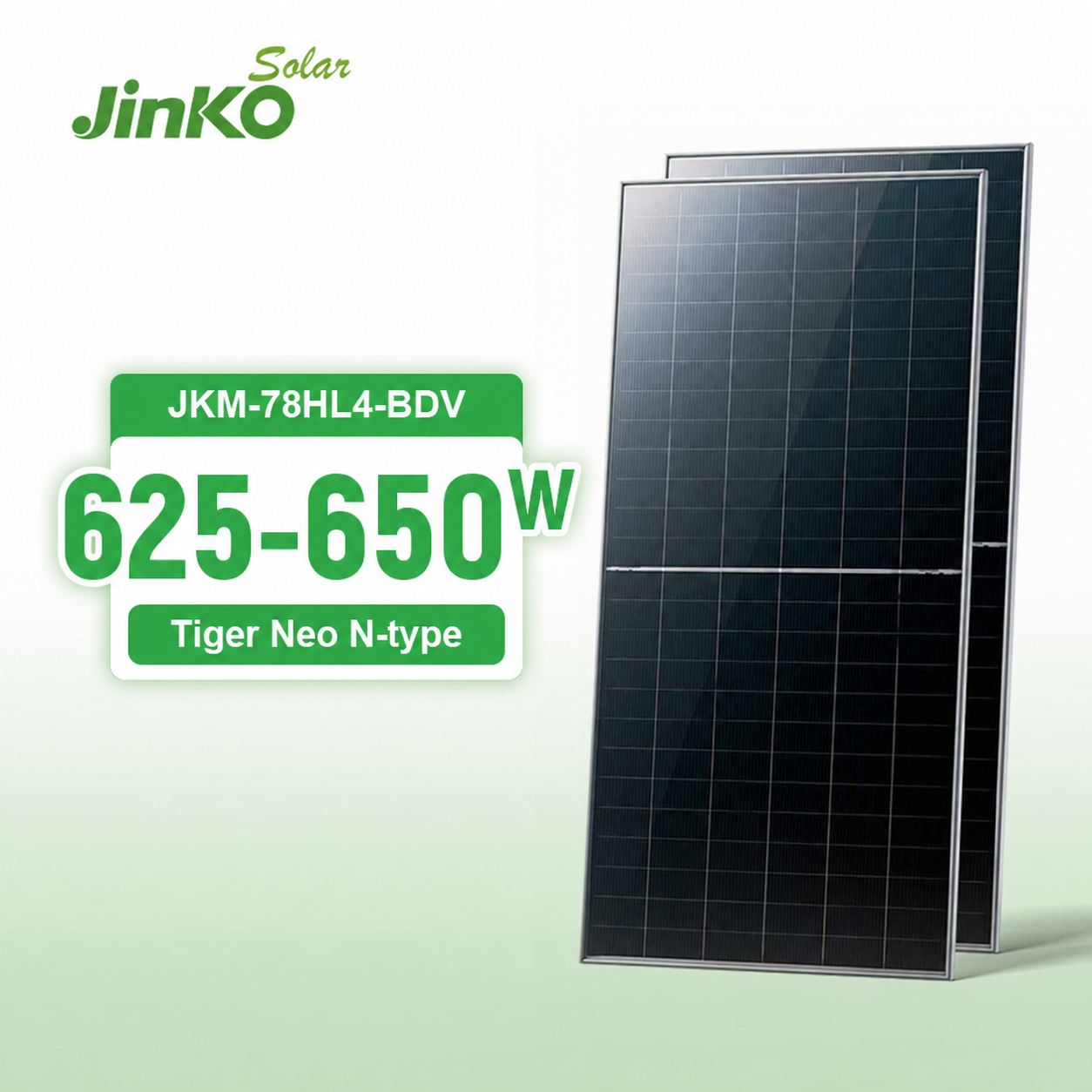
Jinko N-Type Bifacial PV Modules 630W 625W 635W Double Glass
- Module Efficiency: Up to 22.72%
- Bifaciality Factor: 80% ± 5%
- Junction Protection: IP68 Rated
- Temp Coefficient (Pmax): -0.29%/°C
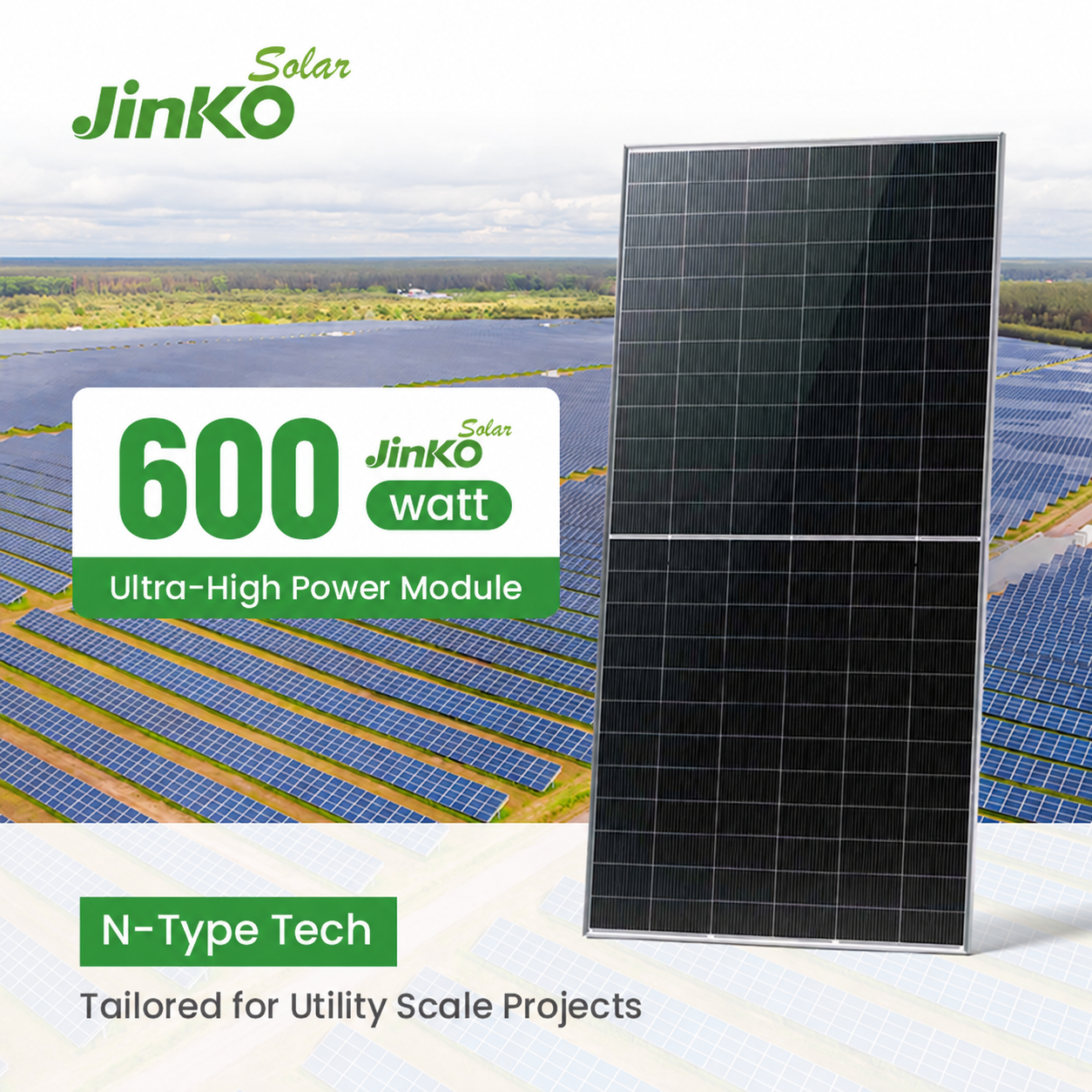
Jinko N-Type Solar Modules 600W 580W 585W 590W Monocrystalline
- Module Efficiency: Up to 22.45%
- Cell Architecture: 182mm Half-Cut
- Front Glass: 2.0mm Antireflective
- Degradation: 1% First Yr / 0.4% Annual
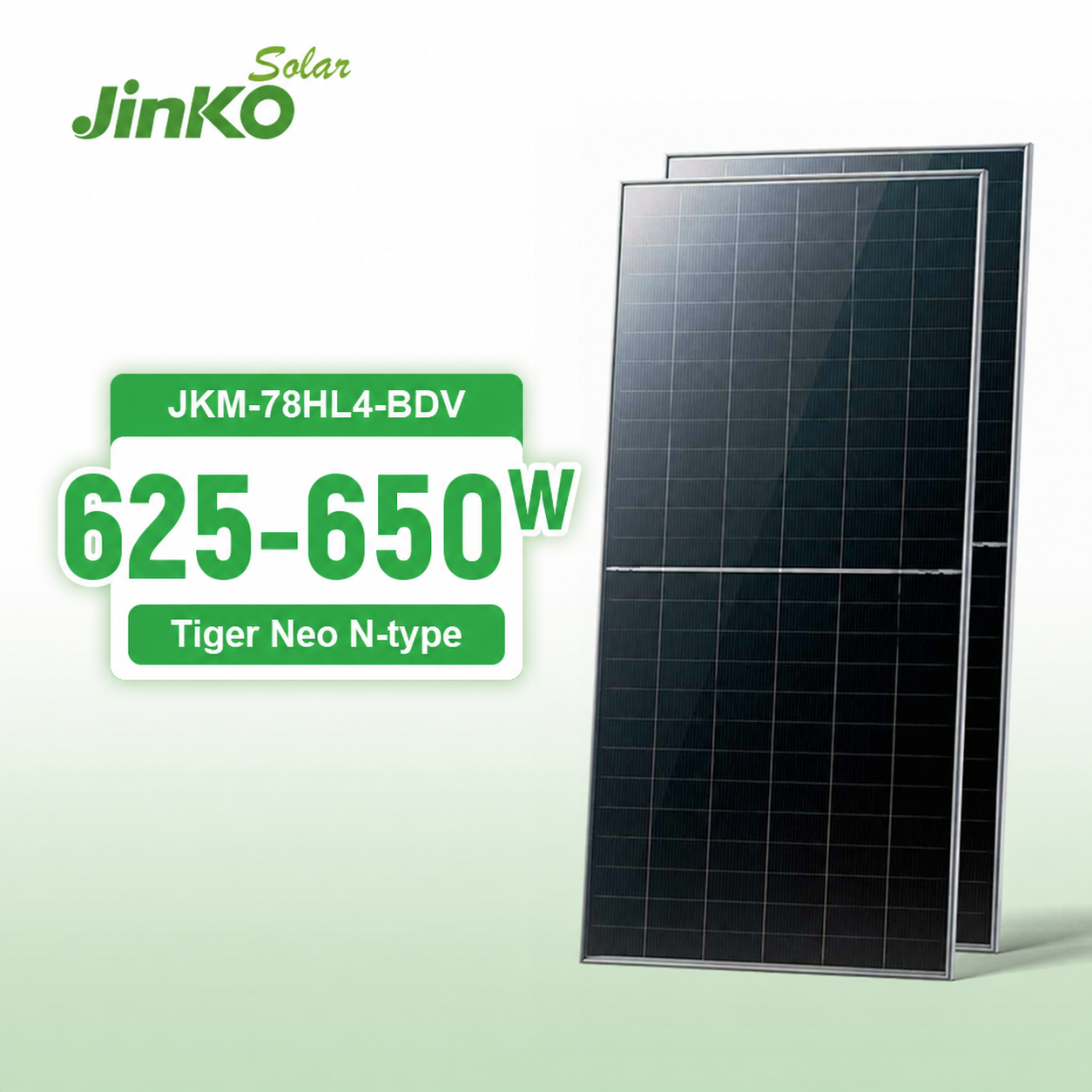
Jinko High Efficiency Bifacial PV Panels 625W 635W 645W Double Glass
- Module Efficiency: Up to 22.95%
- Mechanical Load: 5400 Pa Front / 2400 Pa Rear
- Albedo Gain: +10% to +30% Yield
- Fire Rating: Class A (IEC Standard)
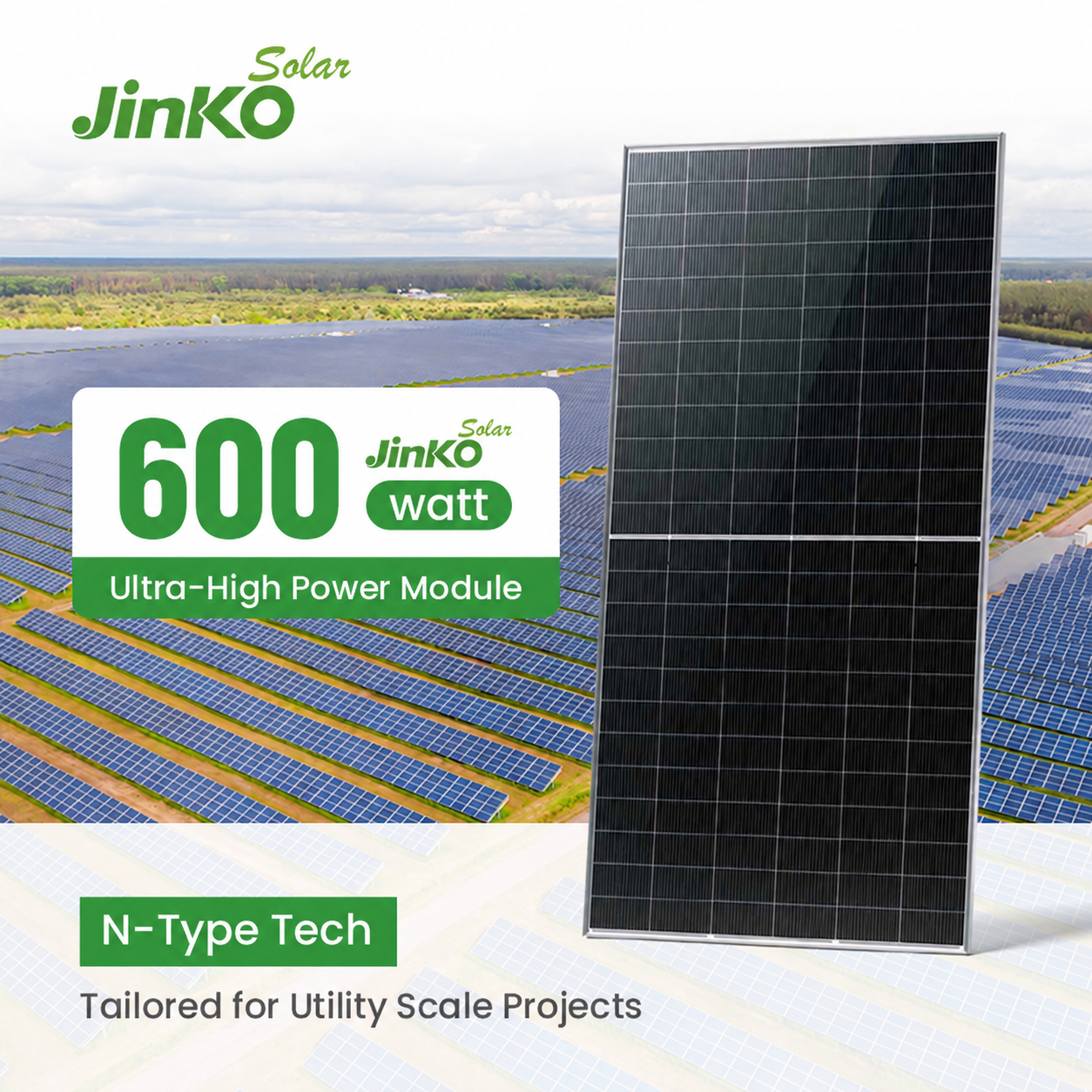
Jinko High Efficiency Bifacial 600W 585W 575W 595W Double Glass
- Module Efficiency: Up to 22.24%
- Hot Spot Risk: Ultra-Low (SMBB Tech)
- Dimensions: 2278 × 1134 × 30 mm
- Weight: 32.0 kg Dual-Glass
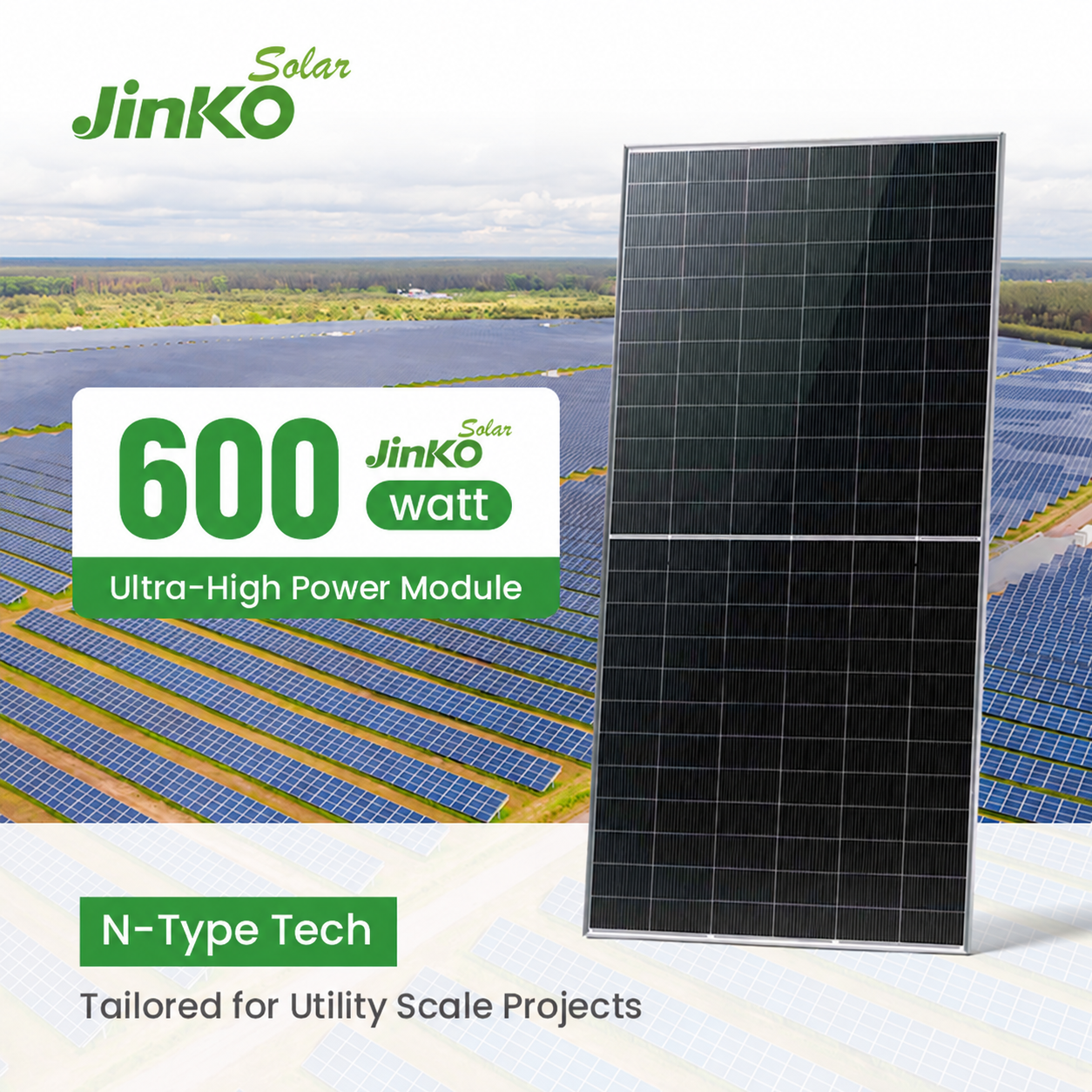
Jinko N-Type Bifacial Panels 600W 580W 595W TOPCon Double Glass
- Max Power Voltage: 44.52V (at STC)
- Max Power Current: 13.48A (at STC)
- PID Resistance: Anti-PID Certified
- Operating Temp: -40°C to +85°C
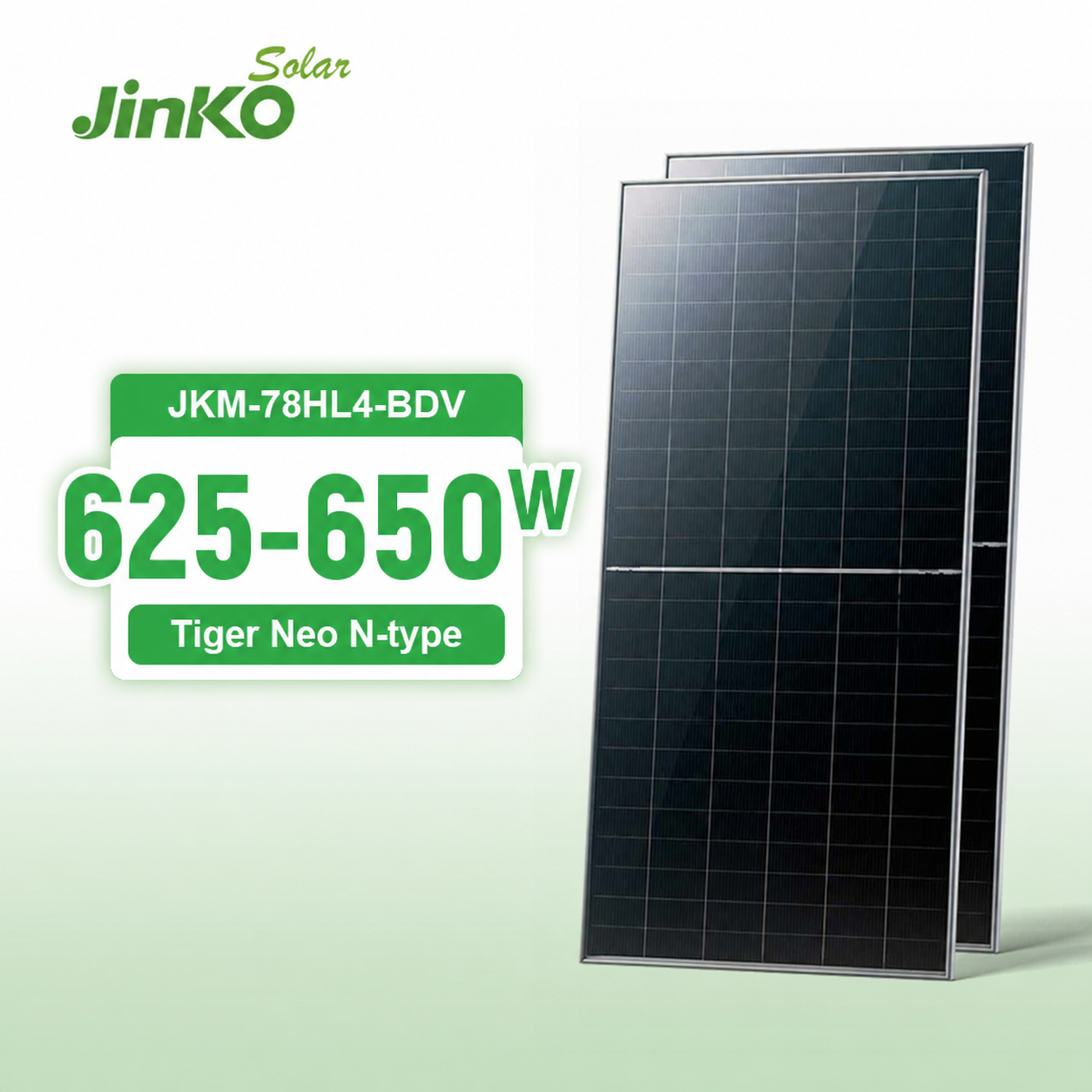
Jinko N-Type Bifacial PV Panels 650W 630W 645W High Efficiency
- Module Efficiency: Up to 23.15%
- Anti-Shading: Optimized Bypass Diodes
- Cell Matrix: 132 (2 × 66) Matrix
- Frame Material: Anodized Aluminum Alloy
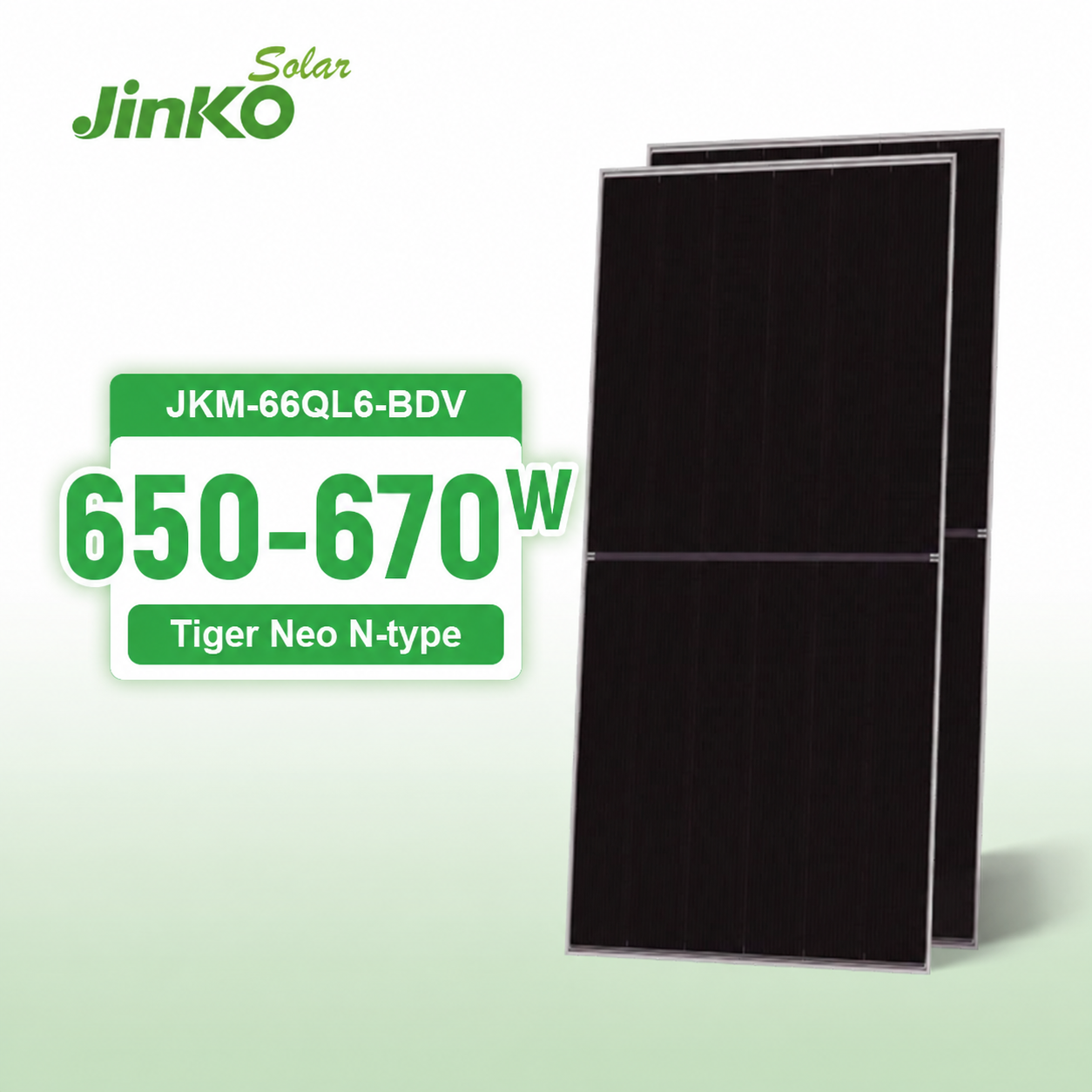
Jinko N-Type Bifacial Panel 650W 660W 670W TOPCon Monocrystalline
- Max Peak Power: Up to 670W
- Linear Warranty: 30-Year Performance
- Connectors: MC4-EVO2 Compatible
- System Voltage: 1500V DC Certified

Jinko N-Type Bifacial Photovoltaic Panels 600W 585W 595W TOPCon
- C&I Optimal Sizing: High Packing Density
- Mechanical Rigidity: Anti-Microcrack Frame
- Cell Technology: N-Type Tunnel Oxide
- Warranty: 12-Yr Product / 30-Yr Output
Engineering White Paper: Navigating the On-Grid Landscape of Buenos Aires and AMBA
The macroeconomic and regulatory framework governing the energy matrix of the Republic of Argentina, and particularly the Autonomous City of Buenos Aires (CABA) alongside the broader Área Metropolitana de Buenos Aires (AMBA), has fundamentally shifted. Historically marked by heavy national energy tariff subsidies, the current transition toward tariff normalization and free-market cost reflectiveness has resulted in substantial increases in electricity costs per kilowatt-hour for commercial, industrial, and large residential consumers. Within the distribution zones regulated by concessionaires Edenor (Empresa Distribuidora y Comercializadora Norte S.A.) and Edesur (Empresa Distribuidora Sur S.A.), on-grid photovoltaic power generation has evolved from a progressive corporate sustainability posture into an imperative fiscal defense strategy.
Procuring top-tier photovoltaic modules and matching string inverter infrastructure from verified Chinese factories requires rigorous technical vetting. The climatic environment of Buenos Aires features high summer irradiation coinciding with extreme thermal peaks exceeding 38°C, accompanied by intense ambient humidity from the Río de la Plata estuary. These localized meteorological conditions quickly expose weaknesses in lower-tier solar cells. Under elevated operating cell temperatures, conventional p-type PERC panels suffer steep thermal degradation curves. Hangzhou VOLT New Energy Technology Co., Ltd. addresses this precise thermodynamic vulnerability by supplying advanced N-type TOPCon (Tunnel Oxide Passivated Contact) bifacial modules, which exhibit an industry-leading temperature coefficient of Pmax at -0.29%/°C compared to standard p-type modules that drop by -0.35% to -0.38%/°C, preserving plant yield throughout scorching Argentine summer months.
| Performance Dimension | Standard P-Type PERC Technology | Hangzhou VOLT Supplied N-Type TOPCon | Operational Impact in Buenos Aires (Edenor/Edesur) |
|---|---|---|---|
| Bifaciality Factor | 70% ± 5% | 80% ± 5% (Bifacial) | Captures +10% to +25% extra yield from reflective rooftop membranes in industrial parks. |
| Thermal Coefficient (Pmax) | -0.35% / °C | -0.29% / °C | Saves 4.8% net power loss during summer heatwaves (38°C ambient / 65°C cell temperature). |
| First-Year Degradation | ≤ 2.0% (LID / LeTID sensitive) | ≤ 1.0% (Zero Boron-Oxygen LID) | Maximizes initial operational cash flow under commercial PPA or self-consumption models. |
| 30-Year Linear Retention | 84.8% | 87.4% Output Guaranteed | Prolongs return on capital investment across extended amortization schedules. |
| Low-Light Spectral Yield | Standard UV-Blue response | Superior Infrared & Diffuse Response | Maintains generation on overcast, humid, and rainy winter days along the coastal basin. |
Localized Application Scenarios in the Buenos Aires Metro & Provincial Belt
From dense urban rooftop installations in CABA to heavy manufacturing complexes in industrial parks, our factory-direct modules and integrated grid solutions solve the specific structural, electrical, and commercial bottlenecks of Buenos Aires.
Industrial Logistics Parks (Pilar, Zárate, Tigre & Quilmes)
Large warehouse distribution centers and manufacturing plants along the Panamericana and Route 2 corridors utilize 200 kW to 2 MW on-grid rooftop arrays. Incorporating Jinko N-Type 600W–650W bifacial dual-glass modules directly mitigates severe industrial peak-hour billing brackets (Tarifa T3 Grandes Demandas). Dual glass withstands severe industrial atmospheric pollutants while absorbing diffused light bounced off white TPO or metal roof deckings.
Urban Commercial & Corporate Towers (CABA / Microcentro)
Corporate office buildings in Puerto Madero, Catalinas, and Belgrano face constrained rooftop surface footprints and strict fire protection standards. Dual-glass Class-A fire-rated modules deliver maximal power density per square meter (reaching up to 231.5 W/m²). Integrated with zero-export grid-tied controllers, these arrays drastically trim base-load HVAC chilling consumption during daylight operational windows without triggering utility backfeed penalties.
Agricultural Processing & Cold Storage (Pampas Agricultural Belt)
On-grid agricultural grain processing facilities, refrigerated meat packing plants, and poultry facilities in the peri-urban fringes of Buenos Aires Province experience weak distribution grid ties and seasonal voltage sags. Installing 625W–670W utility-scale modules coupled with Deye high-voltage grid-interactive three-phase inverters provides stable power factor compensation, peak trimming, and synchronized self-generation.
Strategic Market Trends: What Importers & EPCs Must Anticipate for 2025–2030
The distributed renewable sector in Argentina is undergoing a profound structural evolution. Several distinct trends are driving high-volume container imports of Tier-1 solar modules from factories in China directly into the Port of Buenos Aires:
1. Subsidy Phaseout & Cost-Reflective Tariffs
With the progressive elimination of central government cross-subsidies to wholesale generation administrator CAMMESA, commercial and industrial end-users face electricity tariffs that reflect actual generation, transmission, and operational costs. The return on investment (ROI) timeframe for commercial on-grid solar projects in Buenos Aires has shortened dramatically from 7–9 years down to 3.2–4.5 years, creating unprecedented procurement urgency among local EPCs.
2. Currency Hedging via Capital Equipment Imports
In an inflationary economic environment, Argentine commercial entities leverage physical assets such as Tier-1 photovoltaic arrays as a reliable dollar-hedging vehicle. Commercial equipment imported with international certifications (IEC 61215, IEC 61730, UL 1703) provides long-term tangible value, high balance-sheet liquidity, and predictable operational overhead reduction over 30 guaranteed generation years.
3. Grid Modernization & Bidirectional Meter Deployment
The accelerated installation of digital four-quadrant bidirectional smart meters by Edenor and Edesur under national microgeneration guidelines has simplified the interconnection process. Distributors no longer encounter regulatory dead-ends; project approval workflows are digitized via the Trámite de Conexión de Usuario-Generador web portal, increasing month-over-month distributed generation registrations across Buenos Aires Province.
4. Hybrid Resilience against Urban Brownouts
Summer peak electricity demand regularly overloads the aging 13.2 kV medium-voltage distribution infrastructure of CABA and Greater Buenos Aires, precipitating recurring rolling blackouts. Consequently, forward-looking developers are designing grid-tied systems featuring hybrid capability—pairing high-capacity Jinko TOPCon modules with Deye hybrid inverters and low-voltage or high-voltage LiFePO4 batteries to ensure uninterruptible operations.
Why South American Importers Partner with Hangzhou VOLT New Energy
Direct factory ties, deep technical validation, and dedicated export engineering protocols eliminate component failure risks and customs delays at destination ports.
100% Pre-Dispatch Quality Control
Every containerized batch undergoes dual Electroluminescence (EL) testing to detect microcracks, combined with strict flash-test sorting ensuring 0~+3% positive power tolerance before sea loading.
Full Inverter & Grid Matching
We cross-verify string Voc and Isc parameters against inverter MPPT operational windows (including Deye, Huawei, and Sungrow) to guarantee zero clipping and eliminate communications mismatch errors on site.
Optimized Container Logistics
Engineered vertical stacking using heavy-duty export packaging prevents micro-fracturing along trans-oceanic shipping routes from Ningbo or Shanghai to Puerto de Buenos Aires (Terminales Río de la Plata).
Customs & IRAM Documentation
We furnish complete English and Spanish test reports, Factory Acceptance Test (FAT) logs, IEC 61215/61730 certificates, and consularized documentation required for Argentine customs clearance.



Frequently Asked Questions by Buenos Aires Importers & EPCs
Concrete answers regarding customs regimes, grid homologation, maritime transit times, currency transactions, and mechanical certifications.
What technical documentation is mandatory for importing solar panels through Puerto de Buenos Aires?
How do on-grid inverters and Jinko TOPCon panels interface with Edenor and Edesur grid requirements?
What is the standard ocean freight transit time and shipping route to Buenos Aires?
Can your export hub consolidate solar panels, grid-tied inverters, and mounting hardware in a single container?
How are factory warranty claims and serial verification handled for equipment installed in Argentina?
How does the Argentine financial framework (BOPREAL / BCRA regulations) affect international wire transfers?
Accelerate Your Buenos Aires On-Grid Solar Deployment
Partner with a proven factory exporter equipped with deep South American trade pedigree. Submit your projected MW capacity, bill of materials (BOM), or C&I project parameters, and our engineering team will deliver a fully matched technical proposal, system sizing model, and competitive factory-direct CIF quotation within 24 hours.
Contact Us